Dolphin vs. Porpoise: Spotting the Difference
What distinguishes dolphins from porpoises?
On this page

Dolphin vs. Porpoise at a Glance
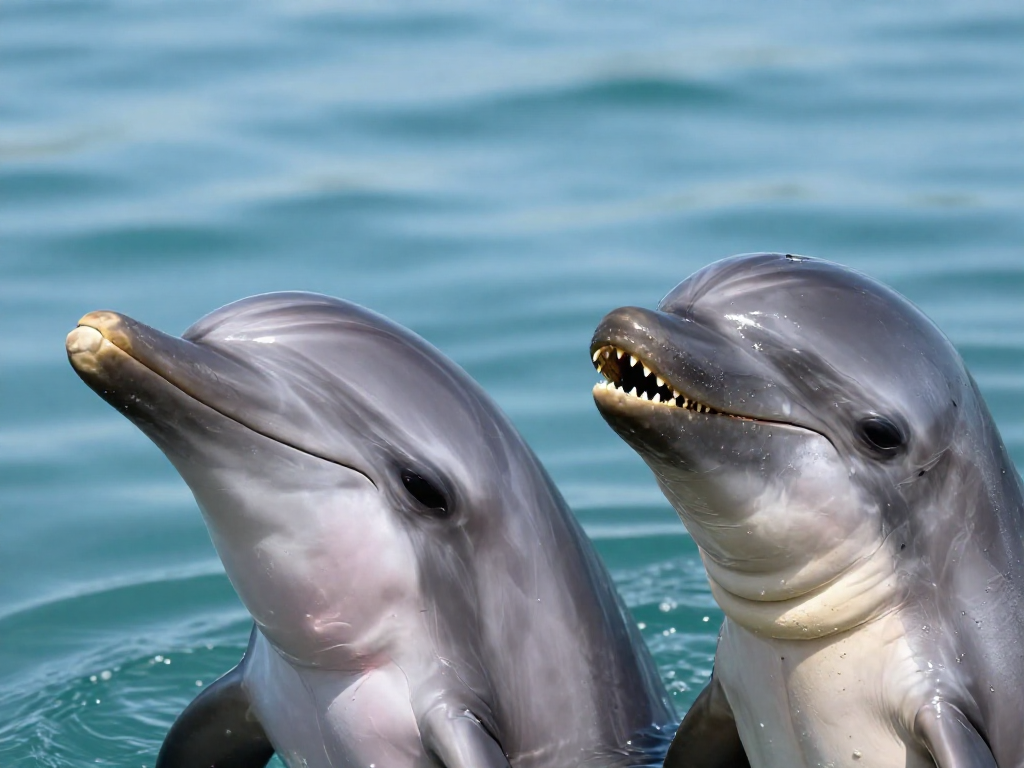
Here's a fact that surprises almost everyone: dolphins and porpoises aren't the same animal—they're more like distant cousins than twins. Both belong to the same broad group of toothed whales (cetaceans), but they split into separate families millions of years ago, and the differences are easy to spot once you know what to look for.
Quick comparison:
| Feature | Dolphin | Porpoise |
|---|---|---|
| Snout | Long, pointed "beak" | Short, rounded—no beak |
| Teeth | Cone-shaped | Flat and spade-shaped |
| Dorsal fin | Tall, curved (hooked) | Small, triangular |
| Body | Sleek and lean | Stout and chunky |
| Size | Up to ~12 ft (bottlenose) | Usually under ~7 ft |
| Behavior | Playful, often leaps and rides waves | Shy, rarely shows off |
The single fastest tell: look at the face. If it has a long, bottle-shaped beak, it's a dolphin. If the face is short and rounded with no beak, it's a porpoise. That one glance gets you the right answer most of the time—everything below just confirms it.
Are They Even Related? The Family Connection
Here's the twist that surprises a lot of people: dolphins and porpoises aren't fish at all—they're warm-blooded mammals that breathe air, just like you. Both belong to a group called cetaceans (the mammal family that includes all whales, dolphins, and porpoises), and more specifically to the toothed whales, which use teeth and echolocation instead of the filtering baleen plates found in giants like the blue whale.
So they really are cousins on the same branch of the family tree. That shared ancestry is exactly why they look so much alike—sleek bodies, blowholes, and flippers built for life underwater.
But the family isn't evenly sized. Scientists recognize 40-plus species of dolphins and only about 7 species of porpoises, according to NOAA Fisheries. Because dolphins are far more common and the two share a body plan, people lump them together constantly. Knowing they're related—yet distinct—is the first step to telling them apart.
The Face: Snout and Teeth
Here's the quickest way to win the dolphin-or-porpoise debate from a boat: look at the face. The shape of the snout and the hidden shape of the teeth are the two most reliable tells scientists use, too.
The snout is your best clue. Most dolphins have a long, pronounced beak (called a rostrum) that gives them that classic "smiling" profile. Porpoises skip the beak entirely — their faces are short, rounded, and almost blunt, a bit like a friendly bowling pin. If you spot a clear, pointy beak, you're almost certainly looking at a dolphin.
The teeth tell the same story up close. Dolphins have cone-shaped teeth, perfect for gripping slippery fish. Porpoises have spade-shaped, flattened teeth instead — a difference biologists use to tell the two groups apart (NOAA Fisheries). It's a small detail with a big payoff for identification.
But here's the catch: you'll almost never see those teeth in the wild. Wild dolphins and porpoises rarely open wide for a good look, and you should never get close enough to try — give all marine mammals plenty of space and follow local wildlife-viewing guidelines.
So in the real world, focus on the snout. Beak = dolphin. No beak, rounded face = porpoise. That one glance does most of the work.
The Fin and Body Shape
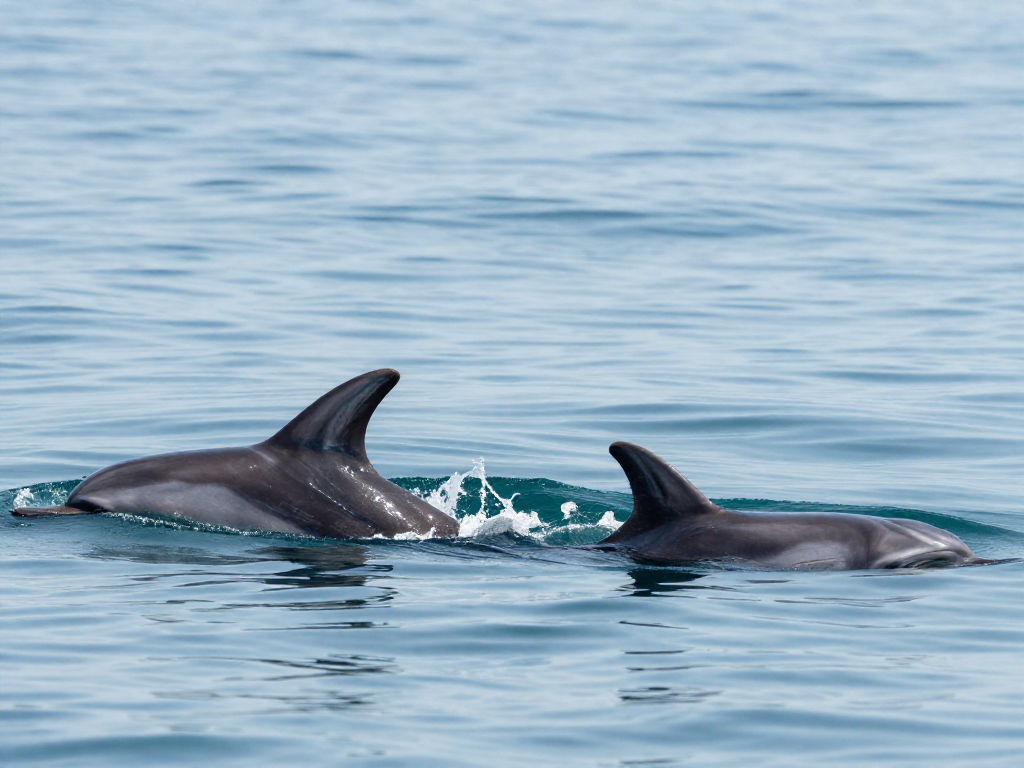
Can't see the face? Watch the fin slice through the water—it might be all you need. When a dorsal fin (the fin on the animal's back) breaks the surface, its shape is one of the quickest ways to tell these two apart.
It's all in the dorsal fin:
- Dolphins usually have a tall, curved fin that sweeps backward like a hook.
- Porpoises tend to have a small, low, triangular fin—more like a tiny shark's than a graceful arc.
The bodies tell a story, too. Dolphins are sleek and leaner, built like torpedoes for fast, acrobatic swimming. Porpoises are stockier and shorter, with a more compact, rounded build that's easy to mistake for "chubby" at a glance.
Size is another giveaway. Most porpoises are smaller, often under about 7 feet long. The harbor porpoise—one of the most common species—typically measures only around 5 feet. Many dolphins run noticeably bigger; a bottlenose dolphin can stretch to 10–12 feet.
A quick field tip: if you spot a flashy animal leaping and riding the bow waves of boats, you're almost certainly watching a dolphin. Porpoises are shyer and rarely show off, so a brief glimpse of a small triangular fin is often the best look you'll get.
Sources: NOAA Fisheries; American Cetacean Society.
Behavior: How They Act in the Water
If a sleek gray animal is surfing the wave off your boat's bow, odds are you're watching a dolphin, not a porpoise. That single habit—bow-riding, or hitching a free ride in the pressure wave a boat pushes ahead of itself—is one of the easiest behavioral tells out on the water.
Dolphins are the extroverts of the sea. They travel in social groups (pods), leap clear of the surface in spinning breaches, and often swim straight up to boats to investigate or ride alongside. Spinner dolphins, for example, can twirl several full rotations in a single jump.
Porpoises play it cool. They're shyer and more elusive, tend to surface with a quick, low roll instead of a dramatic leap, and rarely approach vessels. Spot a small animal that shows just a sliver of back and then vanishes? That low-key style points to a porpoise.
The two also "talk" differently. Dolphins are famously chatty, producing whistles and clicks that carry through the water, and harbor porpoises rely heavily on high-frequency clicks (above human hearing) rather than the signature whistles dolphins use.
Quick tell: Bold, leaping, boat-loving = dolphin. Shy, low-profile, quick to disappear = porpoise.
Where You'll Find Each One
Here's a handy rule of thumb: if you spot a playful animal leaping near a US beach or following a boat, it's almost certainly a dolphin, not a porpoise. Dolphins are the bold, surface-loving crowd, while porpoises tend to keep a low profile.
- Bottlenose dolphins are the ones you'll likely meet, living year-round in warm coastal waters from the mid-Atlantic down to the Gulf of Mexico and along Southern California. Common dolphins prefer deeper, open water off both coasts, often traveling in huge groups of hundreds.
- Harbor porpoises stick to cool, shallow coastal waters in the northern US — think New England, the Pacific Northwest, and Alaska. Dall's porpoises range through cold, deeper waters of the Pacific Northwest and Alaska.
- The big pattern: dolphins range from coast to open ocean and love attention, while porpoises favor chilly, near-shore waters and rarely show off — so a shy, quick glimpse often means porpoise.
Quick Field Guide: Spot It in 5 Seconds
Next time you're squinting at a splash offshore, run this three-step check and you'll have your answer before the animal dives again.
- Look at the face. See a long, bottle-shaped beak? That's a dolphin. A short, rounded face with no beak means porpoise.
- Check the fin. A tall, curved (hooked) dorsal fin points to a dolphin. A short, triangular fin—shaped like a shark's—signals a porpoise.
- Watch the behavior. Leaping, surfing boat wakes, and showing off? Almost always a dolphin. Quick, shy, and rarely making a scene? Likely a porpoise.
Save-this summary:
- Beak → dolphin · No beak → porpoise
- Curved fin → dolphin · Triangular fin → porpoise
- Showy & social → dolphin · Shy & low-key → porpoise
Memorize those three pairs and you're now the most reliable spotter on the boat.
See also
- How Dolphins Use Echolocation to 'See' Sound
- Whale vs. Dolphin: What's the Difference?
- Why Are Dolphins So Smart?
- Surprising Facts About Marine Mammals
Related articles

My Unpopular Opinion: Stop Calling Them 'Killer' Whales
Why should we stop using the term 'killer whale'?
Jul 28, 2026 · 3 min read
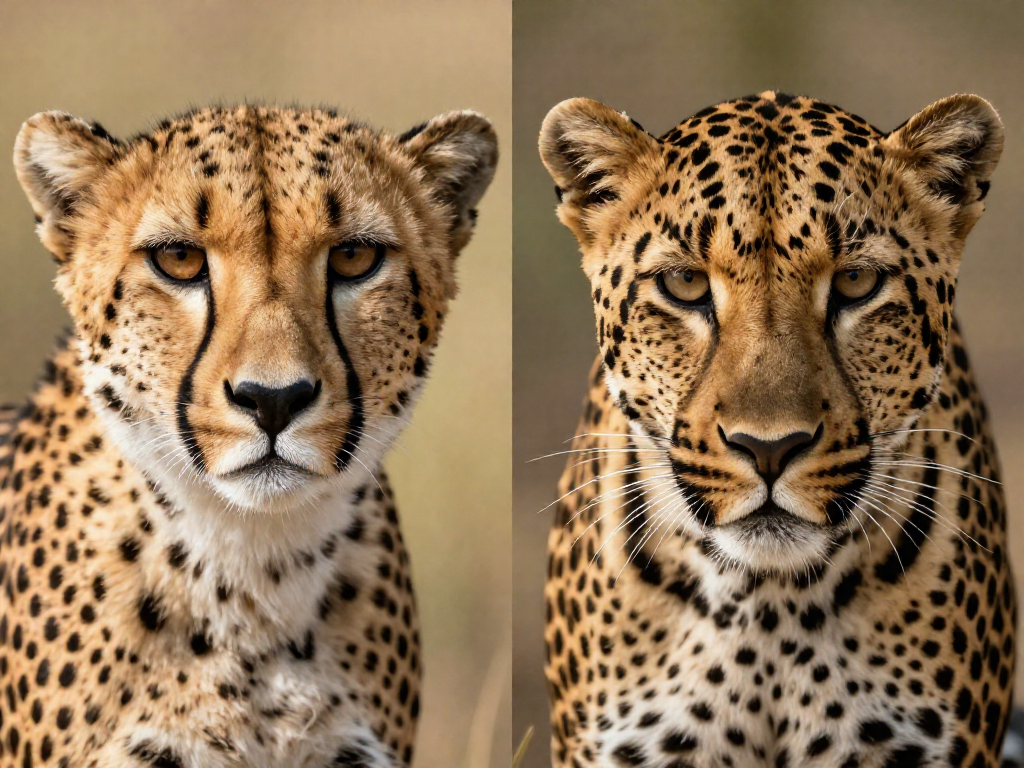
Cheetah vs. Leopard: Spotting the Difference in the Wild
How can you tell the difference between a cheetah and a leopard? Learn the key features including tear marks, spots, body shape, hunting styles, and sounds—all in one easy guide.
Jul 28, 2026 · 6 min read
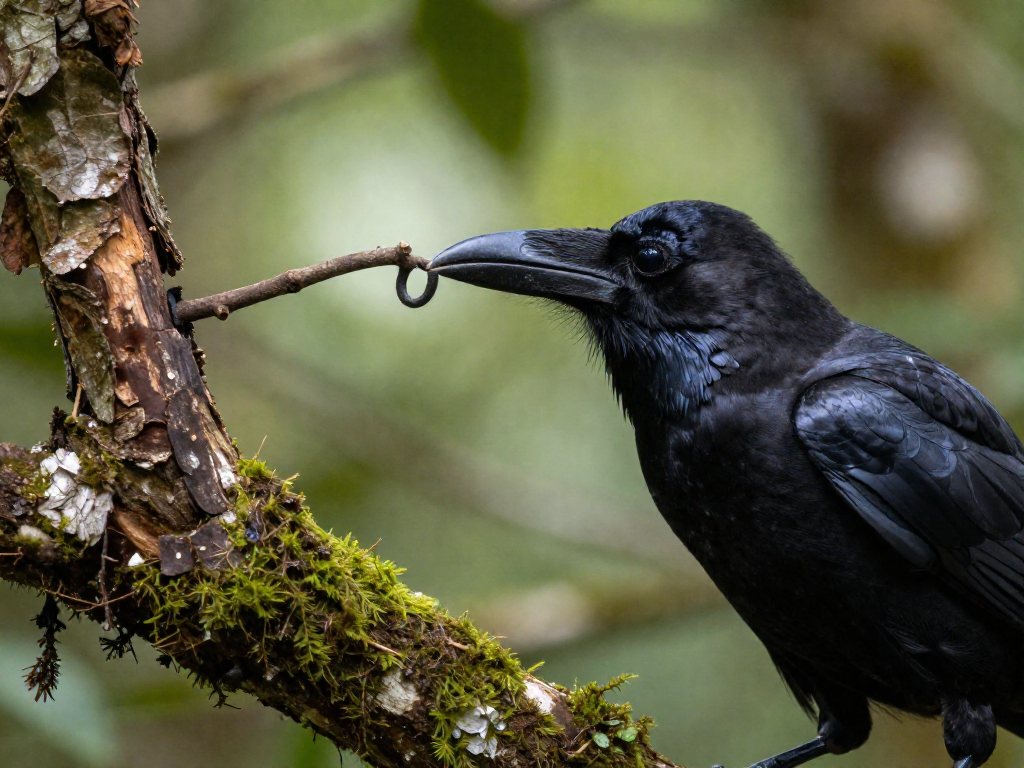
8 Animals That Use Tools (And What They Do with Them)
Which animals use tools, and how do they use them? From crows bending wires to octopuses carrying coconuts, discover 8 tool-using animals.
Jul 28, 2026 · 6 min read