When Your Dog Won't Stop Licking: A Troubleshooting Guide for Common Causes
Why does my dog keep licking everything, and how can I address it?
On this page
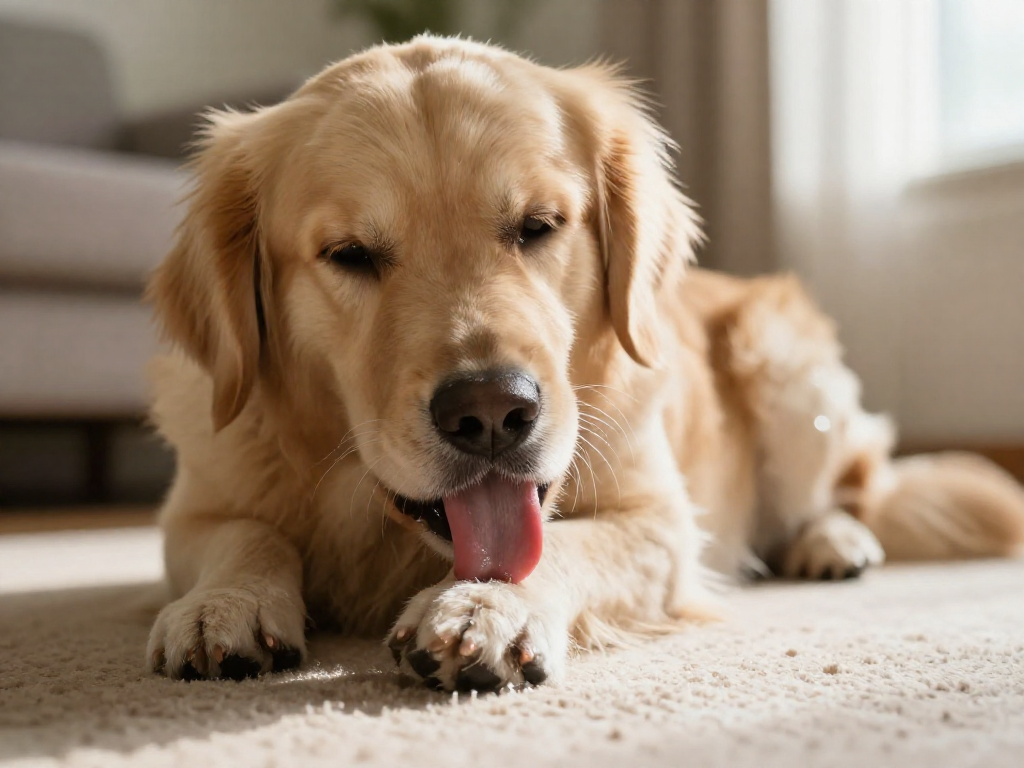
Caught your dog obsessively licking the floor, their paws, or even the air? You're not alone—and no, they're not just being weird. Excessive licking is often a clue that something else is going on. This guide walks you through the common causes, from hidden food allergies to serious GI issues, and gives you a plan of action to get your pup back to a comfortable, lick-free life.
When to Worry: Is Your Dog’s Licking Normal or a Red Flag?
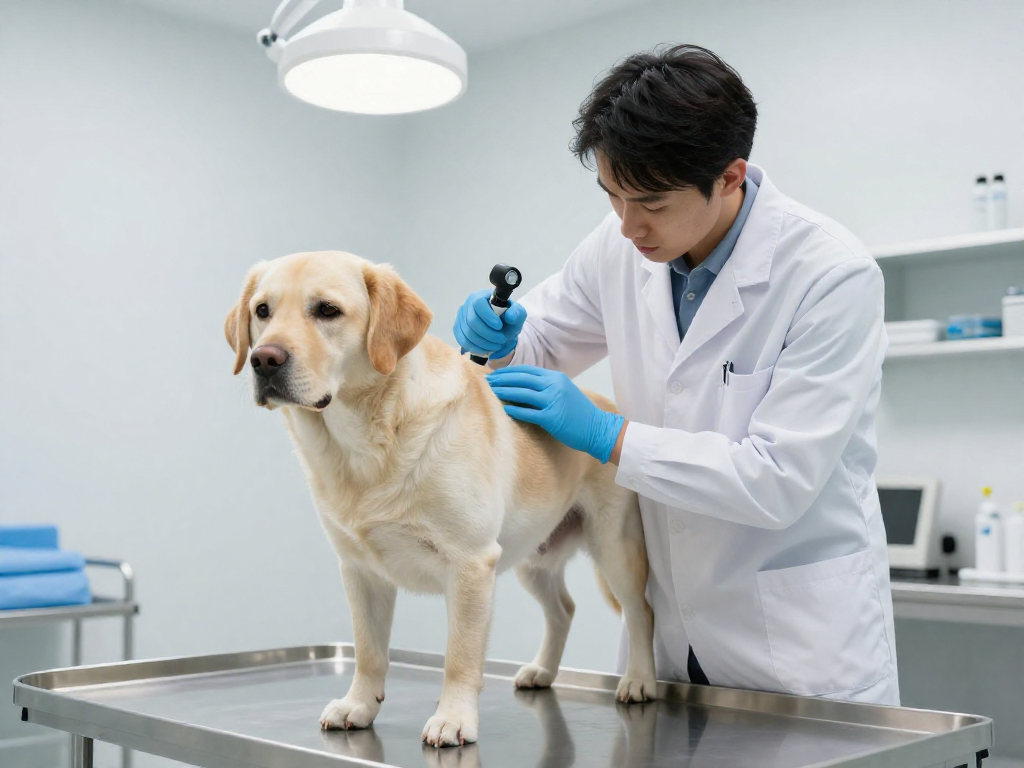
Some licking is completely normal—it's how dogs groom, show affection, or explore the world. But when your dog spends hours focused on one spot, licks until fur thins or skin breaks, or can't stop even when you interrupt, it’s moved beyond everyday behavior. Constant, intense licking that disrupts sleep, eating, or play, or causes raw patches and hair loss, isn't just a nuisance—it’s a clue that something deeper might be off. And the root cause is often a medical one. In fact, research suggests that up to 60% of dogs with excessive licking habits have an underlying gastrointestinal disorder (Pets Best). A dog obsessively licking a joint might be signaling arthritis pain, not just a quirky habit. So before dismissing it as anxiety or boredom, your first move is a vet visit to rule out physical causes. That way, you’re solving the problem at its source.
Medical Causes: Allergies, Tummy Troubles, and Hidden Pain Driving Your Dog to Lick
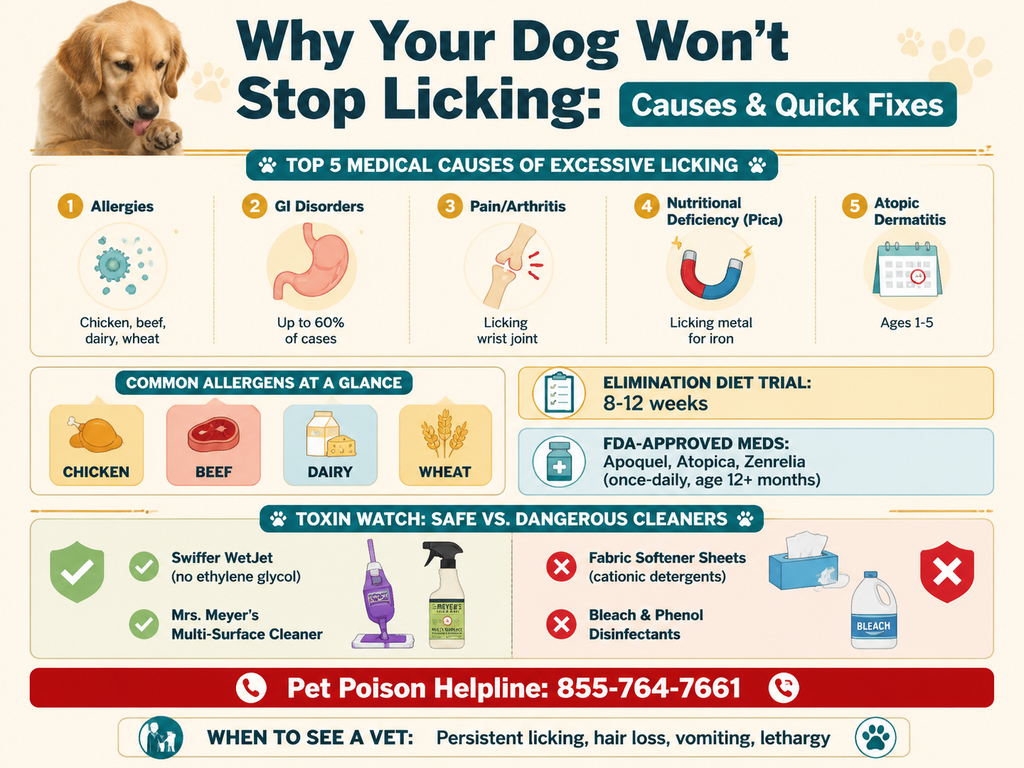
When a dog can’t stop licking, the root cause is often a genuine medical issue that needs veterinary attention. Food allergies are a frequent culprit—the most common triggers are proteins like chicken, beef, and dairy. Diagnosing a food allergy isn’t as simple as swapping brands; it requires a strict elimination diet trial lasting eight to 12 weeks, during which the dog can have nothing else—no flavored treats, no pill pockets, not even a stolen crumb from the floor. If the licking subsides, you know diet is the key.
Environmental allergies (atopic dermatitis) are the second most common allergic skin disease in dogs, and symptoms typically first appear between one and five years of age. Pollen, dust mites, and mold spores can send a dog into a licking frenzy, especially at the paws and belly. While you can’t eliminate all triggers, prescription therapies have revolutionized management. A newer option, Zenrelia (ilunocitinib), is a once-daily tablet for dogs over 12 months that controls allergic itching, and older standbys like Apoquel and Atopica remain effective—all require a vet’s prescription.
Perhaps the most startling medical connection is to the gut. Research suggests that up to 60% of dogs with excessive licking behaviors actually suffer from an underlying gastrointestinal disorder (Pets Best). The licking isn’t random—it’s a response to feelings of nausea or abdominal discomfort that the dog can’t communicate in any other way. Conditions like chronic gastritis, inflammatory bowel disease, or even food sensitivities can drive this behavior, so a thorough GI workup is crucial if other causes are ruled out.
Pain is another invisible driver. A dog that obsessively licks one wrist may be self-soothing arthritis in that joint; the repetitive motion can become a coping mechanism for chronic orthopedic pain. And then there’s pica—the urge to ingest nonfood items—which can manifest as constant licking of floors, metal objects, or even grout. This behavior sometimes signals a mineral deficiency, particularly iron, or anemia, and it has links to GI disorders as well. None of these are behavioral quirks you can train away; they’re red flags that point to a deeper physical problem needing diagnosis and treatment.
Your Home, Their Hazard: Toxic Cleaners and Environmental Irritants
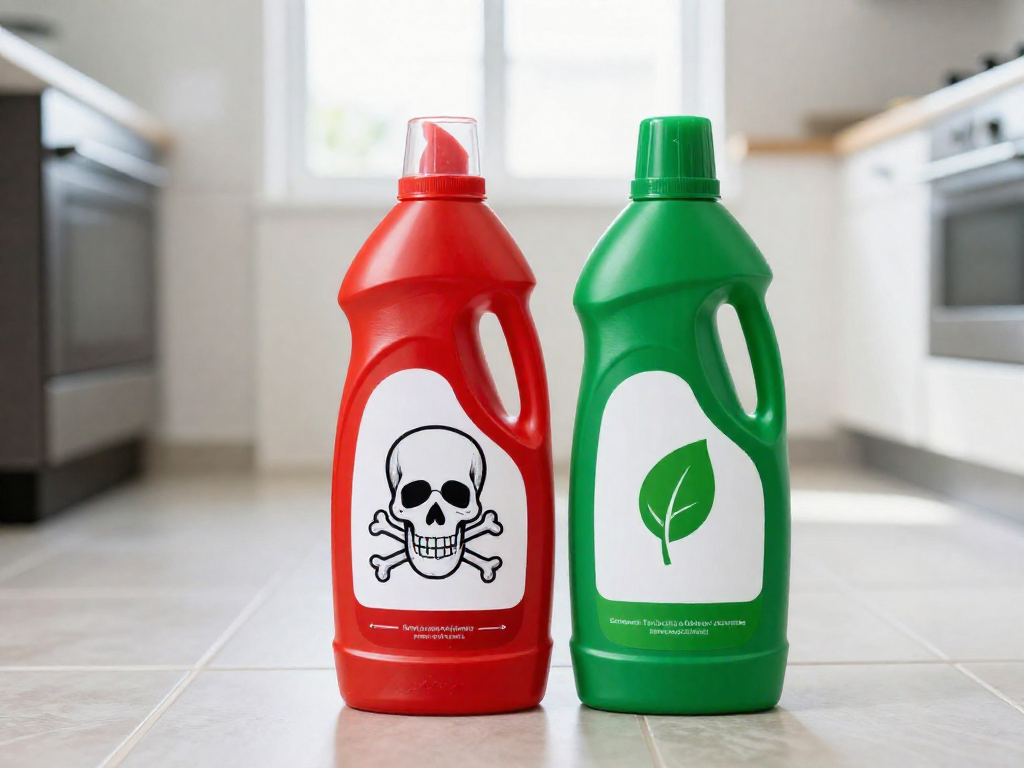
Your home should be a safe haven, but some of the most common cleaning products can turn your dog’s licking habit into a dangerous obsession. Phenol-based disinfectants, diluted bleach, and especially fabric softener sheets contain cationic detergents that can cause drooling, vomiting, oral ulcers, and even fever within hours of ingestion. Even if your dog doesn’t eat the product directly, walking on a freshly mopped floor and then licking their paws is enough to cause chemical burns and irritation.
That doesn’t mean you need to toss every bottle under the sink. ASPCA toxicology experts put to rest a long-running rumor by confirming that Swiffer WetJet products contain no ethylene glycol—the lethal antifreeze ingredient—and are perfectly safe for homes with pets (ASPCA). For everyday surface cleaning, Mrs. Meyer’s Multi-Surface Cleaner is another pet-safe choice that won’t harm a dog who can’t resist a quick taste.
To keep licking from becoming a medical emergency, rinse all mopped or wiped surfaces with water once the cleaner has done its job. Stick to explicitly pet-safe products, and always keep the original packaging—quick access to the ingredient list can save critical minutes if you need to call a vet. If you suspect your dog has ingested a toxic cleaner, don’t wait: call your veterinarian or the Pet Poison Helpline at 855-764-7661 immediately.
Mind Games: When Boredom, Anxiety, or Compulsion Fuel Licking
Before you blame your dog's personality, make sure a vet has cleared medical triggers. Up to 60% of dogs who lick obsessively actually have an underlying gastrointestinal disorder (Pets Best), so stomach trouble and allergies should be the first suspects. If your dog gets a clean bill of health, the licking may be behavioral.
A bored dog often invents a job—like methodically licking a paw or the couch—so up the mental game with puzzle feeders, scent walks, and short training sessions. Anxiety-driven licking is a self-soothing habit; calming aids, predictable routines, and gradual alone-time practice can help. True compulsive disorders (the canine version of OCD) don't fade on their own, so skip the guesswork and bring in a certified behaviorist before the pattern hardens.
From Lick to Fix: Your Step-by-Step Plan to Stop the Obsession
Stop the lick loop with a plan that starts today. First, become a detective: jot down when, where, and what your dog licks—surface, body part, time of day—and how intense it gets. This log is gold for your vet. Then sweep your home for irritants. Switch to a pet-safe cleaner like Mrs. Meyer’s Multi-Surface Cleaner, and ditch fabric softener sheets entirely. Those sheets contain cationic detergents that can cause drooling, vomiting, and even esophageal ulcers if your dog licks them or a treated surface (call the Pet Poison Helpline at 855-764-7661 if you suspect trouble).
If the licking continues, it’s time to look at food. Common triggers include beef, corn, dairy, and wheat. Under your vet’s guidance, start an elimination diet using a novel protein or hydrolyzed food, and stick to it for a full 8 to 12 weeks—no treats, no flavored meds, nothing else. A vet visit is essential; a surprising 60% of excessive lickers have an underlying gastrointestinal disorder, according to Pet’s Best. Bring your log. Your vet might recommend allergy testing (intradermal tests involve about 60 tiny injections under sedation), bloodwork, or imaging, especially if the licking is intense or paired with other symptoms.
Once you have a diagnosis, follow the medical plan. For allergic itch, medications like Apoquel, Cytopoint, or a once-daily tablet called Zenrelia (approved for dogs over 12 months) can bring relief. Understand that for chronic conditions like atopic dermatitis, treatment is often lifelong.
Manage for the long haul: stick to regular check-ups, keep your home free of known triggers, and continue logging any behavioral shifts. A dog that suddenly licks one wrist obsessively could be dealing with arthritis in that joint, so stay vigilant.
Sources
- 12 Reasons Dogs Lick Excessively and When to be Concerned — petsbest.com
- Excessive Licking, Chewing, and Grooming in Dogs | PetMD — petmd.com
- When Licking Isn’t Due to Allergies – Ortho Dog — orthodog.com
- Dog Licking Paws Obsessively | Best Friends Animal Society — bestfriends.org
- Dog Licking | Savannah Veterinary Internal Medicine | Article — savannahveterinary.com
- What does it mean when dogs lick excessively? - The Animal Medical Center — amcny.org
- Pet Poisons: Be Mindful of these Household Products and Cleaning Agents | ASPCA — aspca.org
- Spring Cleaning: Toxic Household Products To Avoid Around Pets | Tell Tail Veterinary Urgent Care — telltailvet.com
- Spring Cleaning: 5 Household Cleaners to Avoid Near Dogs | PetMD — petmd.com
FAQ
Why does my dog lick the floor constantly?
Constant floor licking often points to an underlying gastrointestinal disorder or nutritional deficiency. A study in the Journal of Veterinary Behavior found up to 60% of dogs with excessive licking behaviors have a gastrointestinal issue, and some dogs with pica lick nonfood surfaces to obtain missing minerals like iron.
Could constant licking be a sign of pain?
Yes, constant licking can indicate pain. A dog that obsessively licks one spot, like a paw or joint, might be soothing an underlying ache. For example, chronic wrist licking can signal arthritis in that joint.
How do I know if my dog’s licking is caused by allergies?
Suspect allergies if your dog licks paws, belly, or rear after eating certain foods or during specific seasons, especially with red skin or ear infections. Your vet may run a food elimination trial lasting eight to 12 weeks, or intradermal testing with about 60 allergens to check for environmental triggers. Common food culprits include chicken, beef, dairy, corn, and wheat.
Is my dog licking because of anxiety?
Yes, dogs often lick excessively due to anxiety or stress. The repetitive motion releases endorphins that calm them, much like nail-biting in humans. You may notice other signs like panting, pacing, or destructive behavior.
What should I do if my dog won’t stop licking his paws?
First, have your vet rule out medical causes like allergies or pain. If allergies are diagnosed, they may prescribe medications like Apoquel or Atopica, the only FDA-approved non-steroidal options for canine atopic dermatitis, though side effects can include vomiting and diarrhea. Allergy testing or a food trial might also be recommended.
Are there safe cleaners I can use if my dog licks surfaces?
Yes, some cleaners are safer if your dog licks surfaces. ASPCA toxicology experts confirmed that Swiffer WetJet products don't contain ethylene glycol and are fine around pets. Mrs. Meyer's Multi-Surface Cleaner is another pet-safe option. Avoid products with phenols or cationic detergents, such as fabric softener sheets, which can cause ulcers and vomiting. If your dog ingests something toxic, call the Pet Poison Helpline at 855-764-7661.
See also
- Why Do Dogs Lick People? The Real Reasons Behind Puppy Kisses
- Common Dog Allergies and How to Spot Them
- Pet-Safe Cleaning Tips: Protect Your Pup from Hidden Hazards
- Understanding Your Dog’s Body Language: Signs of Stress vs. Contentment
Related articles

Why Do Birds Sing at Dawn? The Science of the Dawn Chorus
Why do birds sing so loudly early in the morning?
Jul 28, 2026 · 6 min read

Monogamy vs. Polygamy in the Animal Kingdom: A Comparative Guide
How do monogamous and polygamous mating systems compare, and which animals use which?
Jul 20, 2026 · 9 min read

Pack Hunters vs. Ambush Predators: Which Hunting Strategy Is Better?
How do pack hunting and ambush hunting compare in the animal kingdom? We break down success rates, energy costs, and surprising strategies to reveal which approach truly dominates.
Jul 20, 2026 · 6 min read