Pack Hunters vs. Ambush Predators: Which Hunting Strategy Is Better?
How do pack hunting and ambush hunting compare in the animal kingdom?
On this page
From a 5% success rate to over 90%, the animal kingdom's hunting outcomes vary wildly. But is there a champion strategy? We pit cooperative pack hunters against solitary ambush specialists, using hard data and surprising science.
The Ultimate Hunting Showdown
In the animal kingdom, hunting success is a numbers game with jaw-dropping extremes: some predators succeed just 5% of the time, while others pull off kills at an astonishing 97% rate. On one side are pack hunters like wolves and African wild dogs, which work together to pursue and exhaust prey. On the other are ambush predators like pumas and cheetahs, relying on stealth and explosive speed. But which approach is truly “better”? Wolves average a kill only about 14% of the time (Discover Wildlife), yet their teamwork lets them tackle huge prey a lone hunter could never touch. Meanwhile, a solitary cheetah boasts a 58% success rate—nearly triple the wolf’s average—but often loses its meal to scavengers. The real showdown isn’t just about raw kill stats; it’s about energy, risk, and survival in a world where every hunt counts.
The Power of the Pack: How Teamwork Raises the Odds
Pack hunting turns the tables in the predator-prey arms race. Across the African savannah and northern forests, wolves, lions, and wild dogs prove that cooperation can bring down prey many times their size—but it’s a numbers game with surprising twists.
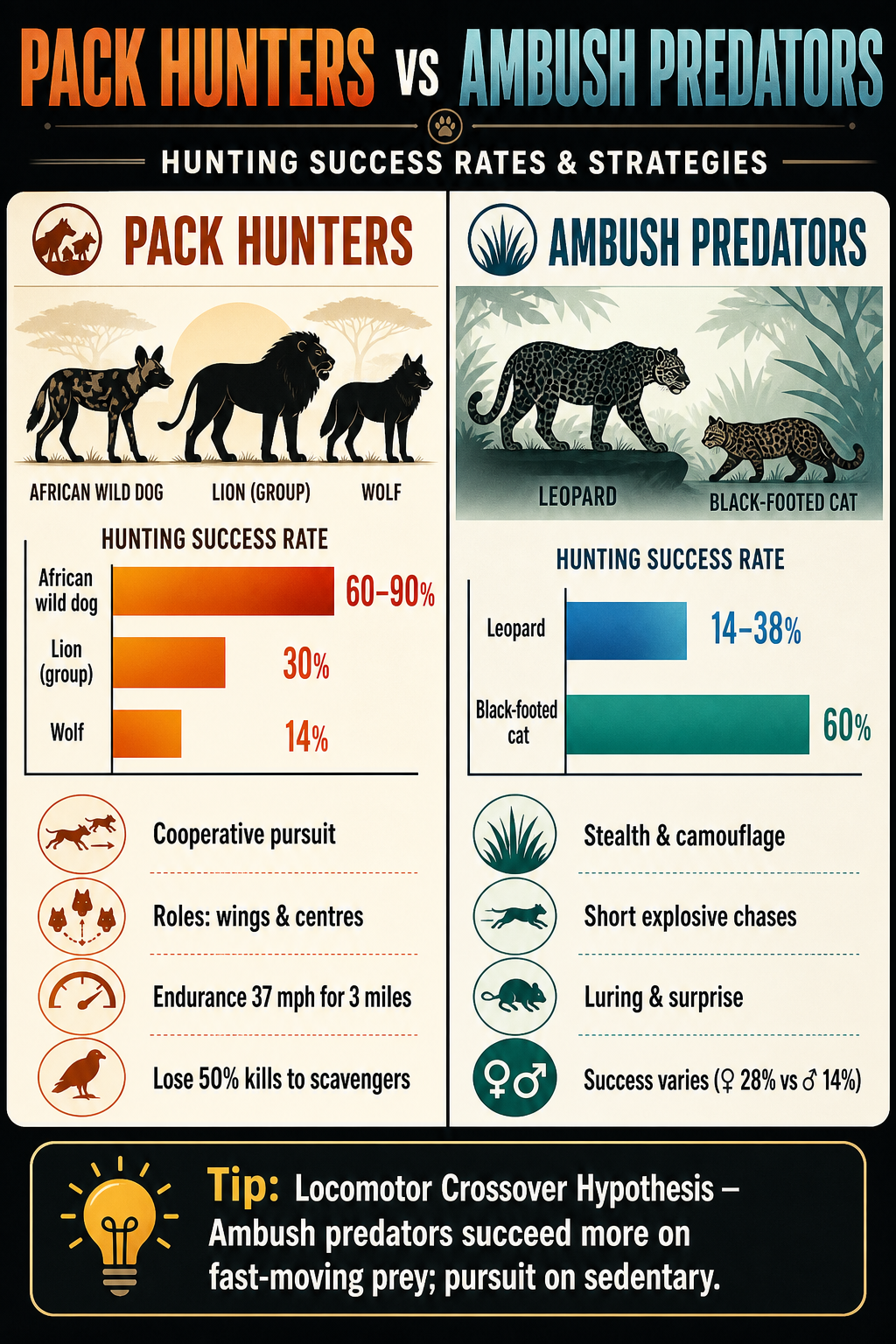
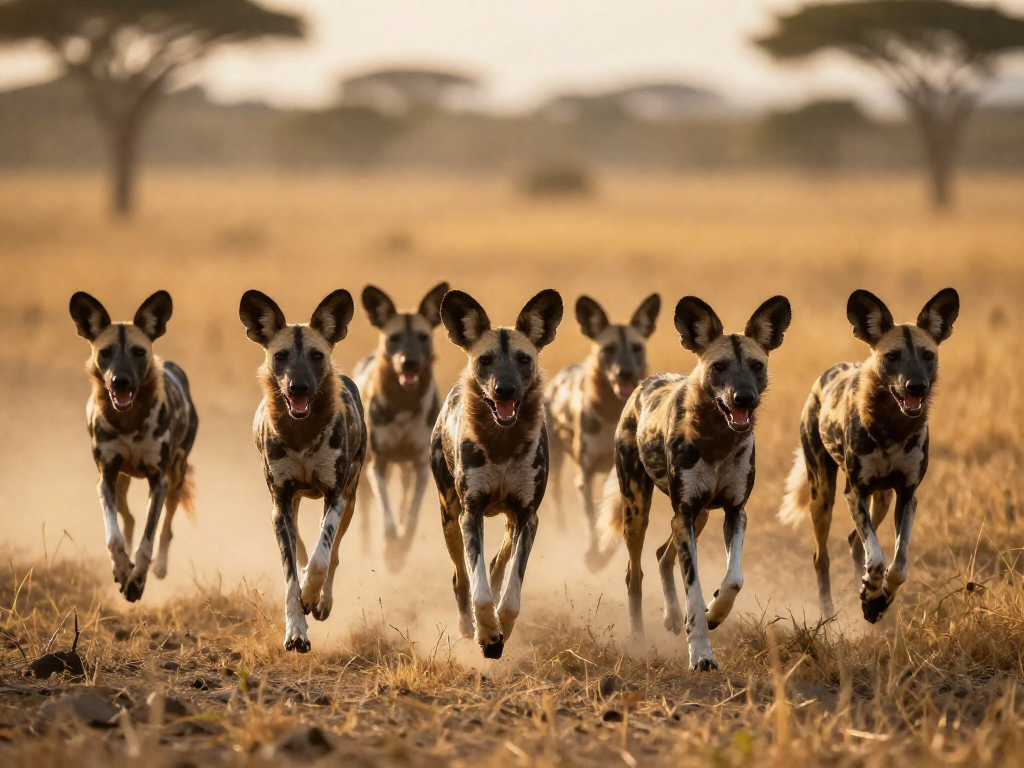
African wild dogs are the gold standard. Their hunting success ranges from 60% to an astonishing 90%, making them the most effective mammalian predators on the planet. They combine raw speed—bursts up to 44 mph—with jaw-dropping endurance, maintaining a steady 37 mph for three miles or more (Denver Zoo). They hunt using multiple short, high-speed chases, and although many fail, the math works out beautifully. A detailed energy balance model published in Nature Communications found that the collective energy return from a kill far outweighs the cost of all those fruitless pursuits—wild dogs are energetically robust, not wasteful.
Lions take a different approach. Alone, a lioness succeeds only about 17–19% of the time. Working as a pride, that figure jumps to around 30% overall, but they really shine against dangerous large prey. In Queen Elizabeth National Park, lions achieved a 54% success rate against African buffaloes—a feat impossible without coordinated roles. Specific individuals act as “wings” to flank the prey, while “centres” chase from behind, funneling the target into a trap.
Wolves, the pack hunters of the north, average about 14% success, but that number hides enormous variation. Chasing moose on Isle Royale, wolves succeed a mere 6% of the time; switching to white-tailed deer in Minnesota, their rate triples to around 20% (Discover Wildlife). Their strategy relies on simple but effective rules: fan out, approach, surround, and test for weakness.
Of course, teamwork has a cost. African wild dogs may lose nearly half of their kills to larger carnivores like hyenas and lions that muscle in. And pack hunting is evolutionarily stable only when solitary hunting is much less efficient—otherwise freeloaders would overrun the group. Yet for those that pull it off, the rewards are immense: regularly subduing prey up to five times their own body weight. That’s a return on cooperation no solo hunter can match.
Master of Stealth: The Ambush Predator's Edge
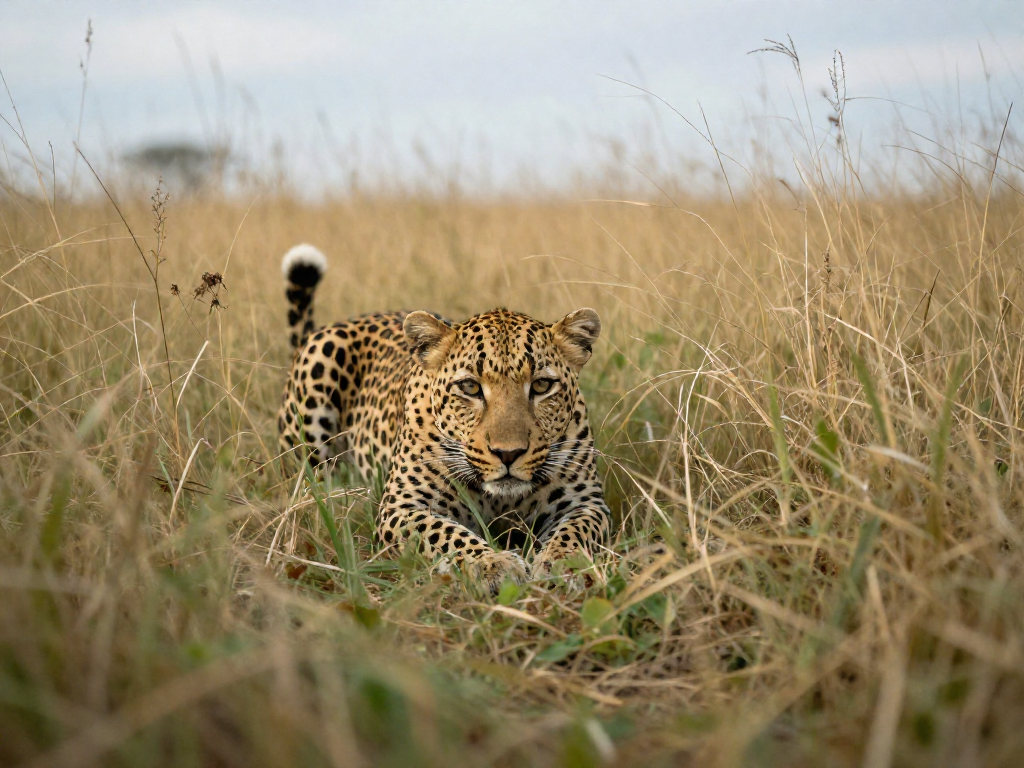
Ambush predators don't chase down their prey—they disappear and wait. A leopard melting into dappled shadows, a puma coiled behind a rock, a tiny cat motionless in the grass: these hunters stake everything on the element of surprise. The payoff can be staggering, but the success rates are far from uniform. A female leopard with cubs manages a kill about 28% of her attempts, while a lone male often scrapes by at just 14%. That pressure to provide for a family sharpens her focus—and her stealth.
The black-footed cat, one of Africa's smallest felines, takes ambush hunting to an extreme. In a single night this cat stalks constantly, launching a hunt attempt roughly every 30 minutes and succeeding 60% of the time—racking up 10 to 14 kills before dawn (Discover Wildlife). Those numbers dwarf most larger carnivores, proving that sheer size isn't the secret weapon; it's the relentless patience and precision of a surprise attack.
But ambush comes with a steep energetic price tag. When a puma explodes from cover, its body runs at full throttle. Research comparing pumas to hounds in chase scenarios found that the cat's mass-specific energetic cost is 1.6 times higher, demanding exercise at or above 90% of its predicted maximum oxygen uptake (VO₂max). In other words, a puma invests so much in those first explosive seconds that every failed ambush carries a real metabolic penalty. That's why they need prey that moves—and moves fast.
The "locomotor crossover hypothesis" offers a neat explanation: ambush predators tend to be more successful against fast-moving prey, while pursuit hunters (like wolves) have the edge against more sedentary animals. A springbok bounding across the savanna is perfect for a leopard's lightning lunge, but a resting antelope is harder to surprise. Still, ambush predators aren't locked into one mode. When prey densities drop or hunger gnaws too hard, they can switch strategies—a starving ambusher may chase like a cursorial hunter to survive. This flexibility blurs the line between the two hunting worlds, reminding us that in nature, a predator's greatest weapon is adaptability.
Beyond the Binary: When Hunters Mix Strategies
Nature rarely draws sharp lines. While pack hunting and ambush predation are useful categories, some predators blur the boundaries—and in doing so, reveal why one strategy never truly wins out.
Chimpanzees take cooperative hunting to a tactical extreme. A hunt isn't a chaotic scramble; it is a coordinated play with four distinct roles: drivers stir up prey, blockers cut off escape routes, chasers keep the pressure on, and ambushers lie in wait to deliver the final grab. Young chimps don't master this until about eight years old, and adults refine it over a lifetime. Oddly, chimps pack-hunt with higher success than many pure carnivores—possibly because their omnivorous diet means they are not desperate every time they hunt, so they can afford to be choosy and coordinated.
The cheetah seems like the opposite: a solitary sprinter. But it is no ambush artist; it relies on pursuit, just a different kind. Where African wild dogs string together several short, mostly unsuccessful chases, cheetahs pack everything into one shorter, even faster rush. It's a high-stakes gamble that demands perfect conditions, but when it connects, the payoff is quick and decisive.
African wild dogs themselves practice a fascinating hybrid. Described as the ultimate cooperative persistence predator, they hunt by sight and scent over many kilometers at a moderate pace, using multiple short bursts. For a long time, this looked energetically wasteful—all those failed sprints. But modern energy-balance models show the math actually works: the energy return from a shared kill substantially outweighs the cost of repeated chases, making the dogs surprisingly robust.
Underneath these blendings lies a simple evolutionary rule. Cooperative hunting for a single large prey is a stable strategy only when a lone hunter would be far less efficient—and even then, groups must constantly guard against cheaters who eat without doing the risky work (Wikipedia). That tension between cooperation and self-interest is what keeps the lines blurry, and it's why no single hunting style dominates the animal kingdom.
So, Which Strategy Wins?
There is no single winner. Pack hunting slays enormous prey on open ground, but it demands social brains and risks cheaters—African wild dogs can hit success rates anywhere from 21% to 100% depending on conditions (Wikipedia), which shows just how heavily teamwork leans on context. Ambush predation is brutally efficient for small, swift quarry in dense cover, yet it fails when prey vanish or hunger forces a chase. Both strategies are spectacularly refined answers to different problems, and nature’s scoreboard counts only what survives.
Sources
- Hunting success - Wikipedia — en.wikipedia.org
- Pursuit predation - Wikipedia — en.wikipedia.org
- 10 deadliest apex predators in the wild: which ruthless mammals are the best – and most brutal – killing machines? | Discover Wildlife — discoverwildlife.com
- How do wild dogs hunt? - Tsavo Trust — tsavotrust.org
- African Wild Dog Lycaon pictus Group Hunting — denverzoo.org
- Co-Operative Hunting - Six Key Elements For Success - Londolozi Blog — blog.londolozi.com
- The African Wild Dog: Everything You Need to Know — africanbushcamps.com
- Energy cost and return for hunting in African wild dogs and cheetahs | Nature Communications — nature.com
- Energetics and evasion dynamics of large predators and prey: pumas vs. hounds - PMC — pmc.ncbi.nlm.nih.gov
- The Six Key Elements Of Pack Hunting — youtube.com
- Pack hunter - Wikipedia — en.wikipedia.org
See also
- African wild dog deep dive
- Lion pride dynamics
- Cheetah vs. leopard: speed or stealth?
- Wolf pack hierarchy and hunting
Related articles

When Your Dog Won't Stop Licking: A Troubleshooting Guide for Common Causes
Why does my dog keep licking everything, and how can I address it?
Jul 28, 2026 · 7 min read

Why Do Birds Sing at Dawn? The Science of the Dawn Chorus
Why do birds sing so loudly early in the morning?
Jul 28, 2026 · 6 min read
Monogamy vs. Polygamy in the Animal Kingdom: A Comparative Guide
How do monogamous and polygamous mating systems compare, and which animals use which?
Jul 20, 2026 · 9 min read