Why Is My Dog Eating Grass and Throwing Up? A Troubleshooting Guide for Pet Owners
Why do dogs eat grass and vomit?
On this page

You look out the window and see your dog happily munching on grass—again. Then a few minutes later, you’re cleaning up a pile of vomit. It’s unsettling, and like many pet owners, you probably wonder: is my dog sick? Is this an emergency? In this guide, we’ll unpack the science behind grass eating, separate myth from fact, and give you a practical troubleshooting plan so you’ll know exactly what’s normal, what’s not, and when to call the vet.
Is It Normal? The Surprising Truth About Dogs and Grass

Many dog owners panic when they see their pup munching on lawn clippings, especially when it leads to a messy puddle on the floor. But here's the reality: your dog eating grass is not a red alert — it's a remarkably common, ancient behavior that rarely signals a serious health issue.
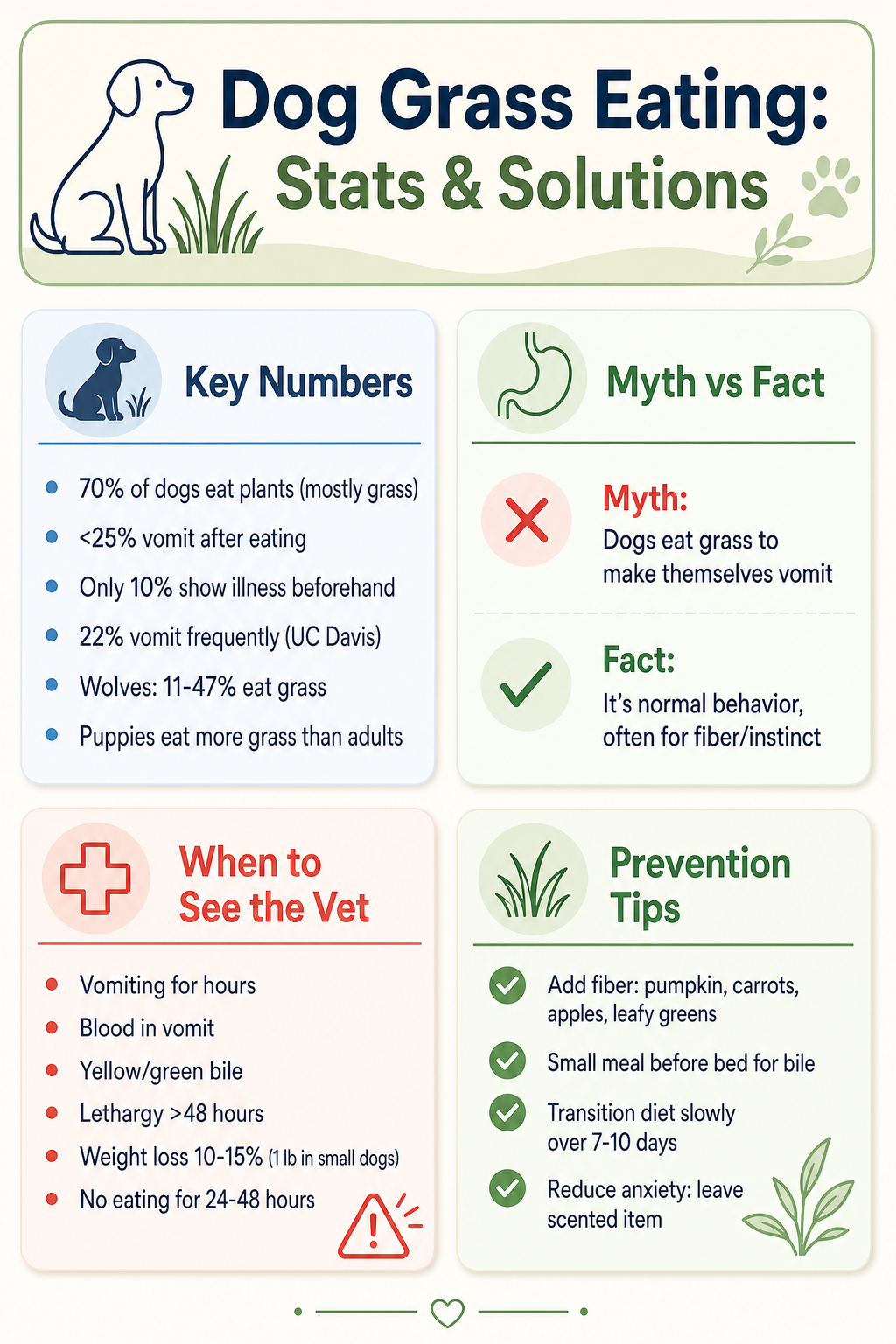
About 70% of dogs eat plants like grass on a daily or weekly basis, and a full 80% of healthy dogs with access to greenery will partake at some point. In a survey of 47 owners, 79% had seen their dogs eat grass — but of the dogs whose owners tracked the before-and-after, only a handful showed any sign of illness beforehand (4 out of 33) or threw up afterward (6 out of 33). A larger UC Davis study backs this up: only 9% of dogs appeared sick prior to grazing, and just 22% vomited later. Overall, studies show that less than 25% of dogs vomit after eating grass (VCA Animal Hospitals). Younger dogs are actually the most enthusiastic grass-eaters, yet they're the least likely to seem sick beforehand or get sick afterward.
It's not just a domestic quirk, either. Wild canids like wolves have plant material in their scat 11% to 47% of the time, suggesting the urge to nibble greenery has deep evolutionary roots. One massive survey of 1,571 dogs found no link between grass-eating and diet quality, fiber intake, or even whether a dog ate table scraps — effectively busting the myth that dogs graze to correct a nutritional deficiency. And when they do vomit that yellow foam (bile), it's often simply because an empty, irritated stomach needs relief. As Dr. Jerry Klein, chief veterinary officer of the AKC, puts it, "dogs may eat grass to help them release the bile and feel better."
Bottom line: an occasional lawn salad followed by a bit of vomit is usually nothing to worry about. Only when it becomes obsessive or is paired with other symptoms like diarrhea, lethargy, or loss of appetite should you call the vet.
Why Do Dogs Eat Grass in the First Place?
There’s no single reason, and that’s what makes this such a normal, if messy, part of dog life. About 70% of dogs graze on grass weekly, and for most, it’s just instinct. Wild canids like wolves eat entire prey animals, stomach contents and all, so scavenging a little vegetation is hardwired into your dog’s behavior.
The fiber theory gets plenty of attention, but it’s mostly a myth for the average dog. Yes, roughage helps digestion, but a large survey of 1,571 dogs found no link between how much fiber they ate and how often they grazed on grass (dvm360). Your pup isn’t likely self-medicating a nutritional gap.
For some dogs, the trigger is boredom or anxiety. Alone in the yard, grazing becomes a way to pass the time. Separation anxiety can intensify the habit; leaving a blanket or shirt with your scent can help when you’re away. Puppies, meanwhile, are just exploring the world: they eat grass more often than adult dogs, yet they’re less likely to seem sick beforehand or vomit afterward.
What about the classic bile-purging idea? An empty stomach can feel rotten, and a few dogs do eat grass to vomit up irritating bile. But a UC Davis study found only 22% frequently vomit after eating grass, and just 9% look ill before. So while it happens, it’s far from the main story.
When to Worry: Signs Your Dog Needs the Vet
Most grass-eating dogs are perfectly fine. A small UC Davis study found that only about 22% of dogs vomit frequently after chowing down, and a mere 9% show any signs of illness beforehand (as noted by Alpine Veterinary Hospital). That means the vast majority are just nibbling out of curiosity or instinct, not distress. So if your dog occasionally snarfs a few blades and then goes about their day, you’re observing a normal canine quirk. But when do you need to shift from observer to concerned owner?
Start tracking the frequency. A single grass-induced upchuck is rarely alarming. But if vomiting happens over hours—three or more episodes stretched across, say, eight hours—it’s time to call the vet. In contrast, a dog who vomits three times in ten minutes and then bounces back to normal is far less concerning. Pay attention to what comes up, too. Yellow-green, frothy bile often means your pup is throwing up on an empty stomach, which can irritate the stomach lining and might trigger more grass-eating. While an occasional bile vomit isn’t necessarily an emergency, repeated episodes paired with lethargy or a hunched posture warrant a professional check. Red or black blood in the vomit, however, is a bright red flag: that’s a “drop everything and go” symptom.
Watch for other systemic signs. Diarrhea, lack of appetite, unusual laziness, or noticeable weight loss (even a pound in a small dog can be 10% of their body weight) all suggest something deeper is going on. Persistent stomach upset could point to conditions like gastric reflux, inflammatory bowel disease, or pancreatitis—treatable problems that need a vet’s diagnosis, not home guessing.
In short: the grass itself isn’t the problem; it’s the company it keeps. If vomiting is isolated, brief, and your dog acts normal, relax. But if you see patterns of frequent sickness, worrisome vomit colors, or a dog who seems genuinely unwell, trust your gut and get them seen.
Practical Steps to Reduce Grass Eating and Vomiting
Start with what goes into the bowl. Incorporating fiber-rich foods like pumpkin, carrots, apples, and leafy greens can reduce the urge to graze on grass (Tranquility Vet). When adding new foods, transition gradually over 7–10 days to avoid stomach upset.
If your dog tends to vomit yellow bile, timing is everything. A small bedtime or early-morning snack can prevent empty-stomach bile vomiting—that irritated, empty feeling often drives them to gulp grass. Beyond diet, boredom or anxiety may be at play. Boost daily exercise, introduce puzzle toys, and carve out dedicated playtime. For dogs that only graze when you’re away, try leaving a worn t-shirt with your scent; it’s a surprisingly effective comfort.
Never scold your dog for eating grass. It’s a normal canine quirk, and punishment increases anxiety without fixing the root cause. With a few simple tweaks, you can ease the behavior and keep those grassy snacks from coming back up.
Sources
- Why Dogs Eat Grass | VCA Animal Hospitals — vcahospitals.com
- Why Do Dogs And Cats Eat Grass? | Big Country Veterinary Clinic — bigcountryvet.net
- Why do dogs and cats eat grass? | dvm360 — dvm360.com
- Why Does My Dog Eat Grass? | Alpine Veterinary Hospital — hoodriveralpinevet.com
- Understanding the Vital Role of Fiber in Dogs' Diet and Why They Eat Grass — tranquilityvet.com
- How to Stop Your Dog Eating Grass: 6 Vet-Approved Methods — poolervet.com
- Dogs Eating Grass: Is my dog poisoned? | Wake Forest Vets — northwakeanimalhospital.com
- 10 Warning Signs You Should Take Your Dog to the Vet — healthline.com
- Vomiting in Pets: Here’s When to Call the Vet — academyanimal.com
- (PDF) Why do dogs and cats eat grass?
FAQ
Is it normal for my dog to eat grass and vomit occasionally?
Yes, eating grass is totally normal—about 70% of dogs do it regularly. Vomiting afterward isn’t the usual outcome, though; studies show that less than 25% of grass-eating dogs throw up. So occasional vomiting isn’t automatically a worry, but if it happens often, a vet check is wise.
Why does my dog eat grass and then throw up yellow foam?
That yellow foam is bile, a sign your dog’s stomach is empty and irritated. According to AKC Chief Veterinary Officer Dr. Jerry Klein, dogs may eat grass specifically to trigger vomiting and expel the bile, which brings relief. A small meal before bed or first thing in the morning can often prevent this by keeping the stomach from getting too empty.
Can I stop my dog from eating grass?
Since grass eating is natural and usually harmless, you don’t always need to stop it. If you’d like to reduce it, try adding fiber-rich foods like pumpkin, carrots, or leafy greens to their bowl—though one large study didn’t find a link between low fiber and more grazing. For anxious nibblers, leaving a worn t‑shirt with your scent can help. When changing the diet, transition slowly over 7 to 10 days to avoid stomach upset. If the behavior becomes obsessive, talk to your vet.
When should I take my dog to the vet for vomiting after eating grass?
See a vet right away if vomiting lasts for hours, contains blood, or comes with diarrhea, lethargy, or loss of appetite. Also seek prompt care if your dog hasn’t eaten for 24 hours, seems suddenly very tired, or has lost 10% or more of their body weight. One or two spits of grass and foam aren’t an emergency, but these warning signs point to a more serious problem.
See also
- Why does my dog eat poop?
- Understanding dog vomiting causes
- Best high-fiber foods for dogs
- Signs of separation anxiety in dogs
Related articles

When Your Dog Won't Stop Licking: A Troubleshooting Guide for Common Causes
Why does my dog keep licking everything, and how can I address it?
Jul 28, 2026 · 7 min read
Why Do Birds Sing at Dawn? The Science of the Dawn Chorus
Why do birds sing so loudly early in the morning?
Jul 28, 2026 · 6 min read

Monogamy vs. Polygamy in the Animal Kingdom: A Comparative Guide
How do monogamous and polygamous mating systems compare, and which animals use which?
Jul 20, 2026 · 9 min read