How Do Spiders Make Silk? The Chemistry Behind Nature's Strongest Fiber
How do spiders produce silk, and what makes it so strong?
On this page
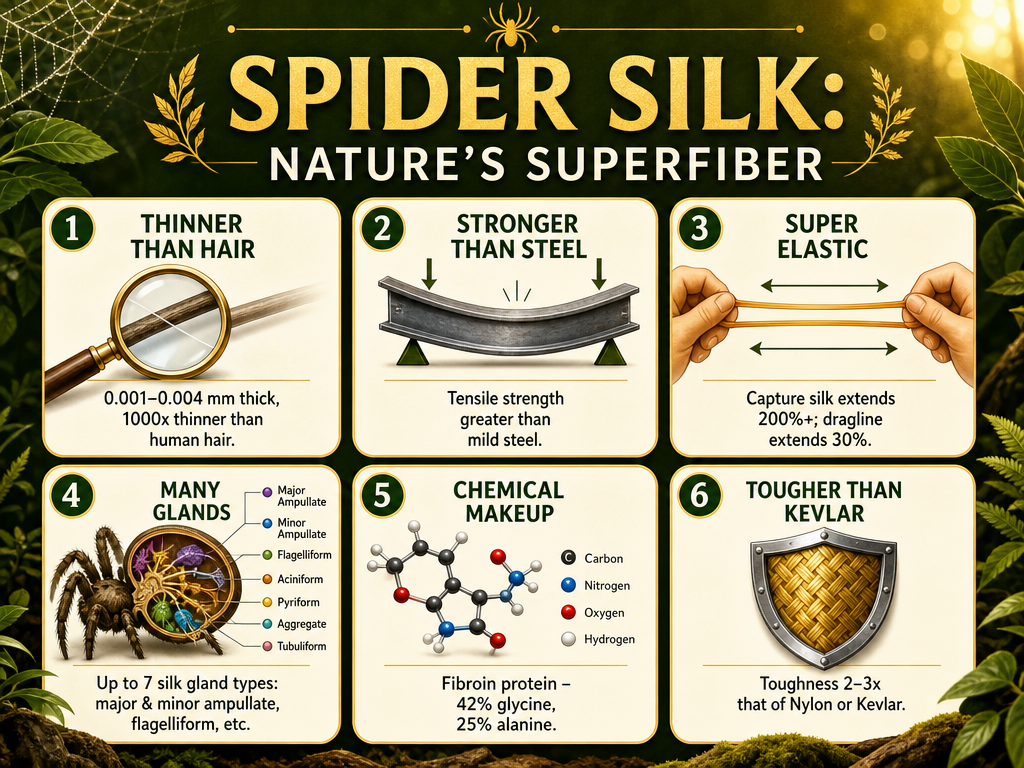
It’s lighter than cotton yet stronger than steel, stretchier than nylon and tougher than Kevlar—spider silk is a material that engineers dream of replicating. But how does a humble spider turn liquid protein into a thread that can stop a bee mid-flight? The answer lies in a microscopic factory of spinnerets, a precise cocktail of amino acids, and a molecular architecture that nature has been perfecting for millions of years. In this deep dive, we’ll unravel the chemistry and engineering behind spider silk—from the seven kinds of glands to the beta-sheet crystals that give it superhero strength.
The Superpowers of Spider Silk: Stronger Than Steel and Thinner Than Hair
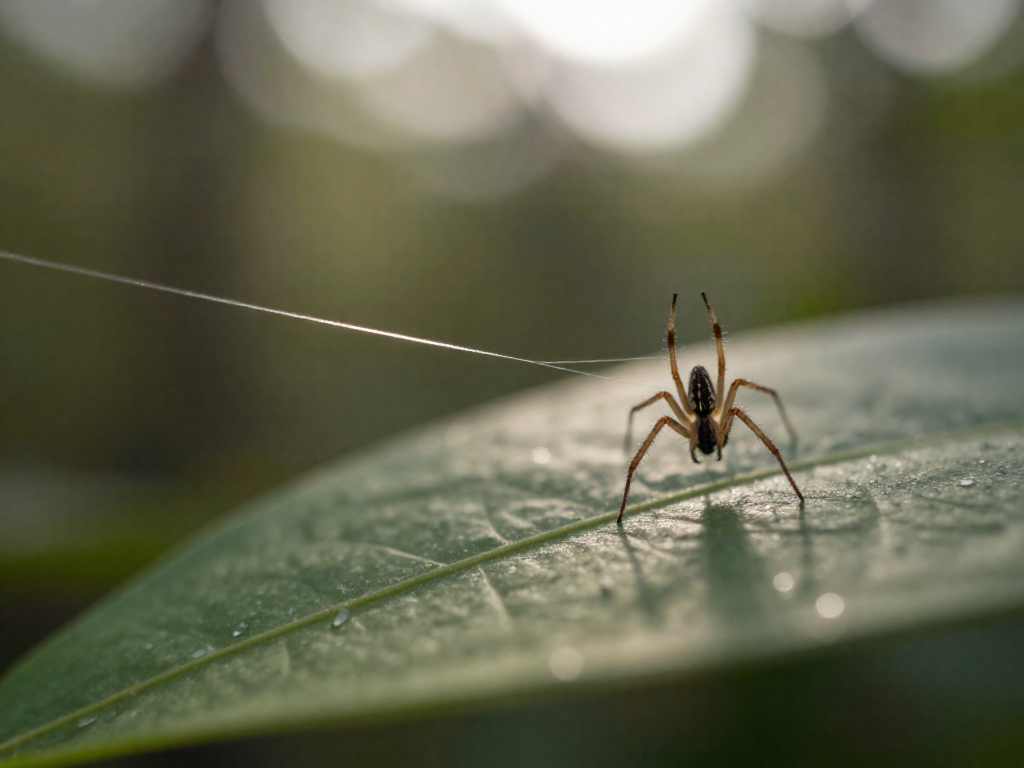
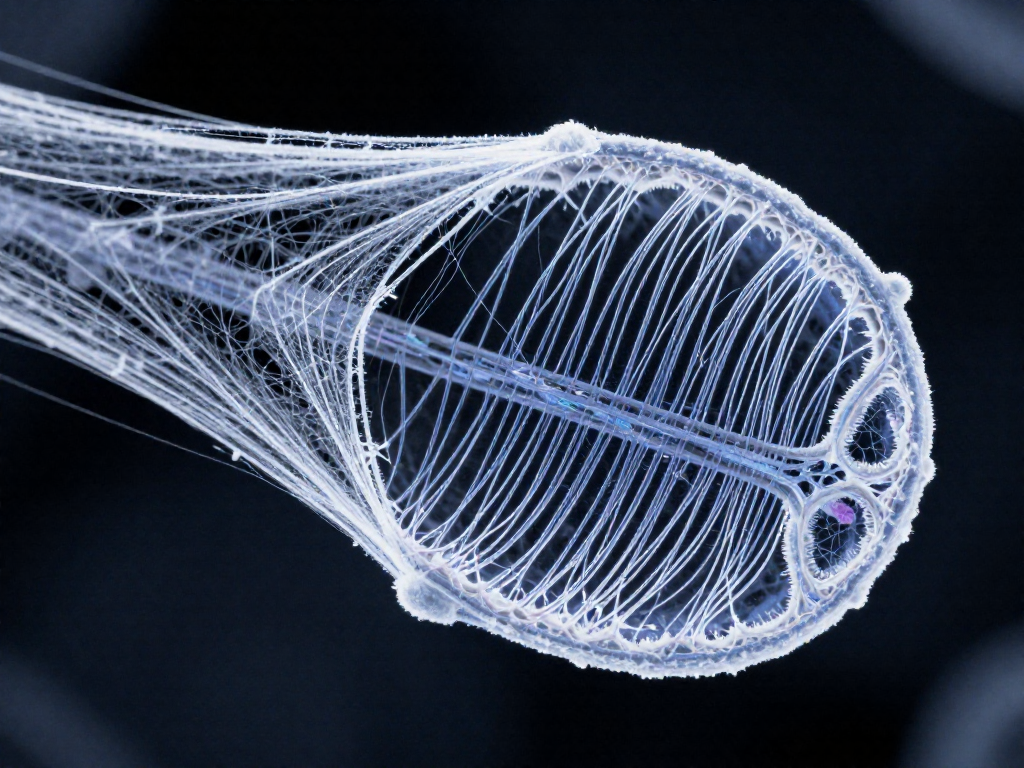
Spiders create silk by pushing a liquid protein solution through tiny spigots on their spinnerets. As they pull the gooey strand, it stretches and solidifies into a thread that’s stronger than steel by weight and finer than human hair. A single silk line measures just 0.001 to 0.004 millimeters thick—up to 100 times thinner than typical hair. But zoom in, and that thread reveals itself as a cable of thousands of “nanostrands,” each only 20 millionths of a millimeter in diameter, bundled together like the wires in a suspension bridge.
This hidden architecture is what gives spider silk its real superpower: toughness, or the ability to absorb energy without breaking. Research from the National Institutes of Health shows that silk’s toughness is two to three times that of synthetic fibers like Nylon or Kevlar. All that strength begins as a watery protein soup inside the spider’s silk glands, where the molecular building blocks—called spidroins—are poised to snap into a semi-crystalline structure the moment they’re pulled. It’s a liquid-to-solid transformation that’s as elegant as it is strong, and it’s what we’ll unpack next.
Inside the Spider’s Silk Factory: Spinnerets, Glands, and Liquid Protein
The magic of silk begins at the spider’s rear end. Look closely and you’ll spot two or three pairs of movable, finger-like organs called spinnerets. These aren’t just simple spouts; they’re covered in dozens to hundreds of microscopic spigots—each one the opening of a dedicated silk duct. By rotating and flexing its spinnerets, a spider can control exactly which spigot releases silk at any moment, almost like a master weaver working multiple threads at once.
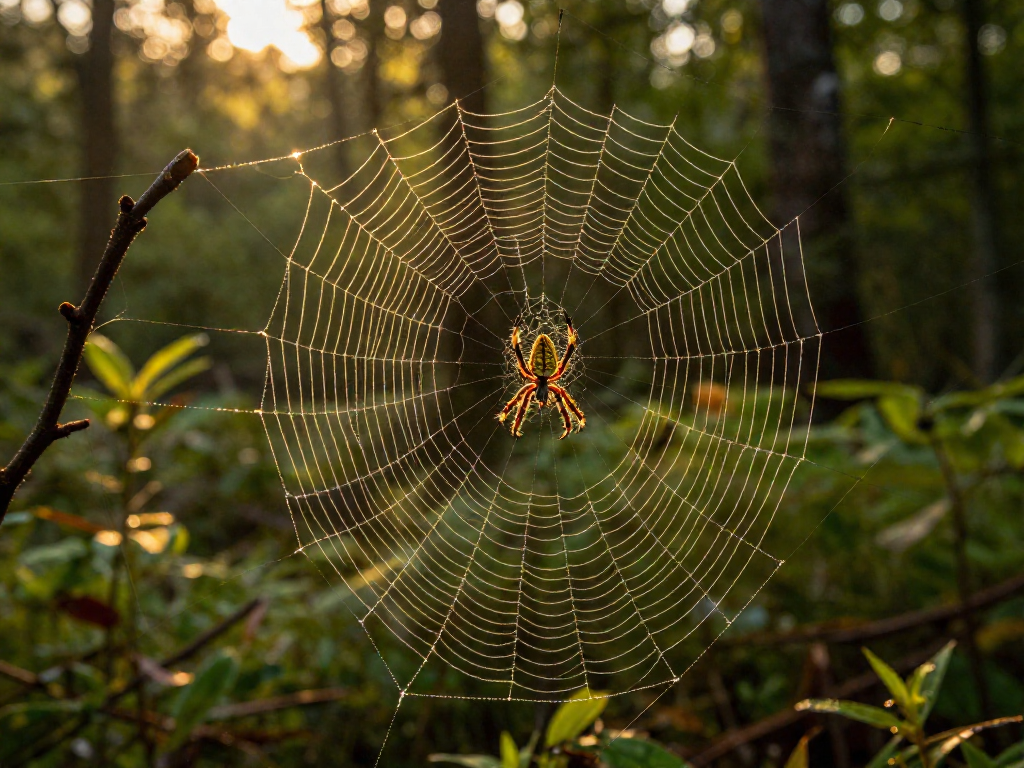
An orb-weaving spider, like the golden silk spider, takes this complexity to an extreme. According to research in Frontiers, such spiders can possess up to seven completely different types of silk glands, each producing a unique silk for a specific job. The major ampullate gland manufactures the dragline—the spider’s safety line and the web’s structural framework—a fiber with tensile strength greater than mild steel. The flagelliform gland spins the capture spiral, a thread so elastic it can stretch two to four times its length without breaking. Just beside the major ampullate spigots sits the piriform gland, secreting thousands of tiny threads that fuse into a sticky attachment disc, anchoring the dragline securely to a leaf or wall. Other glands include the aciniform gland (for wrapping prey), the tubuliform gland (for egg sacs), the aggregate gland (which produces the glue droplets on capture silk), and the minor ampullate gland (for temporary scaffolding during web construction).
Before any of this happens, the silk proteins are stored inside the glands as a water-soluble liquid called “dope.” This dope is a highly concentrated solution of fibroin proteins—specifically, two large molecules known as spidroin 1 and spidroin 2, each weighing an astounding 200,000 to 300,000 Daltons and packed with the amino acids glycine (42%) and alanine (25%). Because the proteins are dissolved and folded into loose helical and random-coil shapes, the dope remains liquid, even at concentrations as high as 30–50%. If it hardened inside the gland, the spider would be paralyzed by its own silk, so evolution has locked it in a stable, liquid crystalline phase until the moment of spinning.
The transformation from gloppy liquid to robust thread happens in the spinning duct, a narrow channel that runs from the gland to the spigot. As the dope flows forward, the environment changes dramatically: the pH drops, ions are exchanged, and water is extracted, all of which cause the protein chains to unfold and align like logs in a river. The real trick, though, is the physical pull. As the spider tugs the emerging fiber with its legs or gravity, the shearing force forces the proteins to lock together into tiny β-sheet crystals, the molecular equivalent of armor plates. These crystals are embedded in a stretchy matrix of unordered protein chains, forming a semi-crystalline material that combines stiffness and toughness in a way artificial materials can only envy.
Finally, none of this would work without precise control. Muscular valves along each silk duct act as gates; a spider can open or close them instantly, adjusting the flow or even halting a line mid-stream. This allows it to release just enough silk to abseil, weave, or wrap—and stop the moment the job is done.
The Chemistry of Spider Silk: Amino Acids, Proteins, and Beta-Sheets
Spider silk’s extraordinary toughness starts with two massive proteins called major ampullate spidroins, MaSp1 and MaSp2. Each has a molecular weight between 250 and 350 kilodaltons—some of the largest proteins in nature—and they work together to form the dragline silk that spiders use as their safety line.
At the amino acid level, the recipe is breathtakingly simple. Fibroin, as the blend is known, is dominated by just two amino acids: glycine, making up about 42% of the chain, and alanine, at roughly 25% (University of Bristol). Glycine is the smallest possible amino acid, little more than a single hydrogen atom as its side chain, which allows protein segments to fold into tight, flexible arrangements. Alanine, with its slightly bulkier methyl group, prefers to line up in orderly stretches.
These orderly stretches are the secret to silk’s strength. Within the spidroin proteins, short blocks rich in alanine stack up to form tiny crystals called beta-sheets. These crystals act like rigid planks, embedding themselves in a surrounding matrix of glycine-rich, disordered chains that loop and twist into helices and turns. The result is a semi-crystalline composite—rigid nano-crystals glued together by a stretchy, rubber-like web. Think of it as nature’s version of reinforced concrete: the beta-sheet crystals are the steel rebar, while the amorphous matrix is the flexible concrete that holds everything together.
What’s fascinating is that the proteins don’t just self-assemble randomly. The ends of each spidroin molecule—known as the N-terminal and C-terminal domains—are highly conserved across spider species, even though the repetitive central parts vary. These terminal regions, about 130 base pairs long, act like smart switches: they keep the protein soluble and prevent premature solidification inside the gland, then trigger rapid fiber formation as the silk is pulled through the duct. Without these conserved caps, the proteins would clump uselessly, never forming the orderly fibers that make silk so strong.
It’s this precise arrangement—hard crystalline regions alternating with soft, mobile linkers—that gives dragline silk a toughness unmatched by most synthetic materials. The tiny beta-sheet crystals resist pulling apart, while the amorphous network stretches and dissipates energy. And because the building blocks are so simple, spiders can spin silk from a liquid protein soup using just slight changes in pH and ion concentration, turning water-soluble proteins into one of the strongest biopolymers known.
Why Spider Silk Is So Tough: Elasticity, Strength, and Energy Absorption
When engineers talk about a material’s toughness, they don’t just mean it’s hard to break. Toughness is the total energy a material can swallow before snapping—a blend of raw strength and stretchiness. Spider silk masters this balancing act better than almost anything humans have made.
Take the spider’s safety line, dragline silk. It’s stronger than mild steel and outclasses nearly every synthetic fiber (Kevlar is the rare exception). Yet dragline doesn’t stretch much—only about 30% before it gives way. That makes it superb for holding steady weight, but it’s the flag silk in the web’s capture spiral that truly showcases toughness. Flag silk can elongate up to 300% of its resting length, stretching like a bungee cord to catch flying prey.
A real-world example brings this into focus: a honeybee slamming into an orb web hits with roughly 0.55 mJ of kinetic energy (that’s a 120 mg bee flying at 3.1 m/s). A single strand of flag silk, thinner than a human hair at just 1–5 micrometers wide, soaks up that impact perfectly without snapping—a feat that synthetic microfibers struggle to match (PMC).
On a weight-for-weight basis, spider silk’s toughness is routinely two to three times that of Nylon or even Kevlar. The reason isn’t one magic ingredient but a clever nanoscale architecture. Silk is a semi-crystalline material: rigid, orderly β-sheet crystals are embedded in a chaotic, rubbery tangle of protein helices and loops. When force is applied, the crystals lock together to provide strength, while the amorphous regions unravel and absorb energy. Countless hydrogen bonds within those regions act like sacrificial links—they break and reform repeatedly, dissipating energy long before the main backbone of the fiber is ever at risk. This hierarchical design is why a web can stop a hurtling insect without tearing, and why engineers still chase spider silk’s blueprint for next-generation materials.
A Silk for Every Task: The Seven Types and Their Amazing Uses
Think of a spider’s toolkit: up to seven different silks, each spun from its own dedicated gland and precisely tuned for a single task. An orb-weaver, for example, starts with a major ampullate dragline—the super-strong, non-stretchy safety line and web scaffolding. The minor ampullate silk is often used as a temporary spiral, a disposable guide the spider replaces with the star performer: flagelliform silk. This capture-spiral silk can stretch over 200% of its original length and absorbs the shock of a flying insect perfectly; a single strand just a few microns thick can dissipate the energy of a honeybee crashing at 3.1 meters per second.
Dotting that stretchy thread are droplets of aggregate silk—the sticky glue that makes the web’s catching spiral. When prey lands, the spider races in and wraps it with aciniform silk, a dense, fluffy silk that immobilizes the meal. Then there’s the hidden workhorse: piriform silk. The spider lays down a disc of this ultra-tough adhesive, fusing its dragline to a surface like a spot-weld—each step the spider takes is anchored by a fresh attachment disc. And for the next generation, mama spider spins pure tubuliform silk to encase her eggs in a protective sac.
Some spiders put on an extra show. The golden silk orb-weaver’s dragline has a natural golden sheen, a glint so lovely that in 2012, the Victoria and Albert Museum displayed a shimmering cape woven from the silk of over a million of these spiders (Natural History Museum). That one spider can produce seven different materials, all from liquid protein, is a reminder that nature’s factory is far more advanced than anything we’ve built.
Spider Silk Myths Debunked: Separating Fact from Fiction
Spider silk often gets boiled down to “stronger than steel,” but that’s only part of the story—and some popular ideas are miles off the mark. Yes, dragline silk has a tensile strength greater than mild steel, but only when compared weight for weight. What truly sets it apart is toughness: the ability to absorb energy without breaking. In fact, spider silk is tougher than Kevlar or nylon by two to three times on a weight-for-weight basis (PMC). That’s why a honeybee smashing into a web at full speed doesn’t tear it apart.
Another misconception? That all spider silk is the same. Most orb-weavers can produce up to seven distinct silks from different glands, each tuned for a specific job—from the super-stretchy capture spiral (it can extend more than 200%) to the stiff dragline that only stretches about 30%.
And spiders don’t “shoot” silk out like a superhero. The silk is pulled from the spinnerets by the spider’s movement or by muscular valves controlling flow; it’s a precise, mechanical process, not a projectile. Finally, silk is far from simple goo. Inside the duct, the protein solution transforms into a liquid crystalline state with tightly packed molecular structures—beta-sheet crystals embedded in an elastic matrix—that give silk its remarkable properties.
The Legacy of Spider Silk: From Gold Capes to Bio-Inspired Materials
Human fascination with spider silk took breathtaking form in a shimmering golden cape. It was woven from golden silk orb-weaver silk and exhibited at the Victoria and Albert Museum in 2012, notes the Natural History Museum. Today scientists study silk to inspire tendon repairs and bulletproof materials, but farming cannibalistic spiders is a dead end. Instead, they splice silk genes into yeast or goats to mass-produce the proteins. Nature’s mastery still leads the way.
Sources
- Frontiers | Evolution of Spiders and Silk Spinning: Mini Review of the Morphology, Evolution, and Development of Spiders’ Spinnerets — frontiersin.org
- Silk: the spider's success story - The Australian Museum — australian.museum
- What are spider webs made of? And how? | Natural History Museum — nhm.ac.uk
- Spider Silk — chm.bris.ac.uk
- The elaborate structure of spider silk - PMC - NIH — pmc.ncbi.nlm.nih.gov
- Protein Composition Correlates with Mechanical Properties of Spider Dragline Silk — etd.ohiolink.edu
- Myth buster: Spider silk is as strong as steel? It's not quite so simple | Forest Preserve District of Will County — reconnectwithnature.org
- Protein secondary structure in spider silk nanofibrils — nature.com
See also
- How Do Spiders Weave Their Webs?
- The Strongest Animal Bite Force (Compared to Spider Silk Strength)
- Animal Architects: Nature's Best Builders
- Why Geckos Can Walk on Ceilings (Adhesion Science)
Related articles
How Electric Eels Generate Shocks: A Deep Dive into Nature’s Living Batteries
How do electric eels produce electricity?
Jul 28, 2026 · 10 min read
Why Don't Woodpeckers Get Headaches? The Built-In Shock Absorbers
How do woodpeckers avoid brain injury despite repeated hammering?
Jul 20, 2026 · 6 min read
How Do Whales Hold Their Breath for So Long? The Superpower of Deep Diving
How do whales hold their breath for extended periods?
Jul 20, 2026 · 6 min read