My Unpopular Opinion: Stop Calling Them 'Killer' Whales
Why should we stop using the term 'killer whale'?
On this page
My Unpopular Opinion: It’s Time to Retire 'Killer Whale'
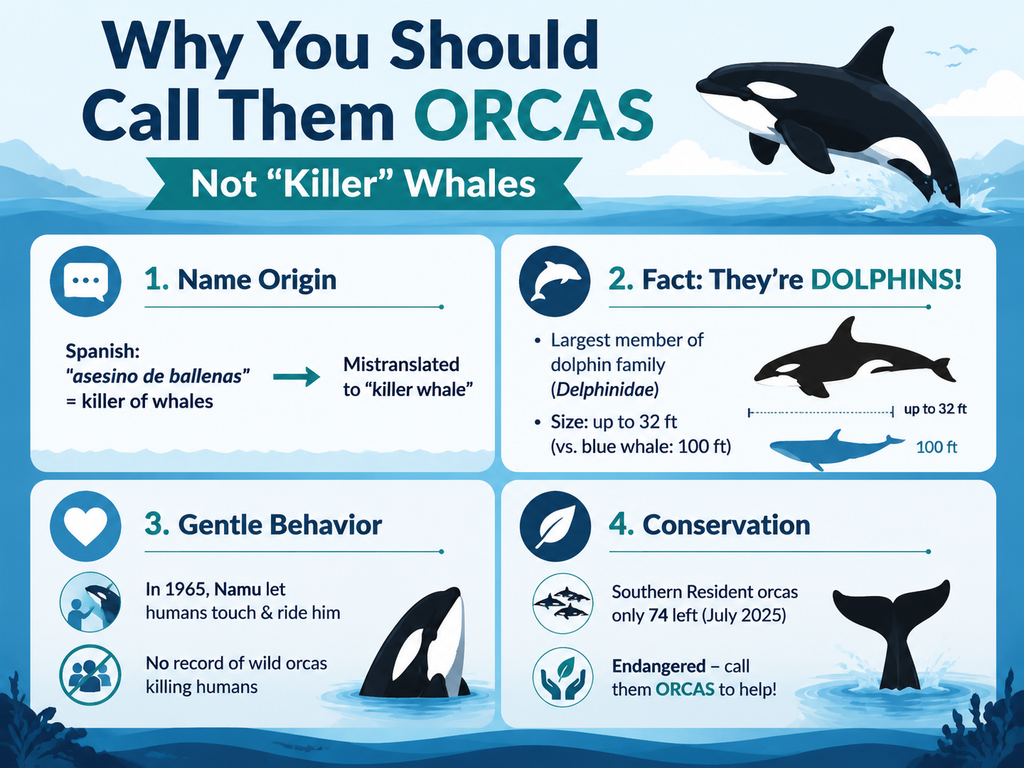
My unpopular opinion: stop calling them killer whales. The name is a mistranslation of the Spanish asesino de ballenas — “killer of whales” — because sailors saw orcas hunting other whales, not people (Aeon). On top of that, orcas aren’t even whales; they’re the largest member of the dolphin family. This misnomer matters: fear-based labels can sour public interest and undermine conservation for a species that desperately needs our help.
A Whale of a Misunderstanding: The Name's Deceptive Origin
The name 'killer whale' is a clumsy echo of Spanish whalers' term asesino de ballenas, which literally means whale killer. They were describing an animal that hunts whales, not one that attacks people. As Aeon notes, the phrase morphed into 'killer whale' over time, saddling these animals with a reputation they don't deserve.
And then there's the 'whale' part. Taxonomically, orcas aren't whales at all — they're the largest members of the dolphin family, Delphinidae. (All dolphins are technically toothed whales, but 'whale' usually brings to mind the giant baleen species.) A full-grown orca might reach 32 feet, but a blue whale can stretch over 100 feet, making the label feel even more out of place. Orcas share more with bottlenose dolphins than with humpbacks: they have conical teeth, use echolocation, and live in tight-knit matrilineal pods.
Today, most scientists still officially call them killer whales, but the general public increasingly prefers 'orca' — a name that carries none of the inaccurate baggage. Given that both 'killer' and 'whale' are off the mark, it's high time the rest of us do the same.
How a Scary Name Hurts Conservation
The name "killer whale" doesn't just sound menacing—it actively harms conservation. When people picture a ruthless predator, fear or indifference can replace the curiosity and compassion that threatened animals desperately need. A scary name breeds apathy, and research shows that directly undermines conservation efforts.
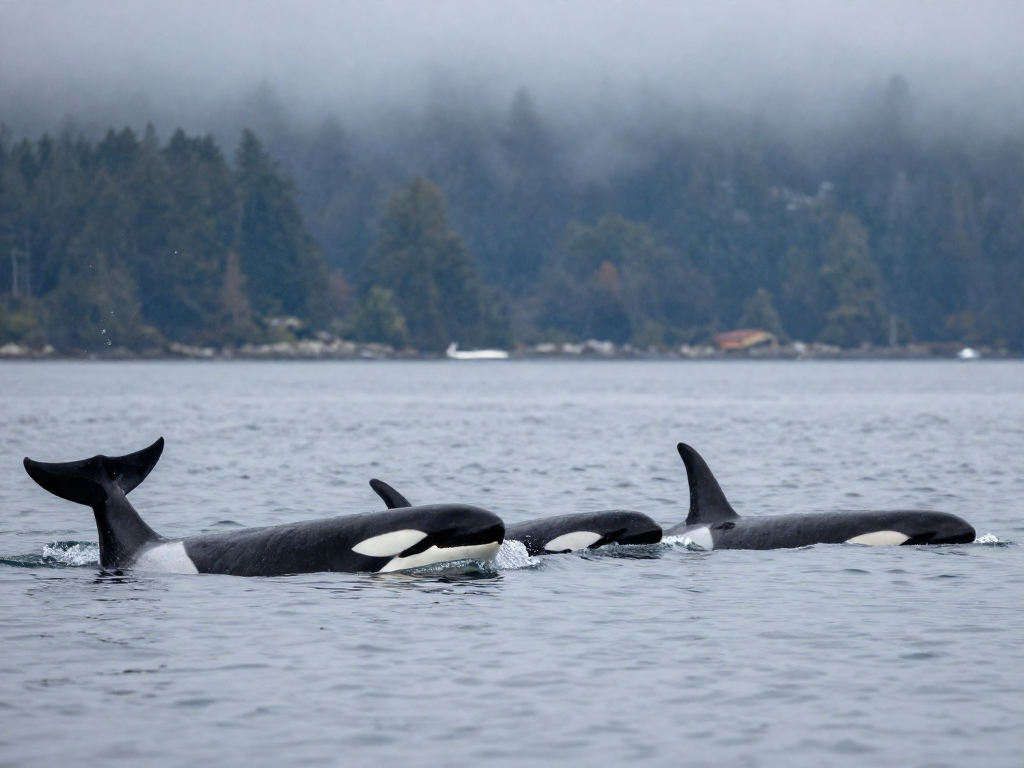
Nowhere is that more brutal than with the Southern Resident orcas of the Pacific Northwest. These are not generic killers; they're a culture, a family of fish-eating whales that have lived in tight-knit pods for millennia. Yet their population, listed as endangered in 2005, has collapsed. The July 2025 census from NOAA Fisheries counted only 74 individuals—a heartbreaking low (NOAA Fisheries). Every calf matters, every lost adult is a blow. The word "killer" does nothing to rally the public around sewage runoff, shipping noise, and salmon decline—the real threats slowly starving this community.
Language shapes action. In the 1970s, activist Paul Spong campaigned to replace "killer whale" with "orca," believing a gentler name would spark spiritual connection. He was onto something: the orca label invites wonder, not nightmares. Imagine if every news headline and aquarium sign swapped "killer whale" for "orca." You'd see a family-oriented, profoundly intelligent dolphin—the largest member of the dolphin family, topping out around 32 feet, not a hundred-foot monster. That mental shift matters. It turns apathy into advocacy, and for 74 whales hanging on by a thread, every ounce of public support counts.
From Monsters to Icons: How Orcas Won Our Hearts
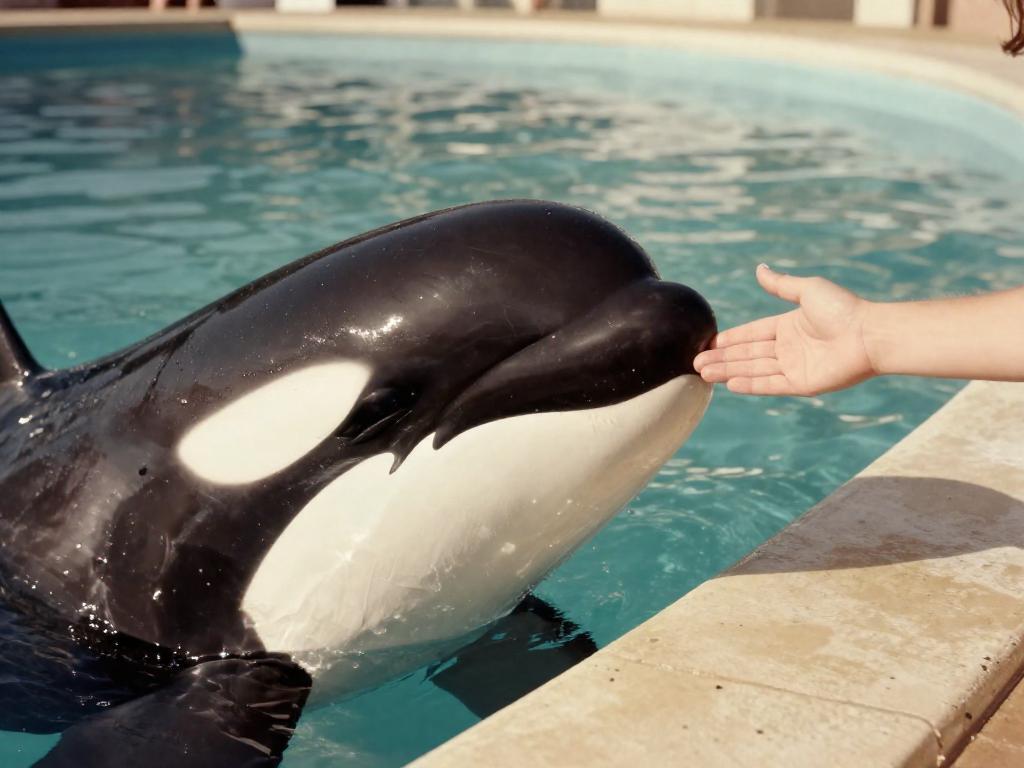
In 1965, a young orca named Namu, captured off British Columbia, stunned the world by letting his caretaker touch, brush, and even ride him. No monster, just a gentle giant. By the 1970s, scientist-turned-activist Paul Spong was urging people to replace “killer whale” with “orca,” believing the name change would foster spiritual connection. The tide had turned. Nothing proved it better than the 1977 film “Orca: The Killer Whale,” which flopped because audiences rejected its depiction of a vengeful orca attacking humans. The movie was out of step with the reality people were finally seeing (Aeon).
It's Time to Drop the 'Killer' — For Good
While researchers often default to 'killer whale,' the public is increasingly choosing 'orca'—and you can help cement that shift. In the 1970s, activist Paul Spong campaigned to replace the label, believing it would spark a deeper, spiritual connection with these animals (Aeon). Every time you say 'orca' instead, you're voting for a more respectful relationship.
Sources
- Orca - Wikipedia — en.wikipedia.org
- CWR - orca — whaleresearch.com
- Orcas haven’t changed, but our view of the killer whale has | Aeon Essays — aeon.co
- The Killer Whale Confusion: Name Origins and Taxonomy | Natural History Museum of Utah — nhmu.utah.edu
- Why is an Orca Not a Whale? - Ocean Conservancy — oceanconservancy.org
- Killer Whale: Conservation Management | NOAA Fisheries — fisheries.noaa.gov
See also
- 10 Surprising Dolphin Facts You Didn't Know
- The Biggest Misconceptions About Sharks
- Why Animal Names Matter: More Mislabeled Creatures
Related articles
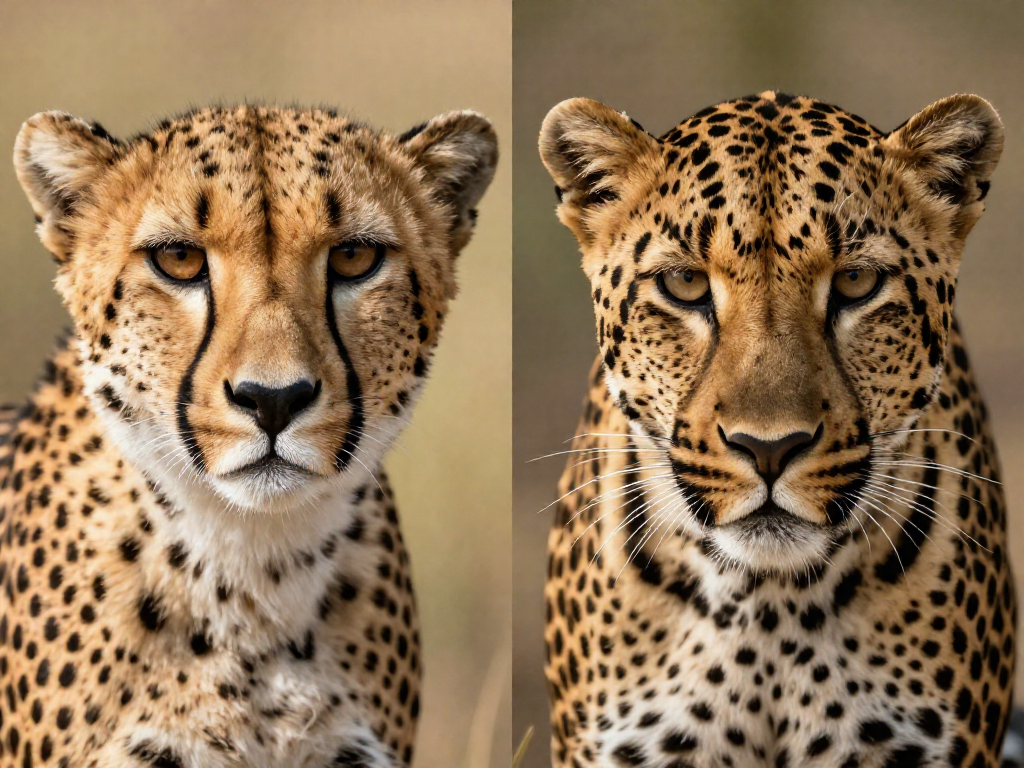
Cheetah vs. Leopard: Spotting the Difference in the Wild
How can you tell the difference between a cheetah and a leopard? Learn the key features including tear marks, spots, body shape, hunting styles, and sounds—all in one easy guide.
Jul 28, 2026 · 6 min read
8 Animals That Use Tools (And What They Do with Them)
Which animals use tools, and how do they use them? From crows bending wires to octopuses carrying coconuts, discover 8 tool-using animals.
Jul 28, 2026 · 6 min read
The Secret Life of the Platypus: Australia's Egg-Laying, Venom-Spurred Oddity
Discover the platypus: an egg-laying mammal with electroreception and venomous spurs. Explore its bizarre evolutionary traits.
Jul 20, 2026 · 7 min read