In Defense of the Vulture: Why You Should Love Nature's Cleanup Crew
Why are vultures important and misunderstood?
On this page
The Vulture's Superpower: A Digestive System Like No Other
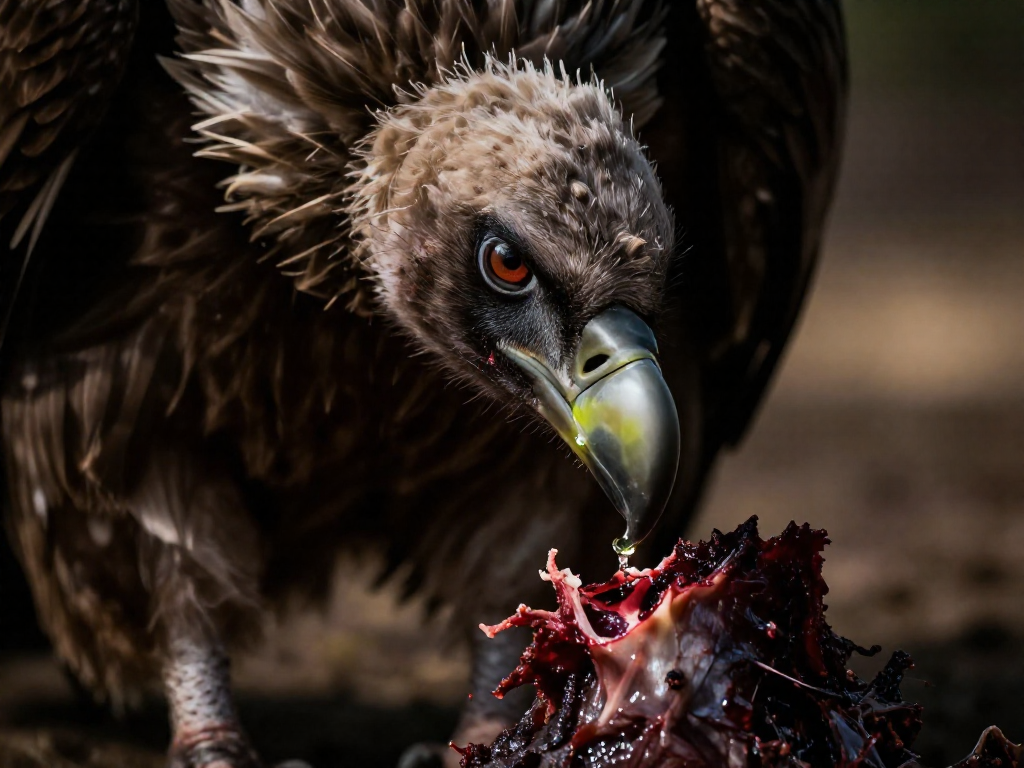
Vultures are the unsung heroes of the animal kingdom, and much of their heroism comes down to one extraordinary piece of internal hardware: a stomach that works like a high-security incinerator. This is the real reason they're so important—and so misunderstood. A vulture doesn't spread disease by eating rotting carcasses; it actually stops outbreaks in their tracks. Every mouthful of decaying meat is rendered harmless by a digestive system that leaves no pathogen standing.
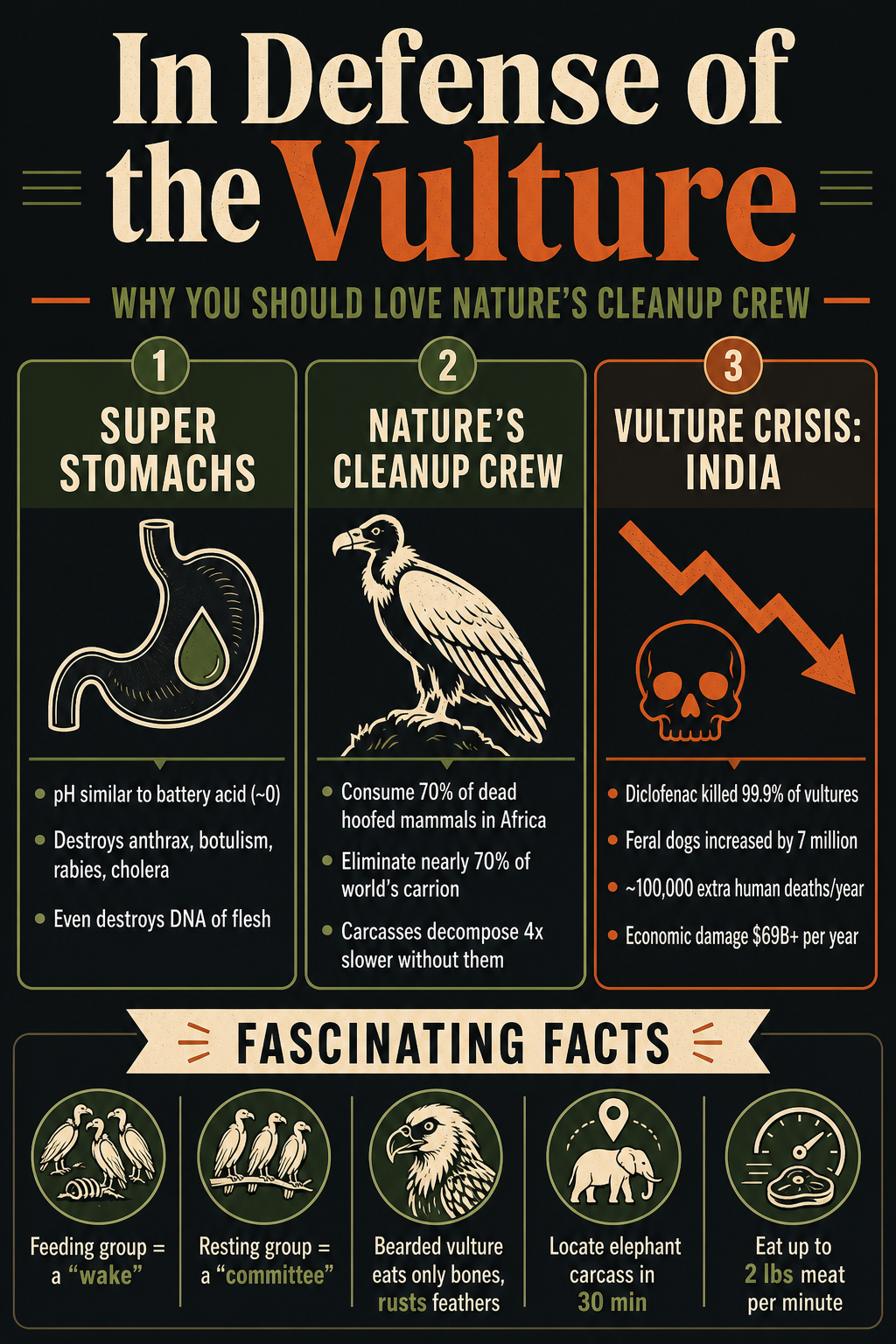
The key is acidity. Vultures boast the strongest digestive acid in the animal kingdom. According to the San Diego Zoo Wildlife Alliance, a vulture's gizzard (that's the muscular bird stomach) has a pH just above 0—comparable to battery acid. That's potent enough to dissolve a grim list of killers including anthrax, tuberculosis, rabies, leprosy, salmonella, cholera, and botulism. Even the DNA of the meal gets shredded. While other scavengers, like dogs or boars, can pick up and spread these diseases from a carcass, a vulture walks away clean.
But the real mind-bender isn't just what the acid destroys; it's what the bird chooses to keep alive. Inside a vulture's gut, two particularly nasty kinds of bacteria—Fusobacteria (which can cause flesh-eating infections) and Clostridia (responsible for botulism and tetanus)—thrive without making the bird sick. In fact, they're helpful. Vultures seem to farm these microbes, using them to break down tough meals and extract nutrients. It's a carefully balanced internal ecosystem where the host is never on the menu.
Genomics backs this up. When scientists sequenced the DNA of the cinereous vulture, they found specific tweaks in genes related to both immune defense and gastric acid production. These aren't just lucky accidents; they're hardwired adaptations that make the scavenging lifestyle possible. Nature spent millennia crafting a bird that can safely dine on disease.
The real-world proof of this superpower came when vulture populations crashed. In India and Pakistan, a veterinary drug used in cattle wiped out 99.9% of vultures over a decade. Without nature's sterilizers, feral dog populations exploded by 7 million, leading to nearly 40 million dog bites and an estimated 48,000 human deaths from rabies. The vulture's disappearing act showed exactly what its stomach acid had been doing all along: insulating entire communities from disease. So next time you see a vulture hunched over roadkill, don't think "harbinger of death." Think "walking hazmat incinerator." Loving them is simply good hygiene.
Nature's Sanitation Department: How Vultures Prevent Disease
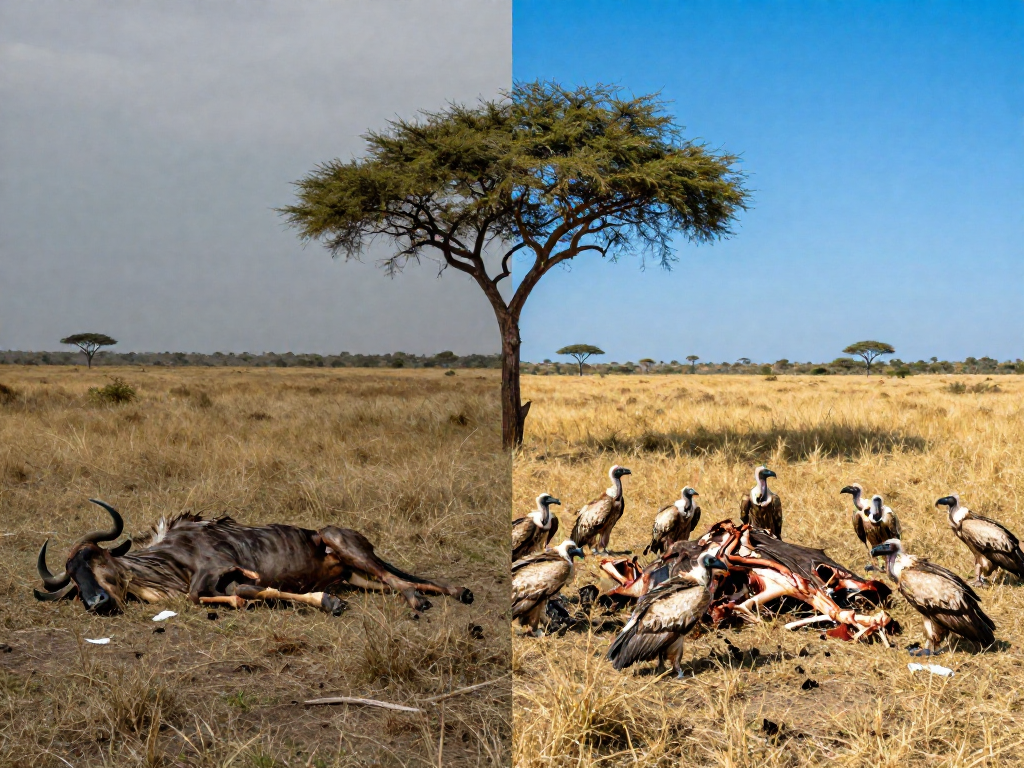
Vultures don't just clean up carcasses—they slam the door on a whole parade of diseases that would otherwise sweep through ecosystems and human communities. Think of them as a mobile sanitation department that works 24/7, never takes a sick day, and sterilizes as it goes.
Across Africa, vultures consume roughly 70% of all dead hoofed mammals. Zoom out globally, and they eliminate nearly 70% of the world's carrion and the pathogens it carries. That's an extraordinary volume of rotting material taken out of circulation before it can contaminate soil, water, or other animals. When vultures are missing, the whole decomposition timetable falls apart—a carcass can take up to four times longer to break down, becoming a festering petri dish in the landscape.
The real danger isn't just the stench; it's what moves in when vultures move out. Facultative scavengers (animals that will scavenge but don't specialize in it, like feral dogs and wild boars) become the primary cleanup crew. Unlike vultures, these mammals lack the internal defenses to neutralise the bacteria and viruses lurking in dead animals. They can pick up anthrax, botulism, cholera, or tuberculosis from a carcass and carry it far and wide, even transmitting rabies through bites along the way.
In fact, one of the most sobering examples of what happens when vultures disappear comes from the Indian subcontinent. After a 99.9% crash in vulture populations, the feral dog population exploded by about 7 million. Over a decade, that led to around 39 million extra dog bites and an estimated 48,000 human deaths from rabies (Cool Green Science). It's a stark illustration that vulture health is directly linked to human health.
Vultures prevent disease not just by eating fast, but by eating thoroughly. Their stomach acid, with a pH close to battery acid, essentially sterilises what they consume. When a vulture devours a carcass, it's not just removing the visible mess—it's chemically dismantling anthrax spores, botulism toxins, and other nightmare microbes at the source. The birds act like nature's autoclave, and they do it within 30 minutes of an elephant dying on the savanna. That kind of rapid response keeps the disease loop locked tight, protecting everything from gazelles to the people who share the landscape with them.
The Indian Vulture Crisis: A Cautionary Tale
It’s hard to imagine a creature as lowly as a vulture holding human society together, but the catastrophic collapse of South Asia’s vultures is the clearest proof we have. In the early 1980s, an estimated 40 million vultures—mainly three species of the genus Gyps—darkened the skies over India, Pakistan, and Nepal. By 2017, a painstaking census could find only about 19,000 individuals. That’s a 99.9% wipeout in just a few decades, the fastest decline ever recorded for any bird since the passenger pigeon vanished over a century ago.
Nobody planned to exterminate them. The culprit was diclofenac, a cheap anti‑inflammatory drug widely given to cattle. When a cow died and vultures fed on the carcass, their extraordinary digestive systems—so good at neutralizing anthrax and botulism—were helpless against the drug. It caused acute kidney failure, killing birds within days. Even the occasional treated carcass in a landscape littered with dead livestock was enough to poison entire colonies. India banned veterinary diclofenac in 2006, but by then the damage was done.
The consequences cascaded straight into human communities. Without vultures to efficiently strip millions of cow carcasses each year, the dead animals simply rotted in the sun. That created a grotesque buffet for feral dogs, whose numbers exploded. Depending on the study, researchers estimate India gained between 5 and 7 million extra stray dogs during the vulture crash. More dogs meant more bites. In the decade after the crash, the region recorded roughly 38–39 million additional dog bites, fueling a rabies epidemic. Conservative estimates attribute an extra 47,000 to 48,000 human deaths to rabies alone.
But those figures only capture one disease. As carcasses piled up, water supplies became polluted, and diseases like tuberculosis found new footholds. An economic analysis of the period, covered by the BBC, calculated that the vulture decline caused roughly 100,000 additional human deaths each year between 2000 and 2005—a 4% spike in overall mortality in the hardest‑hit districts. Put another way, the absence of vultures cost India more than $69 billion annually in mortality damages, a staggering sum for a country where livestock carcass disposal had been a free ecological service.
This wasn’t just a public health disaster; it rewrote the textbook on extinction speed. The decline outstripped even the passenger pigeon’s collapse, and it remains the most dramatic bird population crash in recorded history. The good news? Conservationists have been breeding vultures in captivity and pushing for stricter bans on diclofenac and equally toxic substitutes, like aceclofenac and ketoprofen. Populations are showing small, fragile signs of recovery in some areas. But the caution is clear: remove a keystone scavenger, and the hidden costs land squarely on our own heads. Vultures aren’t just nature’s cleanup crew—they’re an irreplaceable public health shield.
Why Vultures Are Disappearing Worldwide
The crisis isn’t limited to India. Of the 22 vulture species worldwide, 75 percent are in decline, with nine species critically endangered. The leading driver, by far, is toxins—a staggering 88 percent of at-risk vulture species are being pushed toward extinction by poisoning. Often, it’s intentional: farmers lace carcasses to kill predators, or poachers poison elephant remains to eliminate vultures that might alert rangers. In one horrific incident in Namibia, a single poisoned elephant carcass killed 600 vultures (Cool Green Science).
Beyond direct poisoning, vultures face a multitude of other human-made threats. Habitat loss from expanding agriculture and urbanization shrinks their foraging and nesting grounds. In some regions, vultures are persecuted out of misguided fear—killed for their body parts in traditional medicine or because they are seen as omens. Lead ammunition is another silent killer: when vultures consume the remains of animals shot but not retrieved, ingested lead fragments cause slow, fatal poisoning.
The sobering reality is that vultures can’t catch a break. Their disappearance is not a natural fluctuation but a human-driven collapse. Saving them means tackling all these threats simultaneously—regulating veterinary drugs, banning poisons, replacing lead ammunition, and protecting wild spaces. The vulture’s services are too vital to lose.
Meet the Bearded Vulture: The Bone-Eating Artist
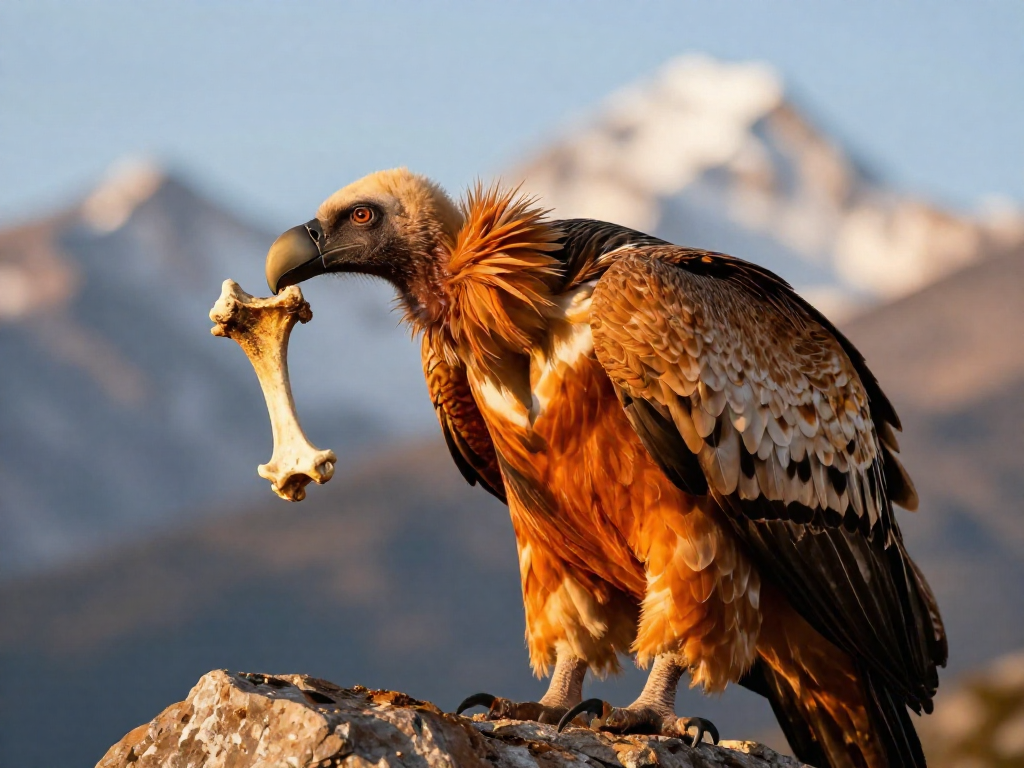
While most vultures dine on meat, the bearded vulture takes a wildly different approach: its diet is almost entirely bone. It drops large bones from heights onto rocky slopes to crack them into swallowable pieces. And it has a unique beauty ritual—rubbing iron-rich mud onto its naturally white feathers to turn them a striking rusty orange (WWF). This bone-cracking artist shows vultures aren’t just cleanup crew; they’re full of surprising, specialized tricks.
Conclusion: Time to Rethink the Vulture
They aren’t grim reapers—they’re silent guardians that neutralize anthrax, botulism, and rabies before those diseases can spread. The near-total collapse of Indian vultures (down 98% for one species) became a tragic warning, triggering a spike in rabies deaths as feral dogs took over. Yet the story isn’t over: targeted bans and conservation efforts are letting some populations slowly climb again. Watch a vulture ride thermals without flapping, and you’re seeing resilience in motion—a reminder that appreciating nature’s cleanup crew is the first step to protecting it. (BBC)
Sources
- Vultures: Nature’s Influencers and Ecosystem Protectors | WWF — worldwildlife.org
- Zoo Atlanta — facebook.com
- How Vultures Can Eat Rotten Meat Without Getting Sick — audubon.org
- Game Species Management and Ecosystem Health: Leveraging Vulture Scavenging to Improve Carcass Disposal and Health Risk Reduction — pmc.ncbi.nlm.nih.gov
- The Role of Scavengers: Carcass Crunching — education.nationalgeographic.org
- Vultures and the Art of Decomposition, Flight & Disease-killing Digestion — wildlifeact.com
- Vultures: The Gastronic Marvel | San Diego Zoo Wildlife Alliance — sandiegozoowildlifealliance.org
- Poisoning Vultures Will Come Back to Bite Us - Cool Green Science — blog.nature.org
- New study uncovers why vultures don’t get sick from eating rotten carcasses — news.mongabay.com
- Indian vulture crisis - Wikipedia — en.wikipedia.org
- Indian vultures: Decline of scavenger birds caused 500,000 human deaths — bbc.com
See also
- /amazing-animal-digestive-systems
- /why-are-animals-bald
- /animals-that-eat-bones
- /most-endangered-birds
- /animal-myths-debunked
- /how-animals-prevent-disease
Related articles
My Unpopular Opinion: Stop Calling Them 'Killer' Whales
Why should we stop using the term 'killer whale'?
Jul 28, 2026 · 3 min read
Cheetah vs. Leopard: Spotting the Difference in the Wild
How can you tell the difference between a cheetah and a leopard? Learn the key features including tear marks, spots, body shape, hunting styles, and sounds—all in one easy guide.
Jul 28, 2026 · 6 min read
8 Animals That Use Tools (And What They Do with Them)
Which animals use tools, and how do they use them? From crows bending wires to octopuses carrying coconuts, discover 8 tool-using animals.
Jul 28, 2026 · 6 min read