How Animals Find Their Way Home: The Mystery of Animal Navigation
How do animals navigate over long distances and find their way back?
On this page

Nature's Impossible Journeys: Why Animal Navigation Is So Astonishing
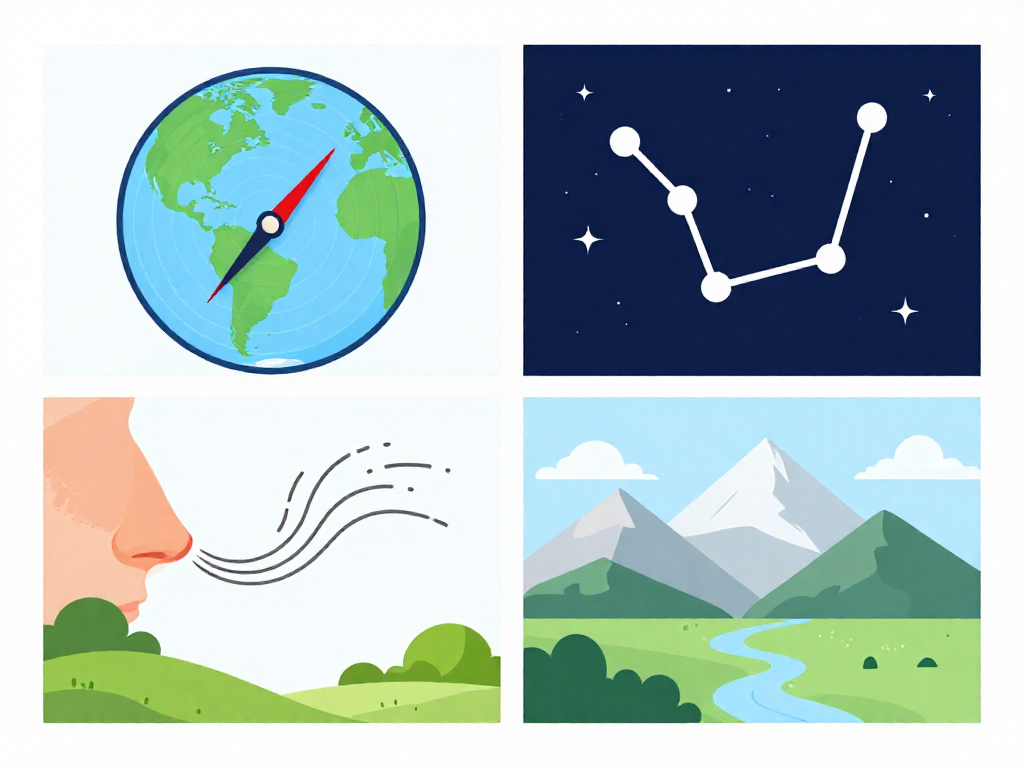
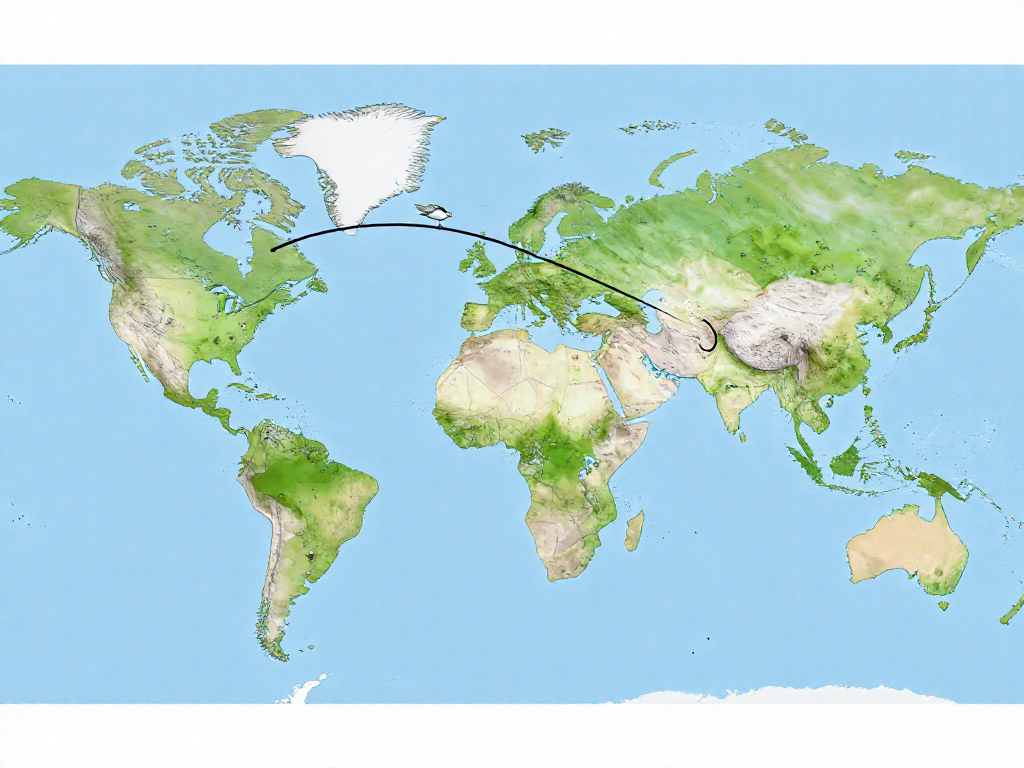
Every year, an Arctic tern flies roughly 44,000 miles in a zigzag from the Arctic to Antarctica and back — the longest migration on Earth, with no map, no compass app, and no one to ask for directions. Over a lifetime, that adds up to enough miles to reach the Moon and back several times.
And the tern isn't even the strangest case. Consider a few of nature's most jaw-dropping travelers:
- Salmon swim from the open ocean back to the exact freshwater stream where they hatched, sometimes years and hundreds of miles later.
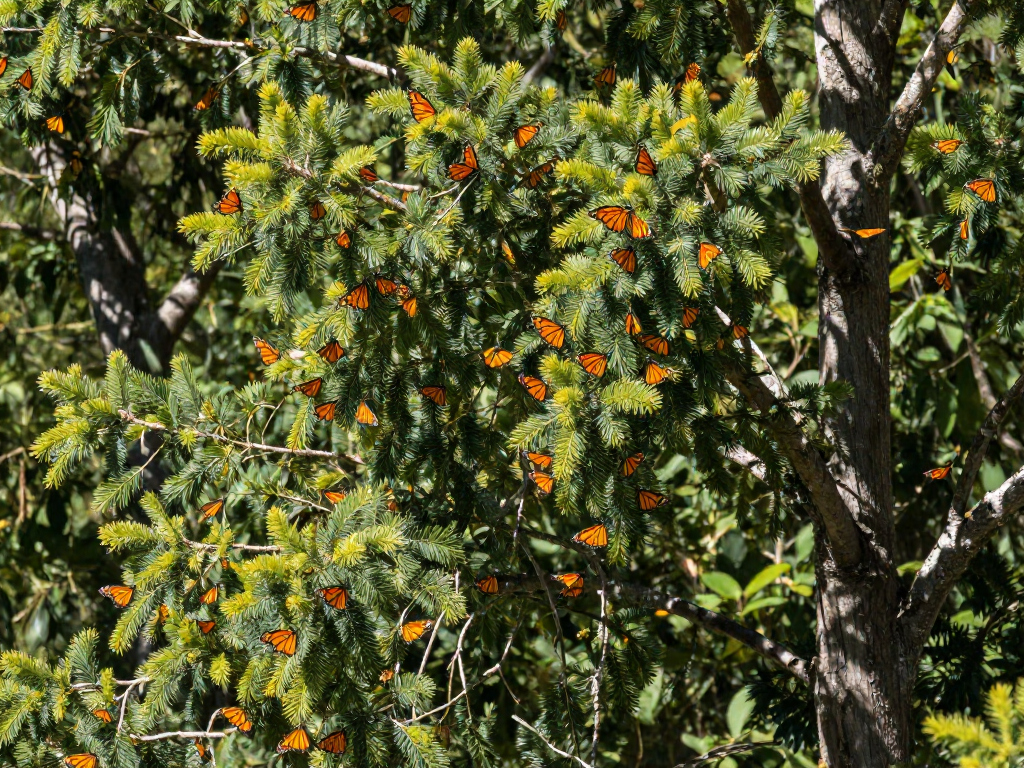
- Monarch butterflies flutter thousands of miles to a specific cluster of forests in central Mexico — a place not one of them has ever visited, since the butterflies that made the last trip died generations ago.
- Homing pigeons can be driven hundreds of miles into unfamiliar country, released, and still beeline back to their loft.
- Arctic terns chase endless summer from pole to pole, racking up tens of thousands of miles annually.
Here's what makes these journeys so astonishing: the animals pull them off with no GPS, no printed maps, and — in the monarch's case — no parents to show them the route. A butterfly weighing less than a paperclip finds a mountain forest it has never seen. A fish picks one stream out of thousands.
So what's actually guiding them? How does a creature with a brain the size of a pea, or smaller, navigate across a continent or an ocean and arrive in the right spot?
That's the mystery at the heart of this article. In the sections ahead, we'll unpack the surprising toolkit animals use — from reading the sun and stars to literally sensing the Earth's magnetic field — to answer one deceptively simple question: how do they find their way home?
The Magnetic Sense: How Animals Read Earth's Invisible Map
Imagine having a compass built right into your body — one so precise it can guide you across an entire ocean. Many animals do, and it's powered by something completely invisible to us: Earth's magnetic field.
Our planet behaves like a colossal bar magnet. Its molten iron core generates magnetic field lines that loop from pole to pole, and these lines vary in two useful ways. Near the equator they run nearly flat and parallel to the ground; near the poles they tilt steeply, almost straight down. The field's strength also changes from place to place. Together, these clues form a kind of invisible map that animals can read.
A Compass and a Map
Plenty of creatures tap into this field. Migratory birds like European robins use it to hold a heading during marathon flights. Loggerhead sea turtles, which hatch on beaches and ride currents for thousands of miles, can detect both the angle (inclination) and intensity of the field. Some fish, including salmon and rays, appear to sense it too.
Here's the surprising part: the magnetic field doesn't just tell animals which way to go — it can tell them where they are. Because field strength and angle differ across the globe, each location has a unique magnetic "signature," like a magnetic ZIP code. In landmark experiments, scientists exposed young loggerhead turtles to magnetic fields matching distant ocean spots; the turtles changed swimming direction as if they were actually at those locations (Lohmann et al., Current Biology). That means they weren't just following a compass — they were reading their position on a map.
How Do They Actually Sense It?
This is where the mystery deepens. Researchers have two leading ideas, and both may be true at once:
- Cryptochromes: light-sensitive proteins in the eye (found in the retinas of birds) that may react to magnetism through quantum-level chemistry, possibly letting some animals see the field as a visual pattern.
- Magnetite: tiny crystals of iron-based mineral found in the tissues of birds, fish, and other species, which could act like microscopic compass needles that nudge nearby nerves.
The Honest Truth: We Don't Fully Know
Despite decades of research, scientists still haven't pinned down exactly how magnetoreception (the ability to sense magnetic fields) works at the cellular level. No one has confirmed a single dedicated "magnetic organ" the way we've mapped eyes or ears. It's one of biology's great open questions — a real superpower hiding in plain sight, and one we're only beginning to understand.
Star Maps and Sun Compasses: Navigating by the Sky
Some baby birds learn to read the night sky before they ever take flight—and a beetle the size of your thumbnail can steer a straight line using the entire Milky Way. The sky, it turns out, is one of nature's oldest road maps.
Birds that memorize the stars. In classic planetarium experiments in the 1960s and '70s, researcher Stephen Emlen showed that young indigo buntings learn to navigate by watching how the stars rotate around a fixed point in the sky. In the Northern Hemisphere, that point sits near Polaris, the North Star. The nestlings don't memorize specific constellations—they lock onto the still center of the spinning sky and use it to find north. Raise them under an artificial sky that rotates around a different star, and they'll happily treat that fake star as "north" instead.
The sun compass and the body clock. During the day, many animals navigate by the sun's position. But the sun moves across the sky—roughly 15 degrees every hour—so a fixed "head toward the sun" rule would send a traveler in circles. The fix is an internal clock (a built-in sense of time of day, called a circadian clock) that tells the animal where the sun should be at that moment, allowing constant course corrections. Honeybees and homing pigeons both use this sun-plus-clock system. Scientists have even tricked pigeons by shifting their light-and-dark schedule by a few hours; the birds then fly off-course by a predictable angle, exactly as the clock-shift would predict.
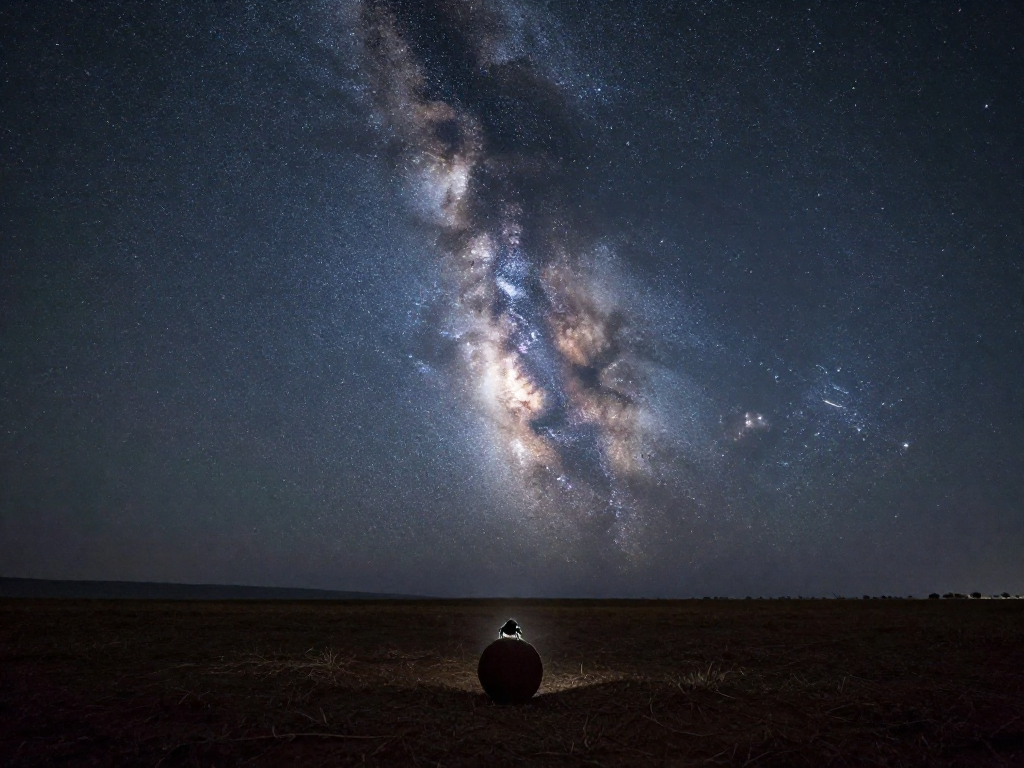
Beetles and the Milky Way. In a 2013 study published in Current Biology, researchers found that African dung beetles roll their dung balls in straight lines by orienting to the bright band of the Milky Way—the first animal known to use the entire galaxy as a compass. Fit a beetle with a tiny cardboard cap that blocks its view of the sky, and it wanders in aimless loops.
When the sky goes dark. Clouds, fog, and artificial light all weaken these celestial cues. That's part of why light pollution disorients migrating birds and hatchling sea turtles, drawing them toward city glow instead of their intended path. Thankfully, most sky-navigators carry backups—like the magnetic sense from the previous section—so a cloudy night rarely strands them completely.
Scent Trails and Smell Maps: Finding Home by Nose
Imagine sniffing your way across an entire ocean to find a single meal—then back to a nest you can't even see. For many animals, the nose isn't just for breakfast. It's a navigation system precise enough to guide them home from astonishing distances.
The most famous nose-navigator is the salmon. As young fish, they "imprint" (lock in a memory of) the unique chemical signature of their home stream—a blend of minerals, plants, and soil so specific it acts like a scent fingerprint. After years at sea, adult sockeye salmon return to spawn, and studies show they use that remembered smell to pick out their birth stream from countless others. Block their sense of smell, and they get lost.
Birds use scent too. Decades of research on homing pigeons suggests they build an "odor map"—linking certain airborne smells to certain directions, almost like learning that the smell of pine means "north" and salt air means "toward the coast." Pigeons raised where they can't sample the wind have a harder time finding their way home, which points to smell as a real piece of their toolkit.
Out over open water, seabirds like petrels and albatrosses face a landscape with no landmarks at all. Their trick? They follow scent. Tiny plankton release a gas called dimethyl sulfide (DMS)—essentially the smell of a productive patch of ocean—and these birds zigzag upwind toward it to find food, sometimes from many miles away.
What makes smell so powerful is its range. A faint plume can guide an animal across long distances toward the general neighborhood, while a strong, familiar scent pinpoints the exact spot—home stream, nest, or feeding ground. It's both a long-range compass and a close-up address, all in one sniff.
Landmarks, Memory, and Mental Maps
A desert ant can march hundreds of body lengths away from its nest across blank, shimmering sand—then turn and walk almost straight home, no scent trail required. How? It's been counting its own steps the entire time.
Not every animal needs a magnetic sense or a star map. Many rely on the same down-to-earth tools we do: looking around and remembering.
Reading the landscape
Plenty of animals navigate by visual landmarks—the shape of a coastline, the line of a mountain range, the bend of a river, or the familiar look of nearby terrain. Pigeons, for example, are known to follow roads and rivers on routes they've flown before, treating the landscape almost like a map drawn from above.
The built-in pedometer
That homeward-bound desert ant (Cataglyphis) uses path integration—continuously tracking how far and in what direction it has traveled, then computing a shortcut straight back. In a now-famous experiment, researchers glued tiny stilts onto ants (and trimmed others' legs) to change their stride length. The long-legged ants overshot home and the short-legged ones stopped early, proving the ants were literally counting steps like an internal pedometer.
Genuine mental maps
Some animals go further and build a true cognitive map—a flexible mental layout of their territory that lets them take novel shortcuts, not just retrace known paths. Studies of rats, certain birds, and primates suggest they can plan efficient routes between places they've never directly connected before, a sign they're working from a map in the mind rather than a memorized checklist.
Learning versus instinct
So how much is "born knowing" and how much is learned? It's usually both. A young animal may inherit a rough sense of direction, but experience sharpens it—memory of landmarks, repeated trips, and time spent exploring all fine-tune the map. Navigation, it turns out, is part instinct and part homework.
Born Knowing vs. Learning the Route: Instinct and the Multi-Sense Backup System
Here's a head-scratcher: a young songbird that has never left the nest can fly thousands of miles to a wintering spot it has never seen — completely alone. No parents leading the way, no map, no GPS. That's because some animals are born knowing the direction and distance to travel, an instinct written into their genes.
But not every animal flies solo. Many learn the route the old-fashioned way — by following experienced elders. Young whooping cranes, for example, copy older birds to learn migration paths, and a famous conservation project even used ultralight aircraft to teach captive-raised cranes where to go.
One Sense Is Never Enough
The real secret to reliable navigation isn't a single super-sense — it's teamwork. Animals layer several cues at once and switch between them when conditions change:
- A magnetic compass (sensing Earth's magnetic field) for keeping a heading
- The sun and stars for direction during clear skies
- Landmarks, smells, and memory for fine-tuning the final approach
When clouds hide the sun, a bird can fall back on its magnetic sense. When the magnetic signal gets fuzzy, it leans on landmarks. This built-in redundancy — having backups for the backups — is exactly why animals so rarely get lost.
How Scientists Test It
Researchers untangle this system by "tricking" one sense at a time. In classic experiments, they've placed migratory birds in planetariums and rotated the artificial stars, or fitted them with tiny magnetic coils to scramble the magnetic field. The birds adjust by relying on their remaining cues — proof that navigation is a flexible blend of senses, not a single magic trick.
What Humans Get Wrong (and What's Still a Mystery)
Here's a surprise: that V-shaped flock of geese isn't blindly "following the leader." Migration isn't one animal copying another — it's thousands of individuals each running their own onboard navigation system, cross-checking the sun, stars, smells, landmarks, and Earth's magnetic field. The "pure instinct" myth sells these animals short. Many, like young whooping cranes, actually learn their routes from elders, and plenty fine-tune the journey as they go.
But there's a darker twist: we're scrambling their signals.
- Light pollution can pull migrating songbirds off course and trap them circling brightly lit buildings. The U.S. Fish & Wildlife Service estimates collisions with buildings kill hundreds of millions of birds a year — many during night migration.
- Magnetic interference from certain human-made electromagnetic "noise" has been shown in lab studies to disrupt birds' magnetic compass (their built-in sense of magnetic direction).
- Habitat loss erases the stopover sites and landmarks animals rely on to rest and reorient, like removing gas stations from a cross-country road trip.
And scientists still don't have all the answers. The biggest open question: how do animals actually sense magnetism? Two leading ideas point to iron-based particles in tissue and a light-triggered quantum reaction in the eye — but no one has fully nailed it down.
That mystery is worth solving, and not just for the animals. Cracking nature's navigation could inspire better technology for humans — think GPS-free navigation for ships, planes, and robots that works even when satellites fail.
The takeaway? These travelers are far more sophisticated than "instinct" suggests — and protecting dark skies and habitat helps keep their incredible maps intact.
See also
- Why do birds fly in a V formation?
- How do monarch butterflies migrate so far?
- How do sea turtles find the same beach to nest?
- Animals with the most incredible senses
- Why do some animals migrate and others don't?
Related articles

When Your Dog Won't Stop Licking: A Troubleshooting Guide for Common Causes
Why does my dog keep licking everything, and how can I address it?
Jul 28, 2026 · 7 min read
Why Do Birds Sing at Dawn? The Science of the Dawn Chorus
Why do birds sing so loudly early in the morning?
Jul 28, 2026 · 6 min read
Monogamy vs. Polygamy in the Animal Kingdom: A Comparative Guide
How do monogamous and polygamous mating systems compare, and which animals use which?
Jul 20, 2026 · 9 min read