My Honest Take: Why 'Apex Predator' Is the Most Misused Animal Term
What does 'apex predator' really mean and why is it misused?
On this page
What "Apex Predator" Actually Means
Here's the twist that surprises most people: being an "apex predator" has almost nothing to do with being the biggest, fastest, or scariest animal in the room. It's a job title in an ecosystem, not a strength ranking.
Quick answer: An apex predator is an animal that sits at the very top of its food chain — meaning a healthy adult has no natural predators hunting it within its ecosystem.
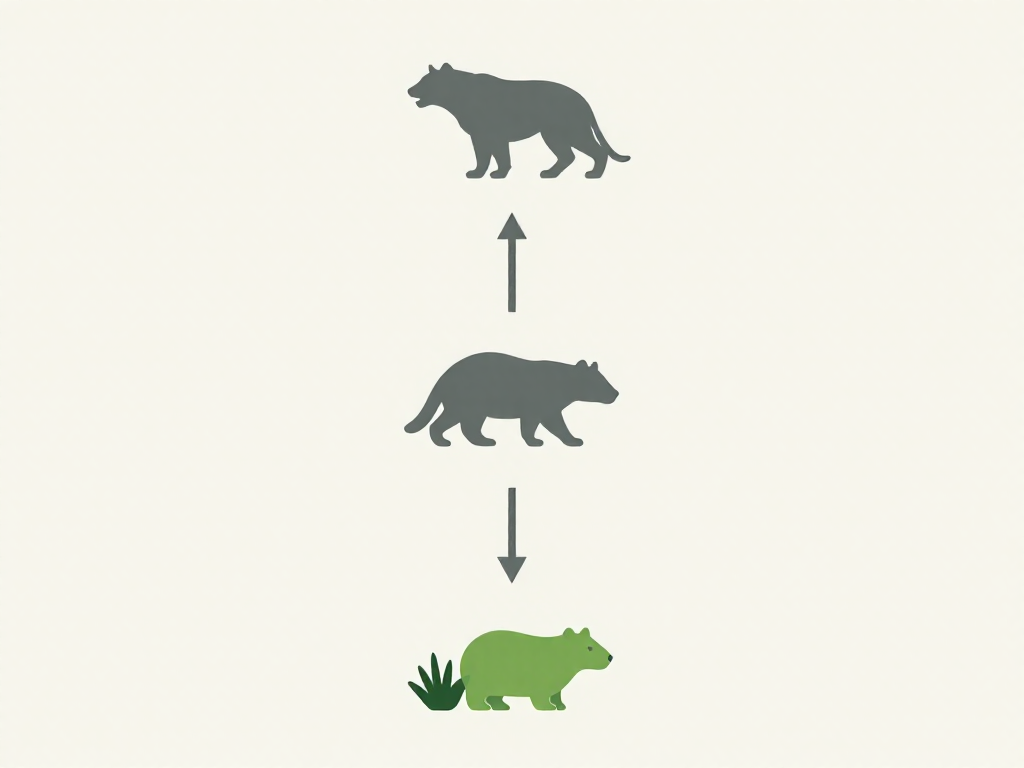
That last part matters. "Apex" describes where you sit, not how tough you are. Ecologists think in terms of trophic levels (your spot in the flow of energy, from plants up to top hunters). Plants sit at the bottom, plant-eaters above them, and predators stack on top. Whoever ends up at the peak — with nothing that regularly hunts them as an adult — earns the "apex" label.
A few things this definition does not care about:
- Raw size or muscle. A huge, powerful animal that still gets hunted isn't apex in that system.
- How frightening it looks. Intimidating teeth don't put you at the top of the chain.
- Being undefeatable. Apex predators can still die from disease, starvation, or rival members of their own species.
Some clear, classic examples:
- Lions on the African savanna
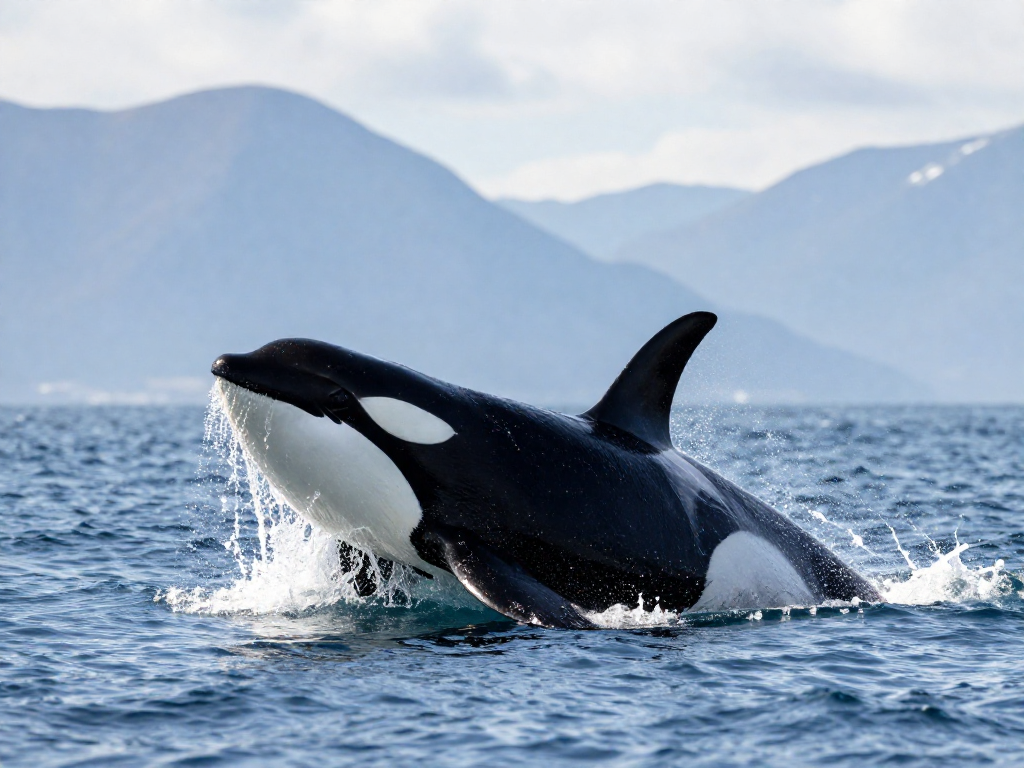
- Orcas (killer whales) in the open ocean
- Great white sharks in coastal waters
- Polar bears across the Arctic
- Crocodiles in rivers and wetlands
Notice the pattern? Each one tops its own specific environment. Drop an apex predator into a different ecosystem and the title doesn't automatically travel with it. That single idea — position, not power — is exactly where most people get the term wrong, as we'll see next.
The 4 Most Common Ways People Misuse It
Here's the wild part: a hippo can flip a boat and kill more people in Africa each year than lions do—yet a hippo is not an apex predator. It's not even a predator. It eats grass. That single mix-up powers most of the misuse you'll see online, and it usually shows up in one of four flavors.
1. Confusing "apex predator" with "strongest" or "most dangerous." An apex predator is simply a hunter with no natural predators of its own in a given ecosystem—not the toughest animal in a fight. Hippos, elephants, and Cape buffalo are big, deadly, and basically untouchable, but they're herbivores. Danger and diet are two different things.
2. Calling humans "apex predators" without the asterisk. Scientists actually coined a separate label for us: "super predator." A 2015 study in Science (Darimont et al.) found humans hunt adult prey—the breeding animals—at up to 14 times the rate of other predators, and target large carnivores at about 9 times their rate. We don't sit inside a natural food web the way a wolf does; we reshape it with tools, farms, and trade.
3. Slapping it on animals that get eaten or outcompeted at home. A predator that's routinely killed, scavenged off, or pushed out isn't at the top. Cheetahs are brilliant hunters, but lions and hyenas steal their kills and even kill their cubs—so in the same savanna, they sit below the true apex crowd.
4. Treating it as a global trophy instead of a local job title. "Apex predator" is always ecosystem-specific. A bull shark rules a coastal estuary—until it swims up a river where a large crocodile or even a jaguar (which hunts caimans in the Pantanal) holds the top spot. Move the animal, and the ranking flips.
A bonus offender ties these together: people pin the label on omnivores and scavengers—bears, for example—that eat berries, fish, and carrion. They're powerful, but "apex predator" describes a pure top hunter, not an opportunistic eat-anything generalist. Get the definition right, and three-quarters of the internet's "apex predator" claims fall apart.
Apex Predator vs. Keystone Species vs. Alpha
Here's the twist: the sea otter, one of the most powerful forces in its ecosystem, isn't an apex predator at all. Mixing up these three terms is the single biggest reason "apex predator" gets thrown around wrong. Let's untangle them.
Keystone species — an animal whose impact on its ecosystem is huge compared to how few of them there are. Sea otters are the classic example: by eating sea urchins, they protect kelp forests that shelter hundreds of other species. Pull the otter out and the whole system collapses. But otters get hunted by sharks and orcas, so they're nowhere near the top of the food chain. Wolves can be both keystone and apex—as Yellowstone showed when their return reshaped rivers and forests—but the two labels aren't the same thing.
Alpha — a ranking within a social group, not an ecological role. And here's the kicker: the "alpha wolf" idea is largely debunked. Biologist L. David Mech, who popularized the term, has spent years asking people to drop it. Wild wolf packs are mostly just families led by parents, not fighters who clawed their way to the top.
Apex predator — strictly about the food chain. An apex predator has no natural predators of its own as a healthy adult. That's it.
So a single animal can be all three, just one, or none. The labels describe different things—and that's exactly why people keep tangling them up.
Why This Mix-Up Actually Matters
Get the label wrong, and you might cheer for protecting the wrong animal. That's not just a vocabulary slip — it can ripple all the way down to the rivers in a national park.
Here's the big idea: true apex predators (animals at the top of the food chain that nothing else regularly hunts) don't just eat prey. They control how prey behave, which reshapes everything beneath them. Scientists call this a trophic cascade (a chain reaction that flows down through an ecosystem).
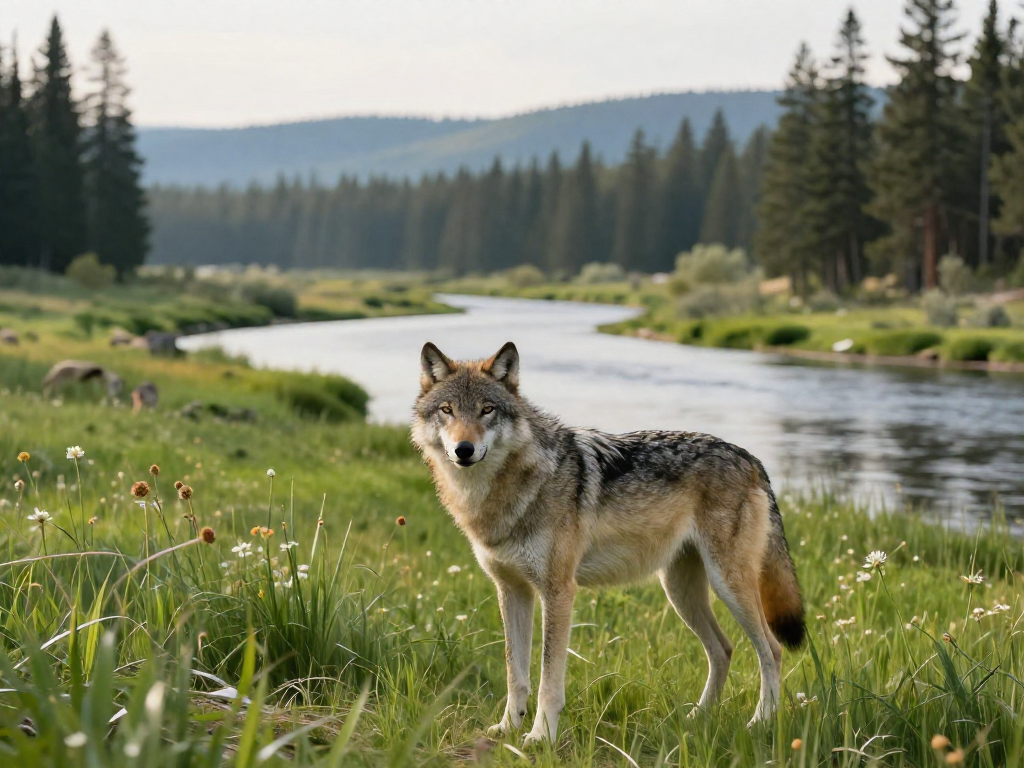
The classic example is Yellowstone. After gray wolves were reintroduced in 1995, elk stopped lingering in open valleys where they were easy targets. Willows and aspens grew back along the banks. Beavers returned, songbirds followed, and in some areas streams even ran straighter as roots stabilized the soil. One predator nudged an entire landscape (National Park Service).
Now flip it. When we treat "apex predator" as a hype word for whatever looks scary, we overlook the plain-looking animals doing the heavy lifting. A modest-sized predator can matter far more to a food web than a flashy one that's actually mid-level. Misjudge that, and conservation dollars and attention can drift to the wrong species.
The stakes are real. Remove a genuine apex predator and prey numbers can explode, vegetation gets stripped, and the effects show up in places you'd never expect — fewer fish, eroding banks, vanishing birds. Food webs are surprisingly tangled, so pulling one top thread can unravel a lot.
That's why the definition isn't pedantic. It's the difference between protecting an ecosystem and accidentally letting it fall apart.
Surprising Animals That Are (and Aren't) Apex Predators
Here's a fact that surprises people: even great white sharks will flee an area when orcas show up. That's how you spot a true apex predator (an animal that, as a healthy adult, no other species routinely hunts).
Yes, these earn the title:
- Orcas — the only known predator great whites actively avoid.
- Komodo dragons — the largest lizards on Earth, they top the food chain on their islands.
- Harpy eagles — they snatch monkeys and sloths straight out of the canopy.
- Tiger sharks — bold generalists with almost no natural enemies as adults.
Surprisingly, these don't:
- A tiger cub — adorable, but it can be killed by leopards, pythons, and even other tigers. Apex status applies to the healthy adult, not the species at every life stage.
- A lone honey badger — fierce and famous, but lions and leopards do take them.
- Most snakes — they get eaten by birds, mongooses, and other snakes far more often than people assume.
Context flips it. A saltwater crocodile is a textbook apex predator. A small freshwater fish that eats insects sits near the bottom of its food web — same family tree, totally different rank.
Honorable mention: apex predators aren't always huge. In a pond, a dragonfly larva can rule its tiny world. "Apex" is about your neighborhood food web, not your size.
My Honest Take: Let's Use the Term Better
Here's the thing: "apex predator" isn't a ruined phrase—it's just an overworked one. We slap it on anything with sharp teeth and a scary reputation, when the term actually means something specific and kind of wonderful.
So next time you're tempted to use it, run a quick gut check:
- Does anything naturally hunt this adult animal in its own habitat? If the answer is yes, it's not sitting at the very top.
That's it. One question. A great white shark? Adults get hunted by orcas, so "apex" gets complicated. An orca? Now we're talking.
Precision doesn't make these facts more boring—it makes them sharper and more surprising. The real food web is full of plot twists you'd miss if every predator got the same label.
So here's my soft ask: the next time a meme or documentary tosses out "apex predator," pause and run the test. You'll start spotting the misuse everywhere—and the animals get more fascinating, not less.
See also
- Why Orcas Are Smarter Than We Give Them Credit For
- What Really Happened When Wolves Returned to Yellowstone
- The Myth of the Alpha Wolf, Explained
- How Sea Otters Quietly Run Their Entire Ecosystem
- Why Hippos Are More Dangerous Than Lions
Related articles

When Your Dog Won't Stop Licking: A Troubleshooting Guide for Common Causes
Why does my dog keep licking everything, and how can I address it?
Jul 28, 2026 · 7 min read
Why Do Birds Sing at Dawn? The Science of the Dawn Chorus
Why do birds sing so loudly early in the morning?
Jul 28, 2026 · 6 min read
Monogamy vs. Polygamy in the Animal Kingdom: A Comparative Guide
How do monogamous and polygamous mating systems compare, and which animals use which?
Jul 20, 2026 · 9 min read