Why Do Animals Migrate vs. Hibernate? Two Survival Strategies Compared
What's the difference between migration and hibernation as survival strategies?
On this page
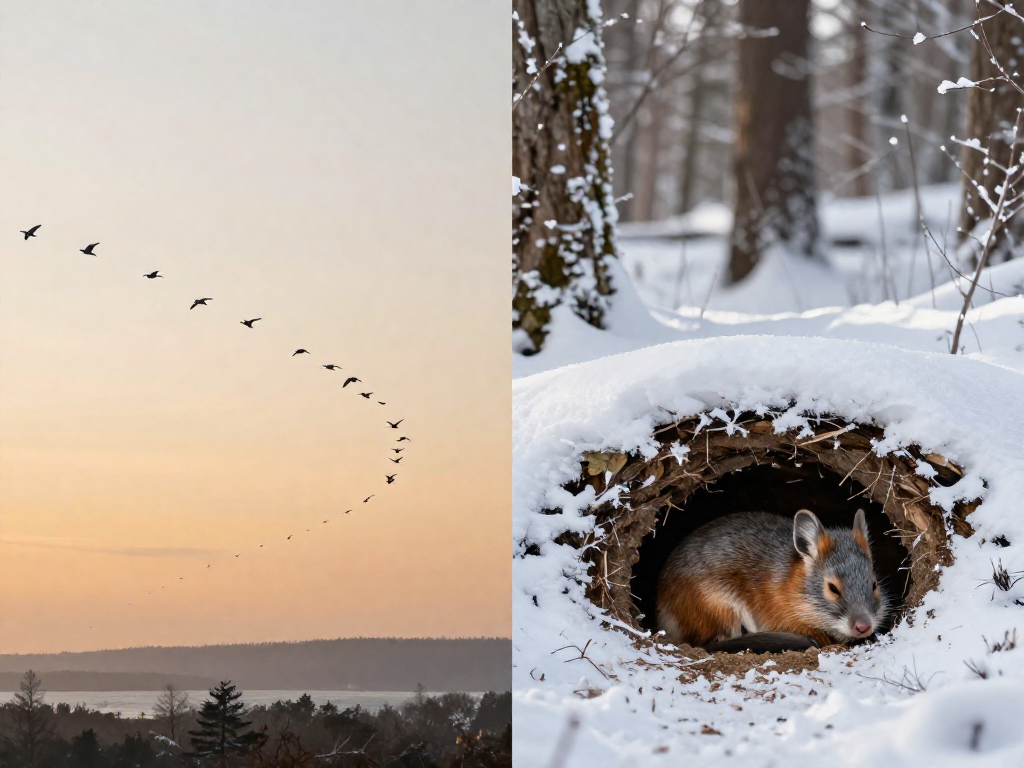
The Same Problem, Two Opposite Answers
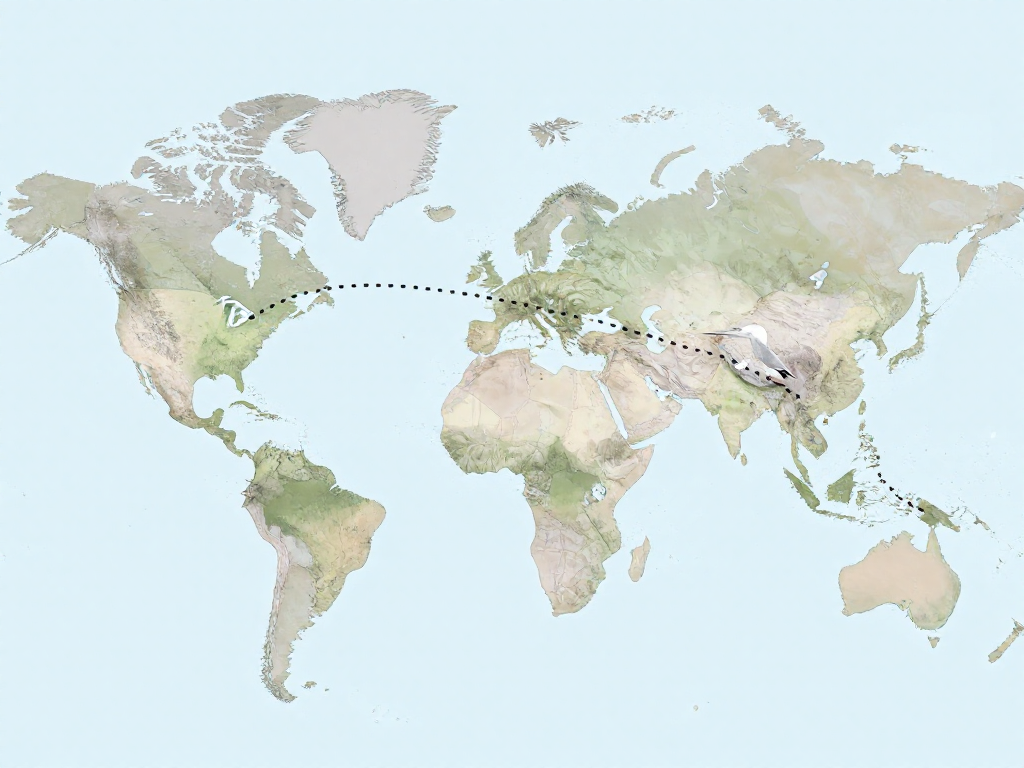
An Arctic tern flies the equivalent of three round trips to the Moon over its lifetime. A wood frog, meanwhile, lets two-thirds of its body freeze solid and simply waits. Two animals, two wildly different plans — and yet they're both solving the exact same problem.
That problem is winter. Across much of the planet, the cold season slams the door on the food supply: plants stop growing, insects vanish, and freezing temperatures make every day a struggle just to stay warm. For an animal, this is an energy crisis. You need fuel to survive the cold, but the cold is precisely what makes fuel disappear.
There are really only two ways out. You can escape the bad conditions by traveling somewhere better — that's migration. Or you can wait them out by hunkering down and slowing your body to a crawl until spring returns — that's hibernation.
At its heart, the choice comes down to energy math. Migration is about getting enough fuel by chasing it across the map. Hibernation is about spending almost none by nearly shutting the body off. Same goal, opposite answers.
So how do these two strategies actually stack up? Here's a quick side-by-side look before we dig into each one.
Migration vs. Hibernation at a Glance
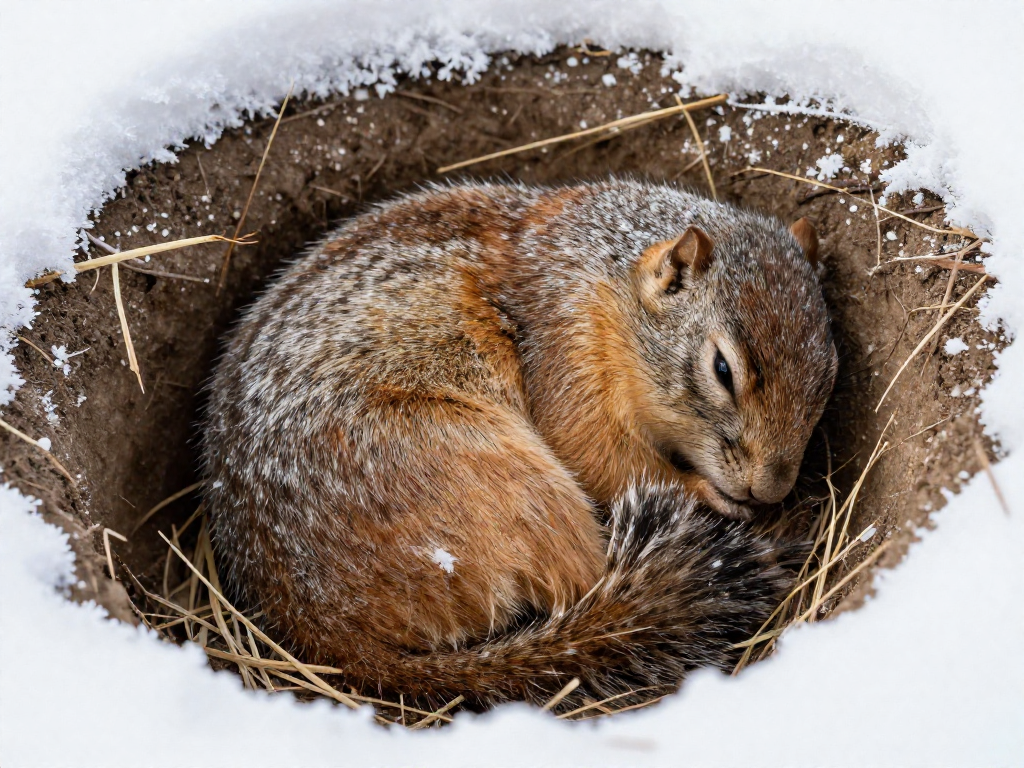
Here's the whole debate in one line: migrate = move to where conditions are better; hibernate = slow your body down until conditions improve. One strategy votes with its feet (or wings, or fins); the other hits pause and waits out the rough patch at home.
Want the screenshot-friendly version? Here it is:
| Migration | Hibernation | |
|---|---|---|
| What it is | Traveling to a better region, usually with the seasons | Entering a deep, dormant state (torpor — a big drop in body temperature and metabolism) |
| What triggers it | Shorter days, dropping temperatures, food running low | Cold, scarce food, and seasonal cues that signal winter |
| Energy use | Very high during travel — fuel up first, then burn it | Very low — heart rate and breathing slow dramatically to save energy |
| Main risks | Exhaustion, predators, storms, getting lost | Starving before spring, freezing, or being disturbed too early |
| Example animals | Monarch butterflies, Arctic terns, caribou, humpback whales | Groundhogs, some ground squirrels, certain bats and turtles |
One important note: not every animal picks a side. Plenty do neither — squirrels and deer simply tough out winter awake. And some mix and match: bears enter a winter sleep that's lighter than true hibernation, while a few species do short bouts of torpor only on the coldest nights.
Keep reading and we'll unpack how each strategy actually works.
How Migration Works (and Why Animals Do It)
An arctic tern can rack up roughly 44,000 miles in a single year of migration—the longest commute on Earth, and proof that some animals would rather travel than tough out a bad season. Migration is simply the act of moving to a better place when conditions turn harsh, then returning when they improve.
What sets it off? Animals don't read calendars, but their bodies track three big signals: shrinking daylight (the most reliable clue that winter is coming), dropping temperatures, and disappearing food. When these line up, the urge to move kicks in.
How do they find the way? Migrating animals come equipped with a remarkable toolkit:
- The sun and stars act like a compass for many birds.
- Earth's magnetic field gives some species—like sea turtles and songbirds—an internal sense of direction (called magnetoreception, the ability to detect magnetic fields).
- Landmarks such as coastlines, mountains, and rivers help guide the route.
- Smell lets salmon sniff out the exact stream where they hatched.
Who are the champions? Monarch butterflies flutter up to 3,000 miles to Mexico—across multiple generations, since no single butterfly makes the round trip. Caribou herds tramp across the Arctic, humpback whales swim between feeding and breeding grounds, and countless songbirds cross continents each spring and fall.
What does it cost? Migration is exhausting and risky. The journey burns enormous energy, so animals must fuel up beforehand—some birds nearly double their body weight in fat. Along the way they face predators, storms, and sheer exhaustion. Increasingly, they also lose the stopover habitats (rest-and-refuel sites) they depend on, making an already grueling trip even harder.
So why bother? Because for these animals, the payoff—abundant food and safer breeding grounds—is worth every mile.
How Hibernation Works (and Why Animals Do It)
A hibernating ground squirrel's heart can slow from around 200 beats per minute to fewer than 5, and its body cools to near-freezing. Instead of fleeing winter, these animals essentially hit the pause button on their own bodies until food returns.
The big idea: hibernation is a deep energy-saving shutdown. An animal's body temperature, heart rate, and metabolism (the rate it burns fuel) all drop dramatically, so it can survive months without eating.
Fatten up, then coast
Hibernators prepare by eating constantly in late summer and fall, packing on fat. Once they settle into their den, they live off that stored fat the way you might live off savings after losing a paycheck. Burn through it too fast, and there's nothing left when spring arrives.
True hibernators vs. light sleepers
Not every animal that "sleeps through winter" is a true hibernator:
- True hibernators drop into a deep, weeks-long state. Examples include ground squirrels, marmots, and some bats.
- Torpor is a shorter, lighter version. Hummingbirds use it nightly, slowing their metabolism for a few hours to survive cold nights, then waking by morning.
- Bears, surprisingly, are debated by scientists — they enter a deep sleep but their body temperature stays higher, so some call it "denning" rather than true hibernation.
The risks of pressing pause
Hibernation isn't a guaranteed win. Animals can starve before spring if they didn't store enough fat, get eaten while too sluggish to defend themselves, or burn precious energy waking up too early during a warm spell.
In short: hibernation trades months of activity for survival, betting that stored fat will outlast the cold.
Wait—Do Bears Actually Hibernate?
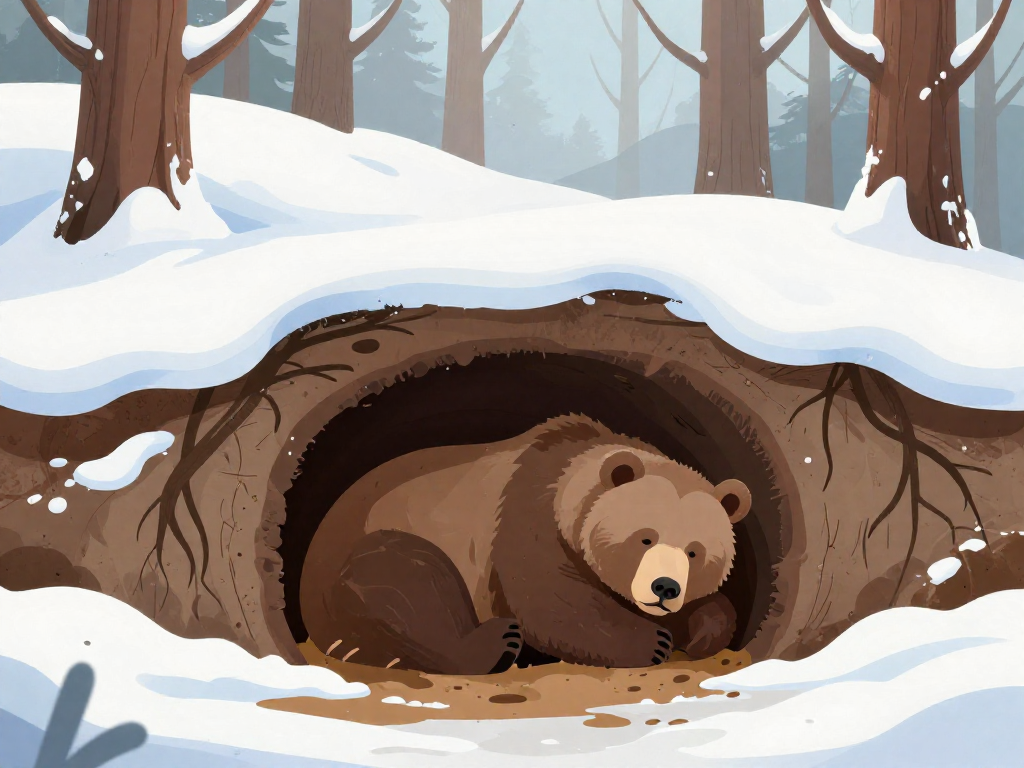
Here's a fact that surprises almost everyone: many scientists don't consider bears "true" hibernators at all. Unlike a ground squirrel that drops to near-freezing and goes almost completely unresponsive, a bear enters a lighter winter slowdown often called torpor (a state of reduced body temperature, heart rate, and metabolism).
The big difference is how easily they bounce back. A bear's body temperature falls only a few degrees, so it can rouse within minutes if disturbed—handy, because mother bears actually give birth and nurse cubs in the den during winter.
So why the debate? Some researchers argue a bear's months-long, food-free dormancy is so extreme it deserves the "hibernation" label anyway. The honest answer: it sits on a spectrum.
And bears aren't the only in-betweeners. Reptiles and amphibians do brumation (a cold-blooded version of winter dormancy where they slow down but may sip water on warm days)—another reminder that nature rarely fits neat boxes.
Which Strategy Is Better—and Who Uses Which?
Here's the surprising truth: there's no winner. Migration and hibernation are both brilliant solutions to the same problem—surviving a season when food vanishes—and the "right" answer depends entirely on an animal's body, diet, and home.
Body size sets the rules. Tiny animals lose heat fast and can't carry enough fuel for a long trip, so many go the opposite way: they slow down. A ground squirrel can drop its heart rate from around 200 beats per minute to fewer than 10 while hibernating, stretching a fat reserve across months. Larger, mobile animals like caribou or whales can instead cover huge distances—gray whales travel up to roughly 12,000 miles round-trip—to follow the food.
Diet pushes the choice, too. Animals that depend on insects, nectar, or fresh grazing often have no way to "save up," so they chase the season instead. That's why hummingbirds and many songbirds migrate. Animals that can pack on fat—like marmots and certain bats—are better built to sleep the lean months away.
So which one wins? Whichever matches the animal. A monarch butterfly can't hibernate through a frozen field, and a dormouse can't fly to Mexico.
One twist worth knowing: climate change is reshuffling both strategies, shifting migration timing and routes and even causing some hibernators to wake too early—a growing focus of wildlife research.
See also
- How do birds navigate during migration?
- Why do animals sleep so much?
- How do animals survive extreme cold?
- What is brumation and which reptiles do it?
- Surprising facts about monarch butterflies
Related articles

When Your Dog Won't Stop Licking: A Troubleshooting Guide for Common Causes
Why does my dog keep licking everything, and how can I address it?
Jul 28, 2026 · 7 min read
Why Do Birds Sing at Dawn? The Science of the Dawn Chorus
Why do birds sing so loudly early in the morning?
Jul 28, 2026 · 6 min read
Monogamy vs. Polygamy in the Animal Kingdom: A Comparative Guide
How do monogamous and polygamous mating systems compare, and which animals use which?
Jul 20, 2026 · 9 min read