8 Animals That Practically Live Forever
Which animals have extraordinarily long lifespans or seem biologically immortal?
On this page
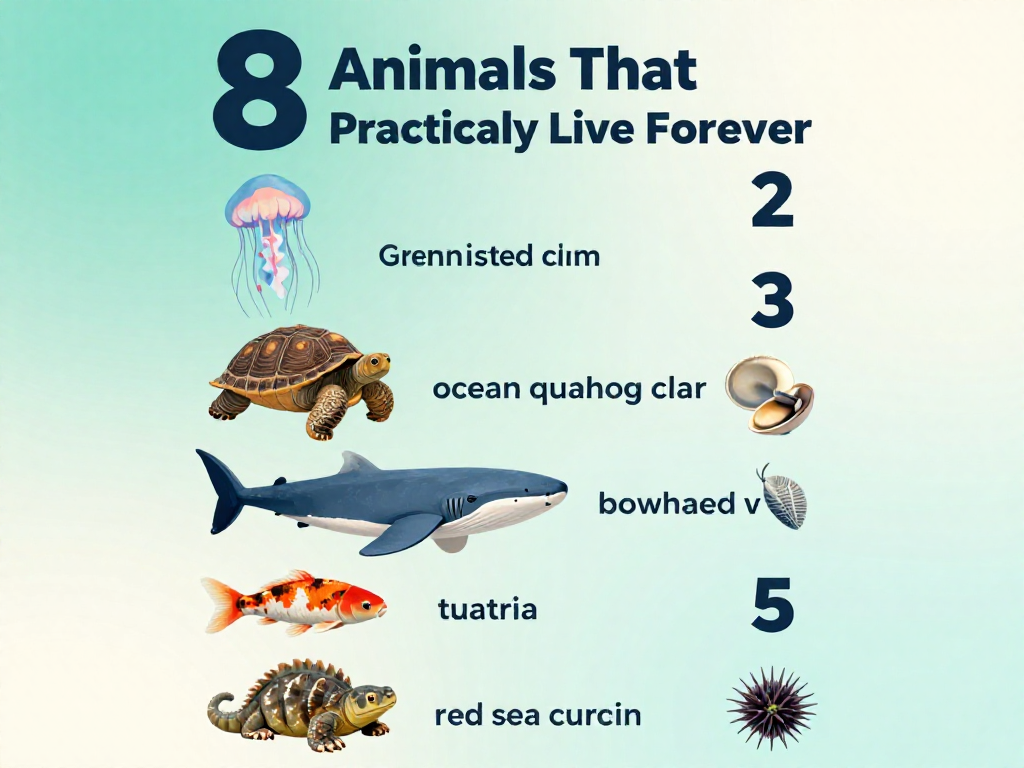
Quick Answer: The Longest-Lived Animals on Earth
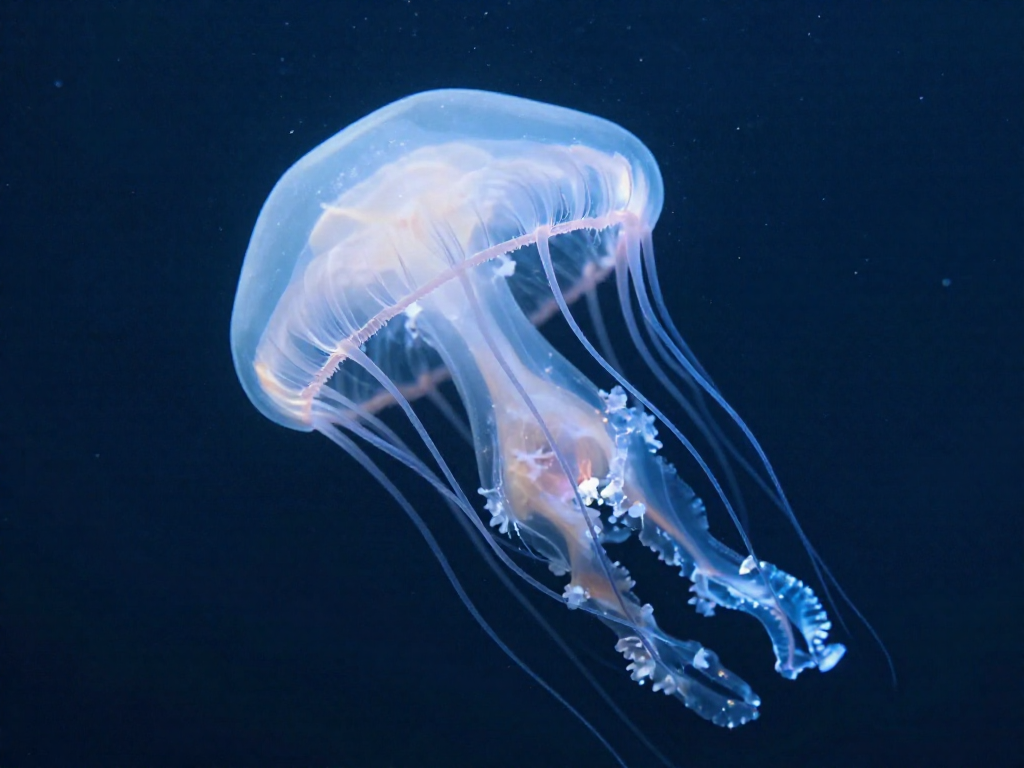
The closest thing to a truly immortal animal is the Turritopsis dohrnii, a tiny jellyfish that can reverse its own aging and start life over again. Most other record-holders aren't immortal—they just live astonishingly long.
Here's a quick snapshot of the champions we'll explore:
- Immortal jellyfish (Turritopsis dohrnii) — biologically ageless; can revert to its juvenile stage
- Glass sponge — an estimated 10,000+ years
- Greenland shark — up to ~400 years
- Ocean quahog clam ("Ming") — about 500 years
- Bowhead whale — over 200 years
- Giant tortoise — 150–190+ years
- Red sea urchin — 100+ years
- Koi fish — up to ~200 years (rare cases)
One quick note: when scientists call the jellyfish "immortal," they mean it doesn't die of old age—not that it can't be eaten, get sick, or die for other reasons. We'll unpack exactly how each of these animals pulls it off below.
What Does It Mean for an Animal to "Live Forever"?
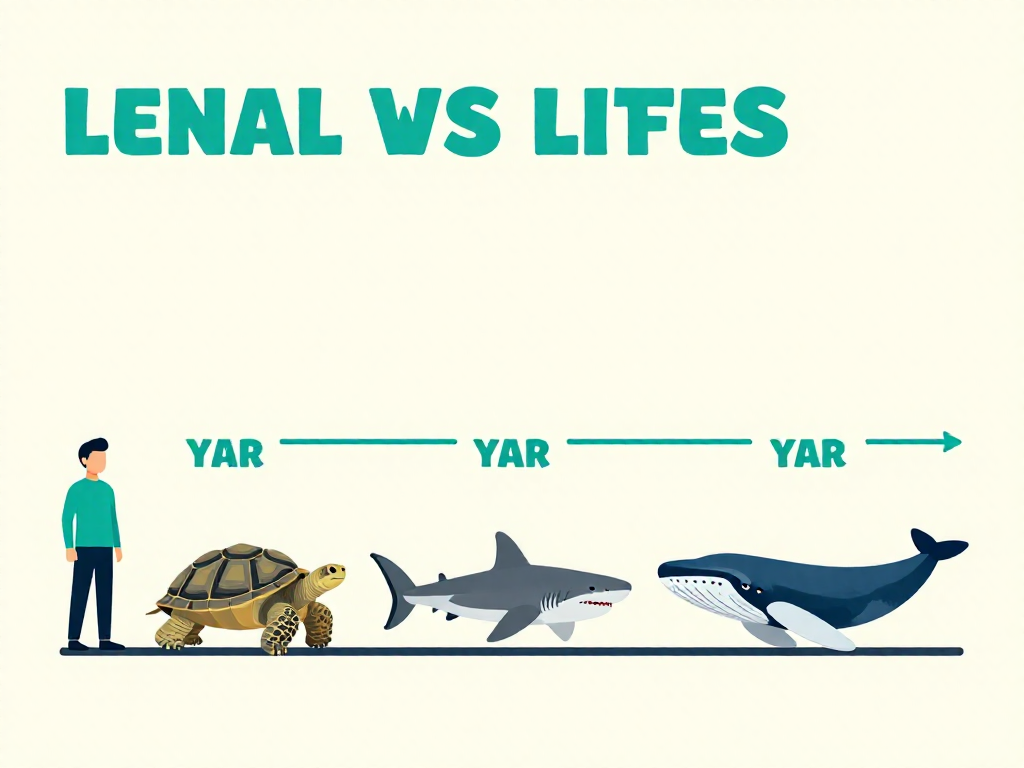
Here's the twist: almost none of the animals on this list are truly "immortal" — and the one that comes closest can still be eaten for lunch. "Living forever" in the animal world is less about magic and more about a few quirks of biology.
Most long-lived animals are champions of extreme longevity — they simply pack a lot of birthdays into one life, like a Greenland shark cruising along for 250–500 years. A rarer group shows negligible senescence, a fancy way of saying they barely age. Their bodies don't get noticeably weaker, slower, or less fertile over time the way ours do.
Then there's the holy grail: biological immortality, meaning an animal doesn't die of old age at all. This is not the same as being unkillable.
Even a "biologically immortal" creature like the Turritopsis dohrnii jellyfish can still:
- Be eaten by a predator
- Catch a deadly disease or infection
- Die from injury, pollution, or losing its habitat
So "forever" really means "won't die just because it got old" — not "can't die." Keep that in mind as we meet the record-breakers.
1. Immortal Jellyfish (Turritopsis dohrnii)
Imagine getting old, then hitting a reset button and growing young again — over and over. That's basically the superpower of Turritopsis dohrnii, a jellyfish smaller than your pinky nail that scientists have nicknamed the "immortal jellyfish."
Here's how it works. Most jellyfish grow up, reproduce, and die. But when this one is injured, starving, or stressed, its adult body (called a medusa) can melt back down into its earlier polyp stage — the tiny, plant-like form it started life as. Biologists call this transdifferentiation (the rare ability of one type of cell to transform into a completely different type). From that polyp, a whole new batch of jellyfish can bud off, effectively restarting the life cycle.
In theory, it can repeat this loop indefinitely, dodging old age entirely.
Reality check: "biologically immortal" doesn't mean unkillable. These jellyfish are constantly eaten by predators, struck down by disease, or simply caught in conditions where they can't reset in time. Most never get the chance to cheat death for long.
2. Greenland Shark (300–500+ Years)
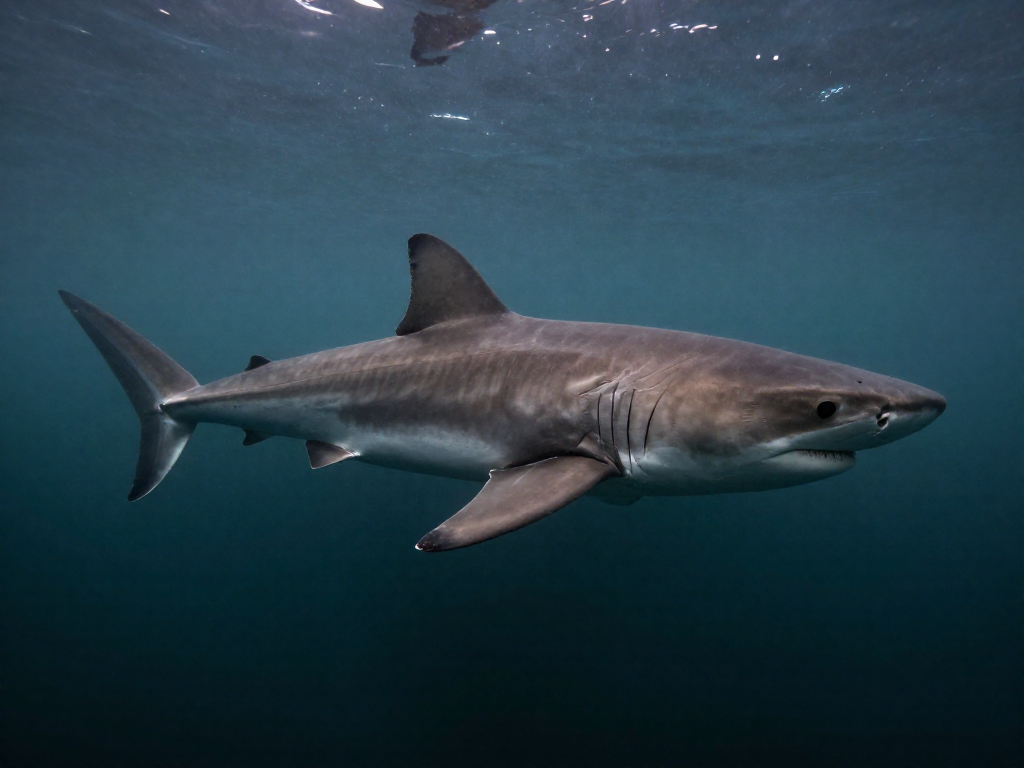
Imagine a fish swimming through the icy North Atlantic today that was already alive before the United States existed. That's the Greenland shark, the longest-lived vertebrate (animal with a backbone) we know of. A 2016 study in the journal Science estimated some individuals at around 400 years old, with a possible range stretching to 500-plus.
What's their secret? Life in the slow, deep, frigid lane. These sharks cruise through near-freezing water at a sluggish pace, and that cold-water metabolism (the rate at which the body burns energy) keeps everything moving in slow motion — including aging.
That slow pace shapes their whole life. Greenland sharks don't even reach maturity until roughly 150 years old, meaning a shark could spend more than a century just growing up.
- ~400-year estimated lifespans, some predating the founding of the US
- Cold, slow metabolism drives extreme longevity
- Maturity at ~150 years — a 150-year childhood
3. Ocean Quahog Clam (500+ Years)
Meet Ming, the clam that lived for 507 years — born around 1499, before Shakespeare was even a twinkle in history's eye. This unassuming ocean quahog (a hard-shelled clam found in the cold North Atlantic) holds the record as the oldest individual animal ever reliably aged.
So how do scientists count the years? Just like trees, quahog shells lay down a new growth ring (a thin band added each year) as they grow. By counting those rings under a microscope, researchers tallied Ming's centuries with surprising precision.
The secret to such a long life? Cold, stable water deep on the seafloor. Frigid, unchanging conditions slow the clam's metabolism to a crawl, which appears to dramatically slow aging.
- Aged at 507 years using shell growth rings
- Rings read like tree rings, one band per year
- Cold, steady deep-sea conditions keep aging in slow motion
4. Bowhead Whale (200+ Years)
Imagine a whale alive today that was already swimming the Arctic when Thomas Jefferson was president. That's no exaggeration: bowhead whales can live more than 200 years, making them the longest-lived mammals on Earth.
We know this partly thanks to surprising evidence — researchers have found old stone and ivory harpoon tips embedded in living whales, weapons that went out of use over a century ago. Scientists also estimate age using changes in proteins in the lens of the eye.
So how do they dodge the diseases of old age? Their DNA holds extra copies of genes for DNA repair (fixing damage in their genetic code) and cancer resistance, which may help these giants stay healthy for two centuries.
Sources: Keane et al., Cell Reports (2015); George et al., Arctic (1999).
5. Giant Tortoise (150–250 Years)
Meet Jonathan, a Seychelles giant tortoise who was hatched around 1832—before the first photograph of a person was ever taken. Now living on the island of St. Helena, he's recognized as the oldest known living land animal on Earth.
So what's their secret? Giant tortoises live life in the slow lane. They have a sluggish metabolism (the rate at which the body burns energy) and a heartbeat that can drop to just a few beats per minute when resting. Moving slowly, eating modestly, and rarely overexerting all seem to ease the wear and tear of aging.
Their long lives are also unusually well documented. Because many tortoises live in zoos and sanctuaries, caretakers have kept careful birth and care records for generations—giving us rare, reliable proof of just how long these gentle giants endure.
6. Hydra (Potentially Ageless)
Imagine a creature so small it fits on your fingertip, yet it may never grow old. The hydra—a tiny freshwater relative of jellyfish, usually under half an inch long—appears to dodge aging entirely.
Its secret is an endless supply of stem cells (cells that can become any body part). The hydra constantly regenerates them, essentially rebuilding its whole body again and again. In lab studies, researchers tracked hydras for years and found no rise in death rates and no drop in fertility as they aged—signs that point to potential biological immortality.
That doesn't mean a hydra can't die. Predators, disease, or a dried-up pond still end its life. But left undisturbed, it may simply keep renewing itself.
7. Koi Fish (50–200+ Years)
The most famous koi ever, a scarlet fish named Hanako, was reportedly 226 years old when she died in 1977 in Japan. How could anyone know? Scientists read her scales like tree rings — each scale grows rings (called annuli) that pile up year after year, and a microscope study of Hanako's scales pointed to a more-than-two-century life.
So why doesn't your backyard koi live that long? Most pet koi reach about 25–50 years, and many far less. Pond size, water quality, diet, and disease all cut lifespans short. Hanako's secret was a cold, clean mountain stream and generations of careful tending — a reminder that "potentially long-lived" and "actually long-lived" aren't the same thing.
8. Red Sea Urchin (100–200 Years)
Picture a spiny purple-red pincushion clinging to a rock — and quietly outliving your great-grandparents. The red sea urchin (Mesocentrotus franciscanus), found along the US Pacific coast from Alaska to Baja California, can reach 100 to 200 years old.
What makes it list-worthy is negligible senescence (almost no biological aging). Researchers have found that very old urchins show no measurable drop in health and keep reproducing just as well as young ones. A century-old urchin can spawn like a teenager.
- Lives 100–200 years
- Shows negligible senescence — barely ages
- Native to the US Pacific coast
A perfect, low-key finish to our list of near-immortals.
Why Don't Humans Live This Long?
Here's the humbling part: a clam can outlive 5 generations of your family, and a jellyfish may never truly die at all. So why are humans capped at around 120 years, tops?
A lot comes down to three things working together:
- Metabolism: Slow-living animals like the Greenland shark burn energy at a crawl, which seems to reduce the cellular wear-and-tear that ages bodies faster.
- Cell division: Each time our cells copy themselves, protective caps on our DNA (called telomeres) shorten. Some long-lived species refresh these caps or divide far less aggressively.
- DNA repair: Bowhead whales and tortoises carry gene variants that fix damage and suppress cancer remarkably well.
Scientists study these animals hoping to understand healthy aging—not to make people immortal, but to add more good years to a normal life.
The catch? These tricks rarely transfer to mammals like us. An "ageless" hydra is a simple creature that constantly rebuilds itself; our complex brains, organs, and bones simply can't be swapped out the same way.
The Takeaway
Living "forever" looks wildly different depending on the animal. Some, like the Greenland shark and ocean quahog clam, simply age extraordinarily slowly, racking up centuries. Others, like the hydra, barely seem to age at all. But the immortal jellyfish (Turritopsis dohrnii) is still the closest thing nature has to true immortality, rewinding its own life cycle back to its earliest stage.
Hungry for more jaw-dropping wildlife wonders? Stick around and explore the rest of our amazing animal facts.
See also
- Amazing Animal Facts category page
- Deep-sea creatures that survive extreme conditions
- Animals with incredible regeneration abilities
- The slowest animals in the world
- Fun facts about jellyfish
Related articles
My Unpopular Opinion: Stop Calling Them 'Killer' Whales
Why should we stop using the term 'killer whale'?
Jul 28, 2026 · 3 min read
Cheetah vs. Leopard: Spotting the Difference in the Wild
How can you tell the difference between a cheetah and a leopard? Learn the key features including tear marks, spots, body shape, hunting styles, and sounds—all in one easy guide.
Jul 28, 2026 · 6 min read
8 Animals That Use Tools (And What They Do with Them)
Which animals use tools, and how do they use them? From crows bending wires to octopuses carrying coconuts, discover 8 tool-using animals.
Jul 28, 2026 · 6 min read