The Incredible Strength of Tiny Animals: Why Ants Lift 50x Their Weight
How can small animals lift far more than their own body weight?
On this page
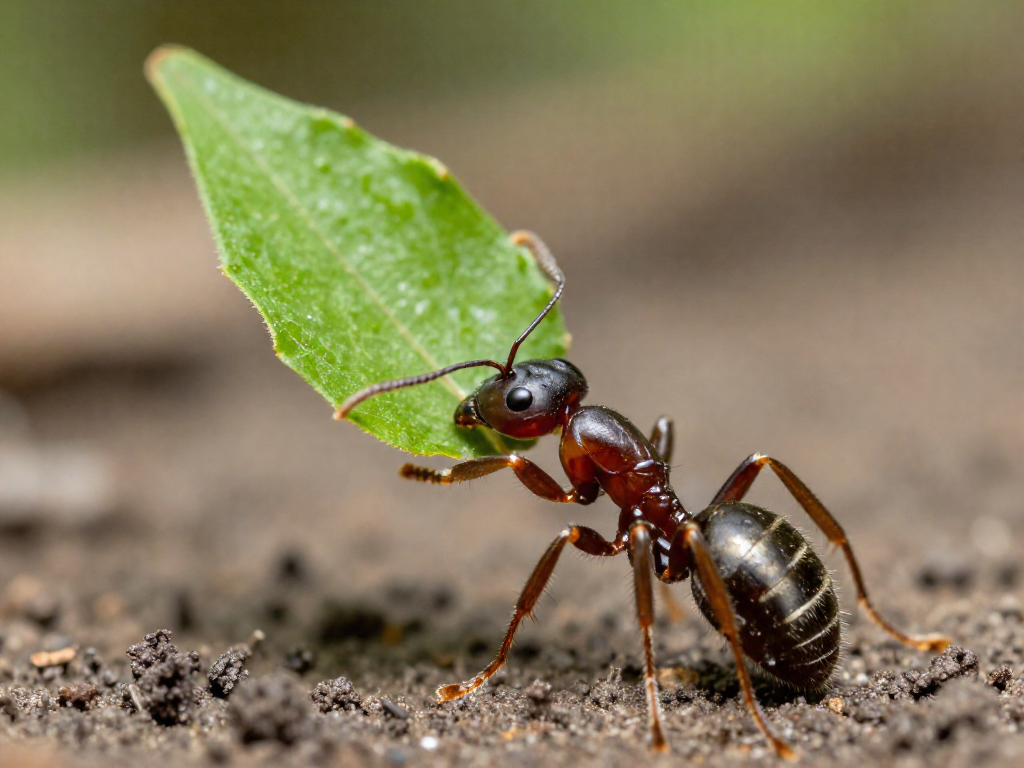
The 50x Claim: What It Actually Means
An ant can hoist something 50 times heavier than itself — picture yourself jogging down the street with a small car balanced over your head. That jaw-dropping image is exactly why the "50x" stat goes viral, but it's measuring something specific, so let's unpack it before we get to the science.
The number describes relative strength (how much you can lift compared to your own body weight), not absolute strength (the raw amount of force, in pounds or newtons). By relative strength, ants are superstars. By absolute strength, they don't stand a chance — an elephant lifts vastly more total weight; it just isn't lifting much compared to its own enormous body.
So "the strongest animal" has two very different answers:
- Relative champions: tiny creatures like ants, dung beetles, and certain mites punch far above their size.
- Absolute champions: big animals like elephants and gorillas move the most actual weight.
One quick caveat: the exact multiplier isn't a single fixed fact. Real figures vary by ant species, body size, and how each study measured the load — some leafcutter and field ants test even higher than 50x. The headline number is a memorable average, not a law of nature.
It's a Size Thing: The Square-Cube Law Explained
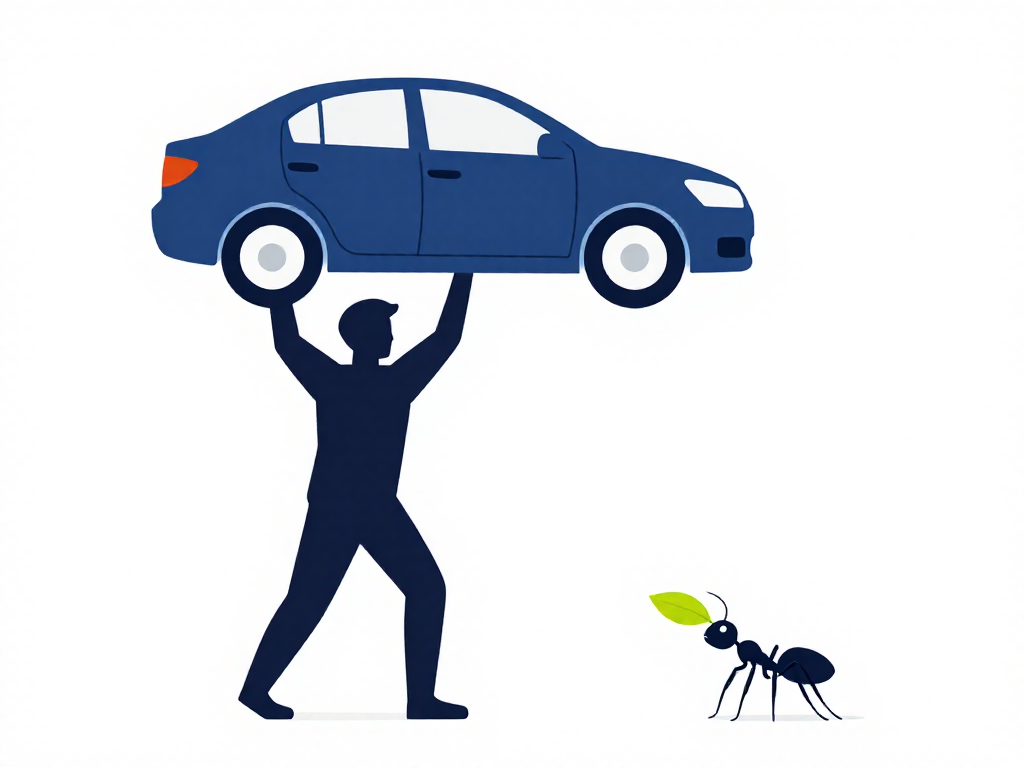
Here's the secret an ant would never brag about: it isn't built from super-strong muscle. It's just really, really small — and being small is a strength cheat code.
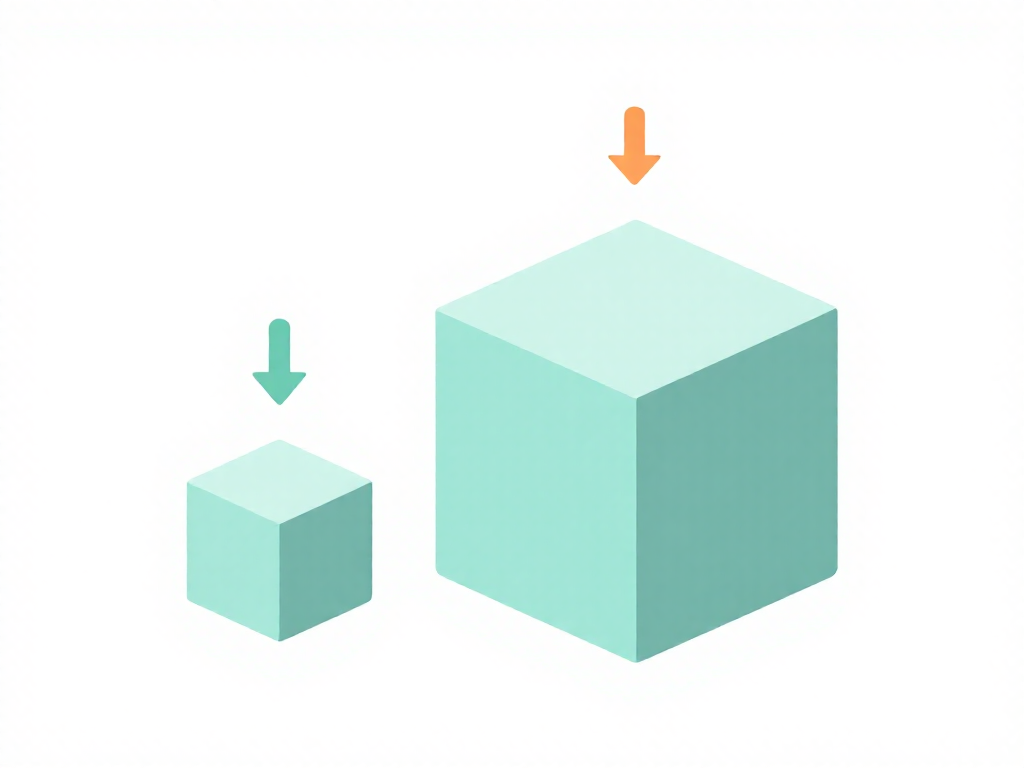
The explanation is a tidy piece of math called the square-cube law (the rule that area grows slower than volume as an object gets bigger). Stay with us, because it makes everything click.
Two things scale differently:
- Muscle strength depends on a muscle's cross-sectional area — think of it as the slice you'd see if you cut the muscle in half. Area grows with the square of size.
- Body weight depends on volume — how much stuff fills the whole body. Volume grows with the cube of size.
Because volume balloons faster than area, the two fall out of sync the moment you change size. Shrink an animal and its weight drops faster than its strength, so it ends up proportionally stronger. Supersize it and weight piles on faster than muscle can keep up, leaving it proportionally weaker.
The sugar-cube test: Picture a tiny sugar cube measuring 1 unit on each side. Its surface is 6 square units; its volume is 1 cubic unit. Now double every side to make a block 2 units across. Surface jumps to 24 (4x bigger), but volume leaps to 8 (8x bigger). Double the size, and weight outruns surface area two to one. Keep growing and the gap only widens.
That single mismatch is the biggest reason tiny animals look superhuman. An ant's legs and muscles are carrying a featherlight body, so lifting many times its own weight is far less heroic than it sounds. Flip the rule around and it explains why an elephant can't leap and why a human-sized ant — a sci-fi favorite — would actually collapse under its own bulk.
Size, not super-muscle, is doing the heavy lifting.
Inside an Ant's Body: Built for Heavy Lifting
An ant doesn't lift 50 times its weight because it has some secret super-muscle. It does it because almost every part of its tiny body is shaped to turn small forces into big results.
Start with the exoskeleton (a hard outer shell instead of an inner skeleton). It works like a suit of armor and a frame. Muscles attach to the inside of this rigid casing, so when they pull, the force transfers directly into solid structure with very little wasted flex—no soft tissue stretching and absorbing the effort.
Then there's the famous neck. A 2014 study from Ohio State University tested the neck joint of the common field ant and found it could withstand forces up to about 5,000 times the ant's body weight before failing. That joint—where the head meets the body—is where a carrying ant anchors its load, and it's reinforced to handle enormous strain.
The muscles themselves benefit from being small. As we saw with the square-cube law, muscle power depends on cross-sectional area, which shrinks far more slowly than body weight as an animal gets tinier. So an ant's muscles are huge relative to the body they have to move.
Finally, shape matters. Short, stubby legs and a compact body give an ant excellent leverage—like using a short, stiff crowbar instead of a long, bendy one—so it can apply force efficiently without buckling.
Why Humans (and Elephants) Can't Do It
Here's the catch: if you scaled an ant up to the size of a dog, it wouldn't lift a car — it would collapse into a puddle, unable to even stand. The very rule that makes ants superheroes turns into a death sentence at our size.
Blame the square-cube law again. When you double an animal's height, its strength (which depends on muscle and bone cross-section, or thickness) roughly quadruples — but its weight (which depends on volume, the whole 3D body) grows about eight times. Scale up far enough and the body simply outgrows the support its own structure can provide.
That's why giants run into hard limits:
- Bones buckle. Leg bones would have to get absurdly thick just to hold the body up, leaving no spare strength for lifting anything else.
- Oxygen can't keep up. Ants breathe through tiny tubes that work great when you're small, but couldn't supply a dog-sized insect — one reason real bugs stay little.
- Structure caps the size. This is partly why elephants have pillar-like legs and can't jump, while a flea can leap many times its own height.
The trade-off is simple: small animals get incredible relative strength, while big animals get reach, stamina, and brainpower. Nobody gets both — physics won't allow it.
Other Tiny Strongmen of the Animal Kingdom
Ants get the headlines, but they aren't even the strongest bugs on the block. Several tiny animals leave a 50x lift in the dust.
- Dung beetle: The horned dung beetle (Onthophagus taurus) can pull a load over 1,000 times its own body weight — like an average person dragging six full double-decker buses. A 2010 study in Proceedings of the Royal Society B clocked it as one of the strongest animals on Earth, pound for pound.
- Rhinoceros beetle: This horned giant can carry roughly 100 times its body weight on its back and still walk around, a feat often demonstrated in museum and university entomology labs.
- Mites and other micro-champions: Shrink down further and the numbers climb. Tiny oribatid mites can resist forces over 1,100 times their weight — proof that smaller often means proportionally stronger.
Notice the pattern? The smaller the animal, the bigger the multiplier. That's not a coincidence — it's the square-cube law (the rule that as a body shrinks, its strength shrinks more slowly than its weight) we met earlier. Muscle power depends on cross-section, while weight depends on volume, so tiny bodies get a built-in strength bonus that no elephant could ever match.
Why It Matters: Lessons Scientists Learn From Ants
Here's the surprising payoff: the same physics that lets an ant haul a crumb many times its size is now helping engineers build better machines. Tiny strength isn't just a fun fact — it's a blueprint.
- Robotics: Researchers have built insect-inspired "microrobots," like Stanford's MicroTug bots, that grip and tow objects far heavier than themselves by copying how ants anchor and pull.
- Materials: An ant's exoskeleton (its hard outer shell) inspires lightweight, super-strong materials for everything from sports gear to aircraft parts.
- Scale smarts: Understanding the square-cube law (how strength and weight change at different sizes) helps designers know why a tiny gripper can't simply be scaled up into a giant one.
The big takeaway: ants don't break the laws of physics — they win at being small. And by studying that, we learn to build smarter, stronger, and lighter.
See also
- How Insects Breathe Without Lungs
- The Fastest Animals on Earth for Their Size
- Why Spiders Don't Stick to Their Own Webs
- Animal Superpowers: Creatures With Built-In Armor
Related articles
How Do Spiders Make Silk? The Chemistry Behind Nature's Strongest Fiber
How do spiders produce silk, and what makes it so strong?
Jul 28, 2026 · 10 min read
How Electric Eels Generate Shocks: A Deep Dive into Nature’s Living Batteries
How do electric eels produce electricity?
Jul 28, 2026 · 10 min read
Why Don't Woodpeckers Get Headaches? The Built-In Shock Absorbers
How do woodpeckers avoid brain injury despite repeated hammering?
Jul 20, 2026 · 6 min read