Why Do Owls Turn Their Heads All the Way Around?
How and why can owls rotate their heads so far?
On this page
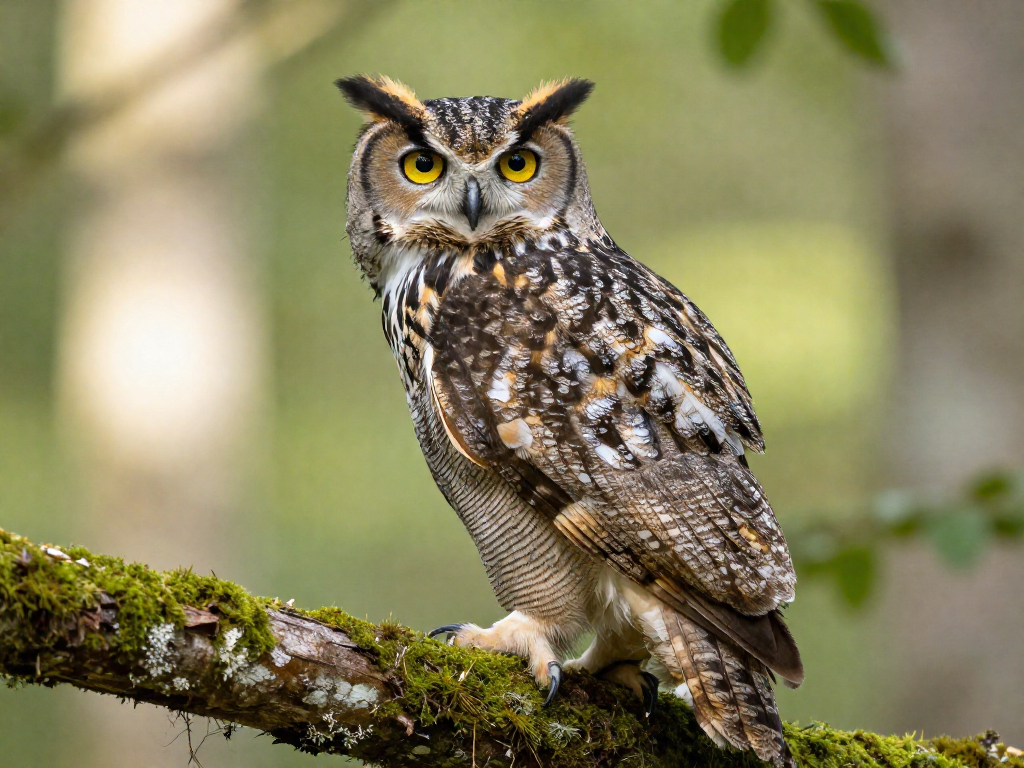
Quick Answer: How Far Can an Owl Really Turn Its Head?
Here's the twist that surprises almost everyone: an owl cannot spin its head a full 360 degrees. The real number is impressive enough on its own — about 270 degrees in each direction, or three-quarters of a complete circle.
To picture it, imagine looking straight ahead, then turning your head to peek directly over your own shoulder and a little past it. An owl can do that and keep going, glancing almost straight back behind itself.
So why does the "full circle" myth stick around? Because the motion is so smooth and fast that it looks like the head never stops. The eye is fooled by how seamlessly an owl swivels — but it's three-quarters of a turn, not a full lap.
Why Owls Have to Turn Their Heads at All
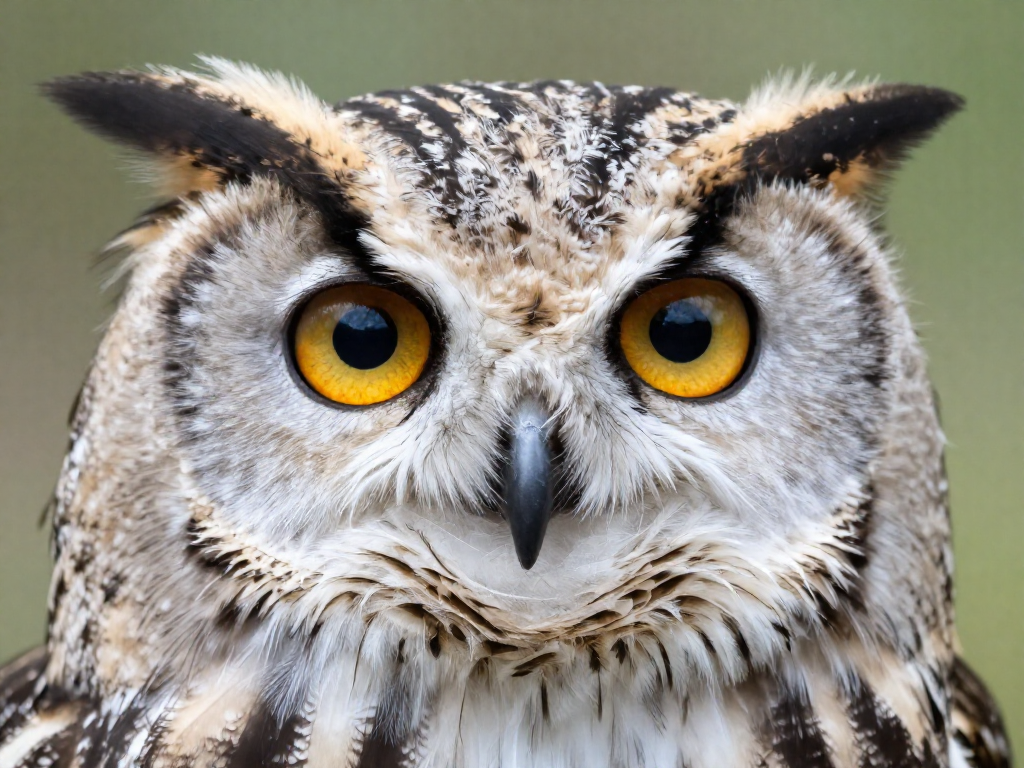
Here's the surprise: an owl can't roll its eyes the way you can. Those huge, golden eyes are actually locked in place, so the only way an owl can glance to the side is to move its entire head.
The reason comes down to shape. Owl eyes aren't round like ours—they're long and tube-shaped (think tiny binoculars rather than marbles), and they're anchored into bony rings in the skull. That design leaves no room to swivel. The eyes point straight ahead and stay there.
So why give up the ability to dart your eyes around? It's a trade-off that pays off at dinnertime. Big, forward-facing eyes give owls excellent depth perception, letting them judge exactly how far away a mouse is before they strike. The catch is that to scan the world, an owl has to turn its head instead of its eyes—which is exactly why those famous neck-twisting skills evolved in the first place.
The Neck Anatomy That Makes It Possible
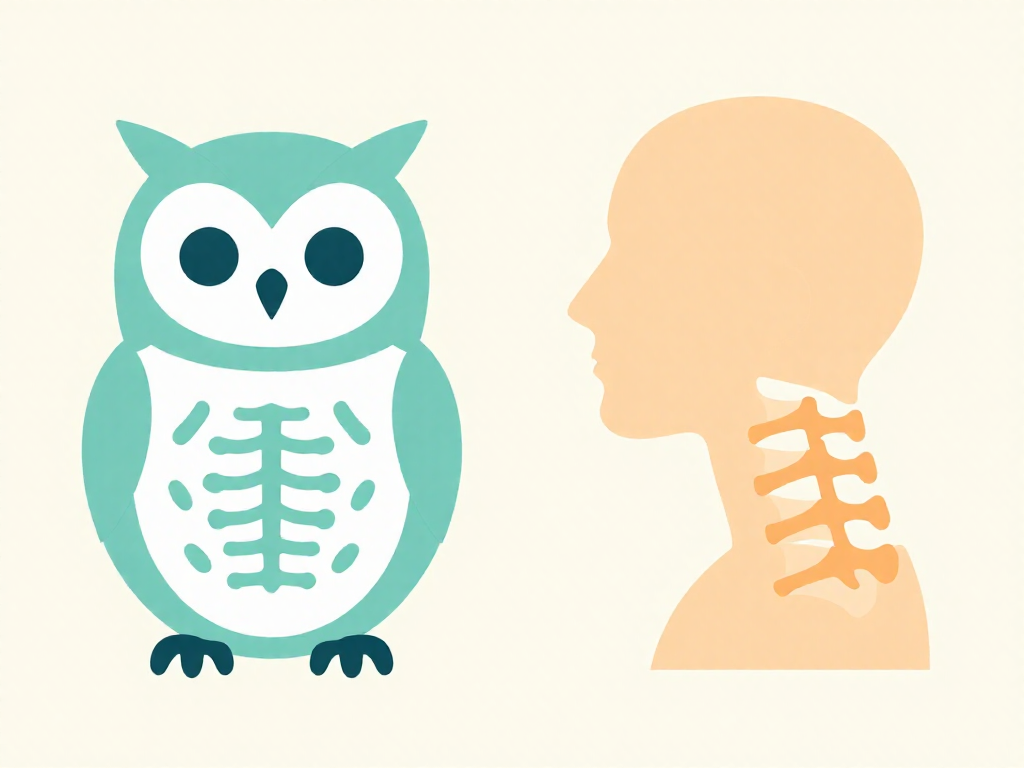
Here's the secret: an owl's whole rotation trick lives in its neck—and that neck is built nothing like ours. Owls can swivel their heads about 270 degrees, roughly three-quarters of a full circle, and a few clever anatomical tweaks keep it from being a disaster.
More bones, more flexibility. Owls have 14 neck vertebrae (the small bones that stack to form the spine in the neck). That's twice the 7 we humans have—the same number, surprisingly, that's found in nearly all mammals, from mice to giraffes. More joints mean more places to bend and turn.
A built-in blood supply backup. Twisting your neck that far should pinch the arteries feeding your brain. Owls solve this in two ways:
- Their major neck arteries pass through extra-large, roomy holes in the vertebrae, leaving slack so vessels don't get crushed during a turn.
- Small blood reservoirs (pooled pockets of blood) sit near the base of the skull, keeping the brain and eyes supplied even mid-rotation.
A 2013 Johns Hopkins study that scanned and injected owl specimens confirmed these adaptations.
Still body, sweeping head. Because owls' eyes are fixed tubes that can't roll in their sockets, the head does all the looking—pivoting smoothly while the body stays planted, like a periscope scanning the dark.
Why This Super-Swivel Helps Owls Survive
That dramatic head spin isn't just for show — it's a survival superpower. Because an owl's eyes are fixed in their sockets (they can't swivel side to side like ours), turning the head up to about 270 degrees is the only way to look around. That gives the owl a sweeping field of view to catch the tiniest movement of prey below or a predator sneaking up behind.
This wide scan teams up with the owl's famously sharp hearing. Many owls have slightly offset ears that help them pinpoint a rustling mouse in total darkness, then aim their gaze right at it.
Best of all, swiveling the head lets an owl stay frozen and silent on its perch:
- Wider view to spot prey and danger
- Hearing + sight combo to locate hidden, near-silent movement
- Stealth scanning with no telltale body motion
Fun Owl Head Facts to Share
Ready for some owl trivia worth pinning? An owl can swivel its head about 270 degrees—roughly three-quarters of a full circle—letting it peek almost upside down and far over its own back.
- Almost a backward glance: That 270-degree turn means an owl can look directly behind itself without moving a single feather on its body.
- Owls take the crown: Plenty of birds have bendy necks (think herons and chickens), but owls go furthest—partly because their huge, tube-shaped eyes can't roll in their sockets the way ours do.
- Owl vs. you: Humans top out around 90 degrees side to side, with 14 neck bones to share between us and giraffes. Owls? They pack 14 neck bones too—double a human's seven—into a much shorter neck.
Sources: National Geographic; Johns Hopkins Medicine.
See also
- How Do Owls Fly So Silently?
- Why Do Owls Hunt at Night?
- How Good Is an Owl's Hearing?
- Curious Kid Questions: Animal Eyes Explained
Related articles
Why Do Cats Always Land on Their Feet? The Physics of Feline Righting
Discover the real reason cats land on their feet—it’s not the tail or magic. Learn the step-by-step righting reflex, the surprising physics behind the twist, and why higher falls can sometimes be safer.
Jul 28, 2026 · 4 min read

Why Do Fireflies Glow? And Other Summer Night Questions
Discover the simple science behind firefly bioluminescence, their coded flash language, and family-friendly tips for enjoying these magical insects without harm.
Jul 20, 2026 · 6 min read
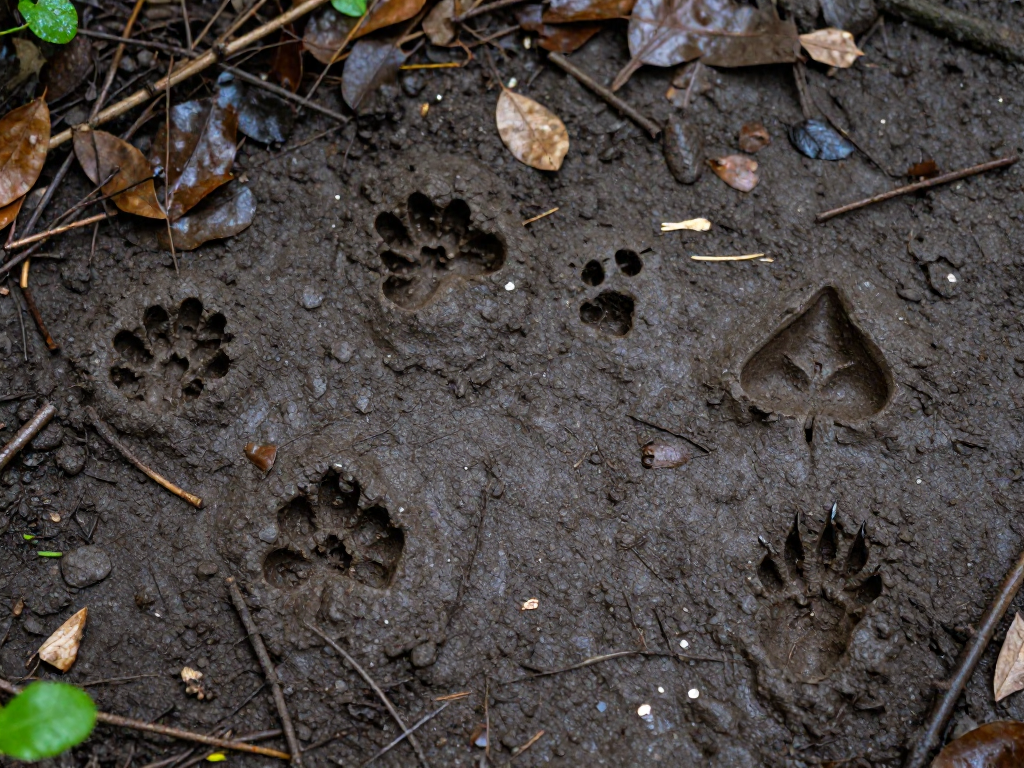
Quick Reference: Common Animal Tracks to Spot in Your Backyard
What animal tracks might you find near your home, and how do you identify them?
Jul 20, 2026 · 4 min read