Why Do Some Animals Glow While Others Change Color? Two Light Tricks Compared
What's the difference between bioluminescence and color-changing camouflage?
On this page
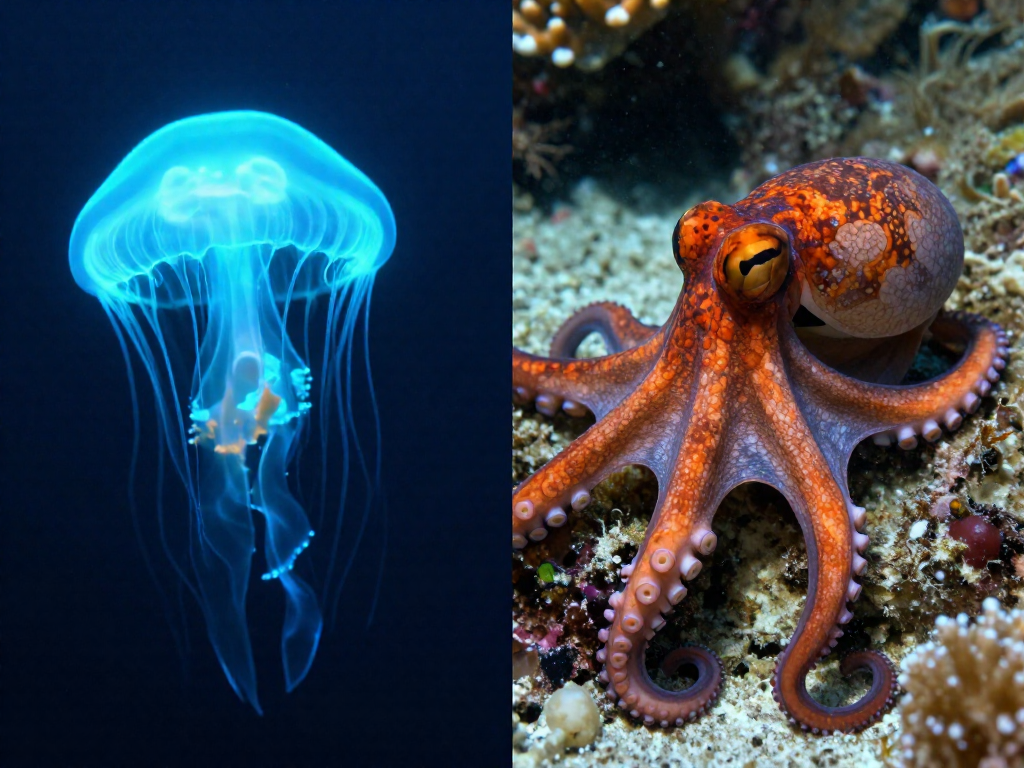
The Quick Answer: Making Light vs. Manipulating It
A deep-sea anglerfish glowing in pitch-black water and a chameleon shifting from green to gold look like the same magic trick — but they're complete opposites. One animal is making light. The other is just rearranging the light that's already there.
Here's the core difference in plain terms:
- Bioluminescence = the animal produces its own light. A chemical reaction inside its body (usually a molecule called luciferin reacting with oxygen) creates a real glow, even in total darkness. Think fireflies, anglerfish, and many deep-sea creatures.
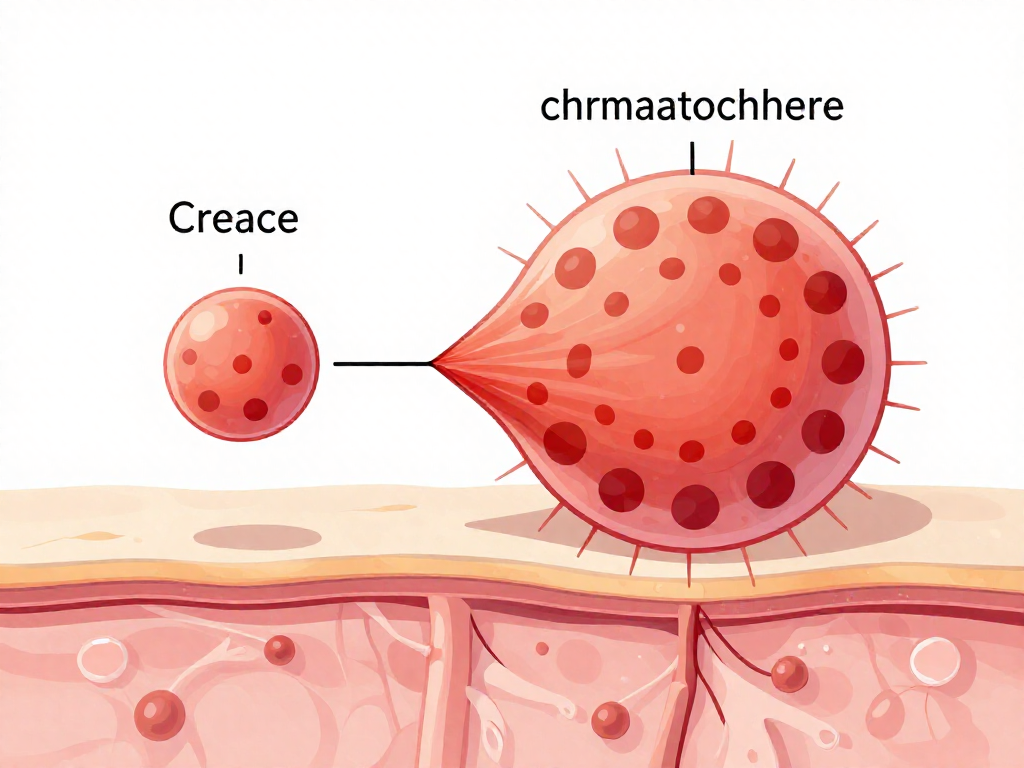
- Color change = the animal alters how it reflects existing light. No light is created at all. Special skin cells (chromatophores — pigment-filled cells the animal can expand or shrink) shift which colors bounce back to your eyes. Think chameleons, octopuses, and cuttlefish.
The memory hook: glowing is like turning on a flashlight; changing color is like giving yourself a fresh paint job.
So why do people mix them up? Both are visual, both feel a little magical, and both help animals survive — to hide, hunt, or send signals. But only one needs darkness to shine, and only one needs light to work at all. The rest of this article digs into how each trick actually happens.
How Bioluminescence Works (The Glow)
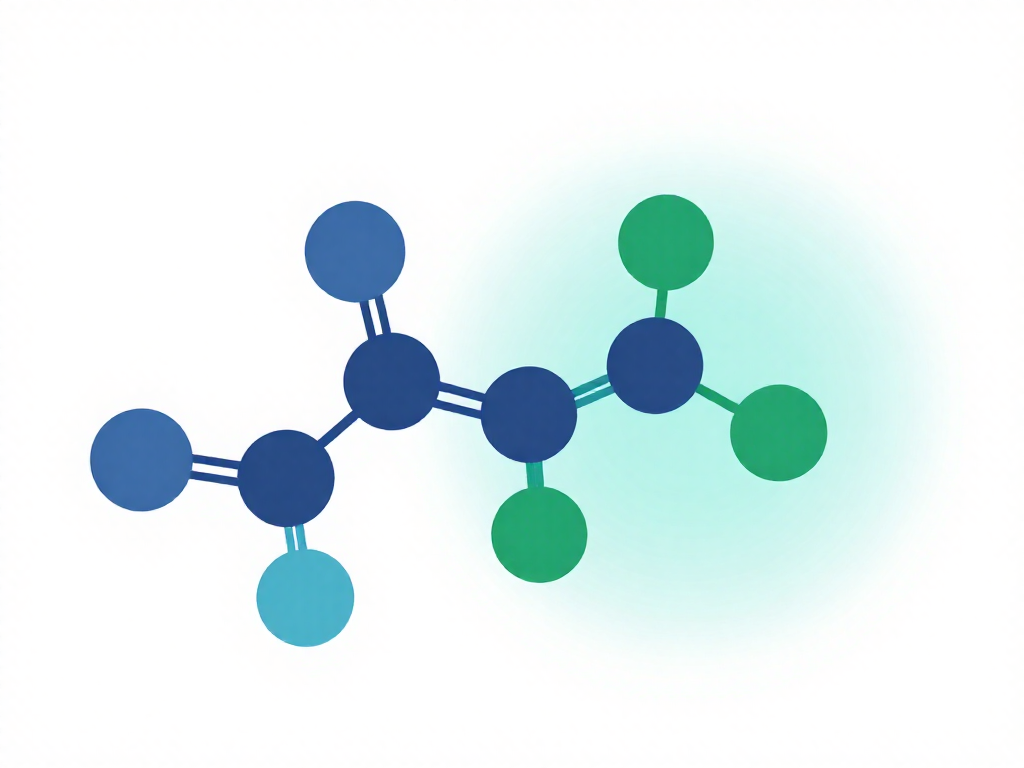
Imagine a chemical glow stick, but alive—and so efficient it wastes almost no energy as heat. That's bioluminescence (light an animal makes inside its own body), and unlike a light bulb that gets hot, it produces "cold light" you could practically hold against your skin.
The recipe is surprisingly simple. An animal combines a light-producing molecule called luciferin with a helper enzyme called luciferase (a protein that speeds up the reaction), adds oxygen, and the result is a soft glow with nearly zero heat. Almost all of the energy becomes light, making it far more efficient than any household bulb.
Where does the glow happen? Some animals make light in special cells of their own. Others outsource the job entirely, hosting colonies of glowing bacteria in dedicated organs—a partnership scientists call symbiosis (two species living together for mutual benefit). The deep-sea anglerfish, for example, dangles a bacteria-powered "lantern" to lure prey.
Notice a pattern in the colors, too. Most ocean glow is blue or green, and there's a reason: those wavelengths travel farthest through seawater, so they're the most useful for signaling, hunting, or hiding in the deep.
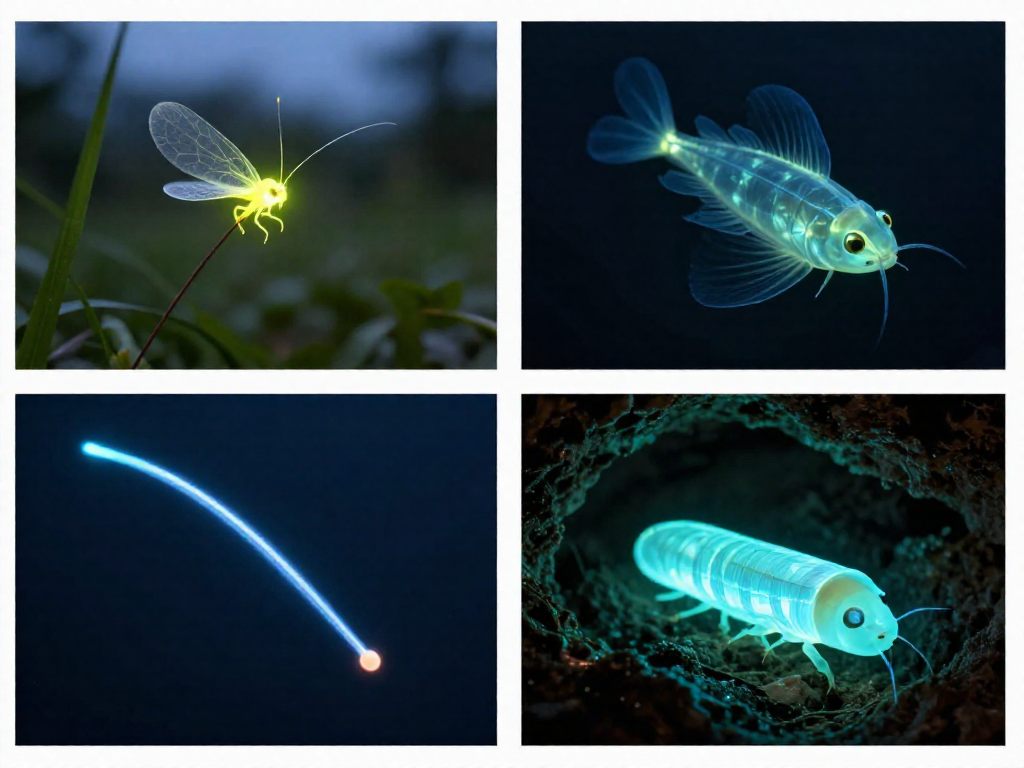
You'll find this trick across the animal world—fireflies blinking in summer fields, glowworms lining cave ceilings, and ghostly jellyfish pulsing in the dark depths. Same basic chemistry, wildly different light shows.
How Color-Changing Camouflage Works (The Shift)
An octopus can match the color and texture of a rock in under a second — faster than you can blink twice. But here's the twist: unlike glowing animals, color-changers don't make any light at all. They bend and rearrange the light that's already there.
The main tool is a layer of cells called chromatophores (tiny sacs packed with pigment). When tiny muscles pull these sacs open, the color spreads across the skin like a balloon inflating; when they relax, the dot shrinks and the color fades. Stack thousands of these in red, yellow, and brown, and an animal can paint shifting patterns across its body.
Underneath sit iridophores (mirror-like cells that reflect light). Instead of holding pigment, they create "structural color" by bending reflected light — the same trick that makes a soap bubble shimmer blue and green. This is how cuttlefish flash metallic blues that no pigment could produce.
What sets the speed? It comes down to the controls:
- Nerves and muscles drive lightning-fast changes. Octopuses and cuttlefish rewire their look almost instantly.
- Hormones drive slower shifts. A chameleon's color change unfolds over seconds to minutes, often tied to mood and temperature rather than just background.
You'll also see this skill in some flatfish, which settle onto the seafloor and blend into sand or gravel. So while glowing animals produce light, color-changers manipulate it — two very different solutions to the problem of being seen.
Side-by-Side: Glow vs. Color Change
Here's the cleanest way to tell these two tricks apart: a glowing animal is its own flashlight, while a color-changing animal is more like a chameleon-shaped mood ring reacting to its surroundings. One makes light; the other manipulates the light already there. Below is the quick comparison to pin (literally).
| Feature | Bioluminescence (the glow) | Color-Changing Camouflage (the shift) |
|---|---|---|
| Light source | Self-made — a chemical reaction inside the body produces light | Reflected/ambient — bends and reflects existing light, no light created |
| Visibility | Stands out, especially in darkness (lures, mates, warnings) | Blends in to hide or signal against the background |
| Speed | Built on a chemical reaction; flashes can be quick, but it's not instant "redecorating" | Near-instant — a cuttlefish can change in well under a second |
| Best environment | Dark, light-starved places like the deep sea, where ~76% of animals glow | Lit environments where matching the background actually matters |
A few details worth knowing:
- Energy cost: Glowing burns stored chemical fuel (a molecule called luciferin) every time it lights up, so animals tend to use it in short, purposeful bursts. Color change uses specialized skin cells (chromatophores — tiny pigment sacs that stretch and shrink), which is fast and relatively cheap to flick on and off.
- Where you'll see each: Glow rules the dark — think anglerfish, fireflies, and glowing plankton. Color change rules the lit world — octopuses, cuttlefish, chameleons, and flounder.
- The big idea: In the pitch-black deep, making light wins. Where there's already light to work with, bending it wins.
Same goal — survival — two completely different light tricks.
Why Animals Evolved Each Trick
Here's the twist: glowing and color-changing solve almost opposite problems, and where an animal lives usually decides which one wins.
In the deep sea, where sunlight runs out below about 660 feet (200 meters), making your own light is wildly useful. Glow earns its keep in several ways:
- Luring prey: the deep-sea anglerfish dangles a glowing lure to draw curious fish straight to its mouth.
- Finding mates: fireflies flash species-specific patterns so the right partner can answer back.
- Startling predators: some squid and shrimp eject a glowing cloud to confuse an attacker and slip away.
- Counter-illumination: many squid light up their bellies to match the faint glow from the surface, erasing their silhouette from hunters lurking below.
Color change, by contrast, shines in bright, busy places like reefs and forests, where there's plenty of light to work with:
- Hiding: a cuttlefish can match the color and texture of sand or coral in under a second.
- Ambushing prey: a chameleon blends in, then strikes when an insect wanders close.
- Signaling: many color-shifters flash bold hues to warn rivals or show they're ready to mate.
Some animals refuse to pick just one. Certain squid glow to vanish from below and shift color to blend in from the side—two light tricks, one very clever survivor.
Quick Myths and Mix-Ups Cleared
That eerie green shine in your flashlight beam? It's usually not the animal glowing at all. Here are the mix-ups worth untangling:
- Firefly "glow" vs. eyeshine. Fireflies make their own light (bioluminescence). The "glow" in a deer's or cat's eyes at night is just eyeshine — light bouncing off a mirror-like layer called the tapetum lucidum. One is a chemical reaction; the other is a reflection.
- Chameleons aren't mainly hiding. They shift color largely to communicate mood and dominance and to regulate temperature — not just to vanish into the background. Camouflage is a bonus, not the main act.
- Fluorescence is a third trick. Some animals (like certain corals and scorpions) absorb light and re-emit it as a different color. That's fluorescence, and it stops the instant the light source is gone.
- Some deep-sea glow isn't theirs. Many creatures, like the anglerfish, "glow" thanks to symbiotic bacteria living inside them doing the light-making.
See also
- How Octopuses Change Color in Less Than a Second
- Why Deep-Sea Anglerfish Carry Their Own Glowing Lure
- Fireflies Explained: How and Why They Light Up
- Chameleon Color Change: The Surprising Real Reason
- Animal Superpowers: 10 Abilities That Sound Made Up
Related articles
How Do Spiders Make Silk? The Chemistry Behind Nature's Strongest Fiber
How do spiders produce silk, and what makes it so strong?
Jul 28, 2026 · 10 min read
How Electric Eels Generate Shocks: A Deep Dive into Nature’s Living Batteries
How do electric eels produce electricity?
Jul 28, 2026 · 10 min read
Why Don't Woodpeckers Get Headaches? The Built-In Shock Absorbers
How do woodpeckers avoid brain injury despite repeated hammering?
Jul 20, 2026 · 6 min read